The Middle East is one of the world’s most strategically important aviation regions—home to major global hubs like Dubai, Doha, Abu Dhabi, Riyadh, Muscat, and Istanbul, and surrounded by airspace that is both heavily traveled and tightly monitored. Tracking live flights in this region offers a unique blend of commercial traffic, long-haul connections, and restricted air corridors.
This regional guide explains how to track live air traffic over the Middle East, which data sources work best, why certain flights may be hidden, and how political geography shapes what you can see on flight trackers.
Why the Middle East Is One of the World’s Most Active Airspaces
The region sits at the crossroads of Asia, Africa, and Europe, making it a major transit zone for:
- Ultra-long-haul flights
- Europe–Asia connections
- Middle East–US traffic
- Africa–Asia routes
- Pilgrimage and religious travel
- Military and government operations
Airports like DXB, DOH, AUH, RUH, JED operate some of the highest volumes of wide-body aircraft in the world.
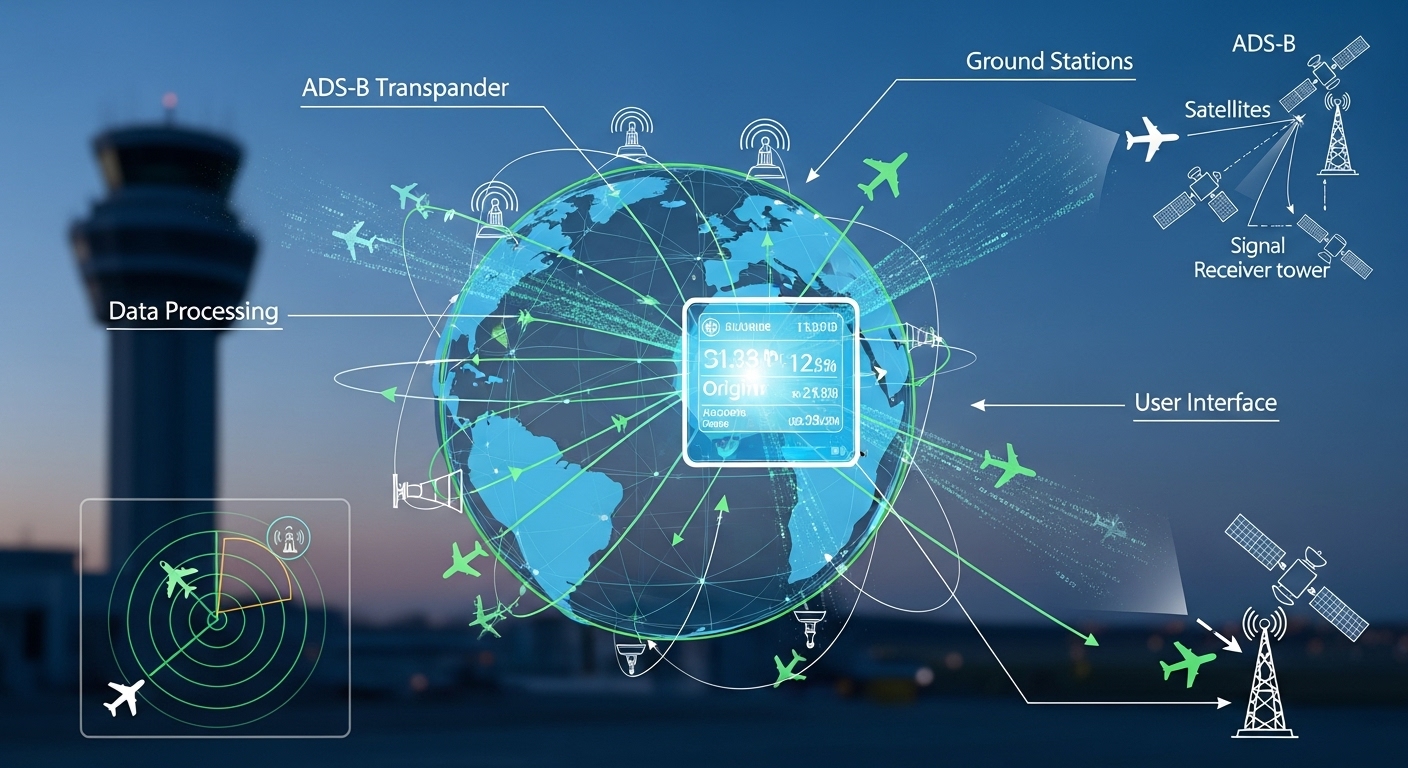
How Live Flight Tracking Works in the Middle East
Live air traffic in the Middle East is monitored through four main systems:
1. ADS-B (Automatic Dependent Surveillance–Broadcast)
The dominant method for flight tracking.
Aircraft broadcast:
- GPS-based position
- Speed
- Altitude
- Heading
Ground ADS-B receivers in the UAE, Saudi Arabia, Oman, Qatar, Bahrain, and Turkey provide excellent coverage.
Coverage Strength: ★★★★★
Accuracy: ★★★★★
2. Radar (ATC Surveillance Radar)
Used by Air Traffic Control to manage:
- Approach & departure
- En-route flight corridors
- Restricted military zones
Radar coverage is strong around major airports but weaker near deserts or remote borders.
Coverage Strength: ★★★☆☆
Accuracy: ★★★★☆
3. Satellite ADS-B
Essential for covering:
- Red Sea
- Arabian Sea
- Persian Gulf offshore areas
- Empty Quarter deserts
- Remote border regions
Premium flight trackers offer near-real-time satellite visibility.
Coverage Strength: ★★★★☆ (paid)
Accuracy: ★★★★★
4. MLAT (Multilateration)
Used for tracking aircraft that transmit Mode-S signals without GPS data.
More common around:
- Turkey
- Israel
- UAE
Coverage Strength: ★★★☆☆
Why Some Flights Over the Middle East Are Hidden
Due to political, military, and security concerns, visibility varies by country.
Hidden or restricted flights include:
- Military aircraft (Saudi, UAE, Turkish, Israeli, Iranian)
- Diplomatic aircraft
- Intelligence flights
- Royal family aircraft
- Strategic cargo missions
- Surveillance & patrol aircraft
- Conflict-zone operations
Many countries—including Saudi Arabia, UAE, Turkey, Israel, Iran, Iraq, and Syria—have policies that restrict the broadcasting of certain aircraft.
Key Aviation Corridors in the Middle East
1. Europe ↔ Asia Superhighway
A massive flow of long-haul aircraft connecting:
- UK
- Germany
- France
- Turkey
to - India
- Southeast Asia
- China
Most pass through Turkish, Iraqi (limited), Saudi, and Iranian air corridors.
2. Gulf Mega-Hub Traffic
Dubai (DXB), Doha (DOH), and Abu Dhabi (AUH) form one of the world’s busiest tri-hub systems.
You’ll see:
- Emirates A380s
- Qatar Airways 777s
- Etihad Dreamsliners
- Frequent Europe/Africa/Asia connections
3. Pilgrimage Routes
Huge seasonal traffic between:
- Indonesia
- Pakistan
- India
- Malaysia
into Jeddah (JED) and Medina (MED).
4. Oil & Gas Transport
Frequent operations between:
- Gulf states
- Red Sea ports
- Offshore rigs
Many are private or corporate—sometimes invisible due to LADD-style restrictions.
Airspace Restrictions & No-Fly Zones
Certain areas in the Middle East have limited or no civilian overflight due to geopolitical risk.
Common no-fly or restricted zones include:
- Syria (most airlines avoid)
- Yemen (conflict zone)
- Parts of Iraq (limited visibility)
- Iran (restricted airlines only)
- Israel (specific airspace security rules)
Current conditions constantly shape flight corridors.
Best Apps to Track Live Middle Eastern Air Traffic
1. Flightradar24
Best overall for Gulf & Turkey
Coverage: ★★★★★
Features: 3D view, excellent ADS-B, accurate arrivals
2. FlightAware
Best for airline ops data
Coverage: ★★★★☆
Features: delay prediction, gate times, ACARS-based info
3. RadarBox
Strong satellite ADS-B (premium)
Coverage: ★★★★★ with satellite
Features: oceanic tracking, historical data
4. ADSBexchange
Best for unfiltered military/government tracking
Coverage: ★★★☆☆
Features: raw data, no blocks, more visibility
5. PlaneFinder
Strong UI & Gulf coverage
Coverage: ★★★★☆
Features: replay, multi-source tracking
What You Can See Live Over the Middle East
Trackers typically show:
- Wide-body aircraft (A380, B777, A350)
- Long-haul Europe ↔ Asia traffic
- Regional routes (GCC to GCC)
- Cargo fleets (FedEx, UPS, Qatar Cargo, Emirates SkyCargo)
- Hajj & Umrah travel
- Private & business jets (when not blocked)
- Turkish Airlines hub flow
What you won’t usually see:
- Royal flights
- Military & defense aircraft
- Israeli intelligence flights
- Iranian military movements
- Surveillance drones
- Most government aircraft
Why Middle East Flight Tracking Is So Interesting
The region offers:
- The world’s highest density of wide-body aircraft
- Complex ATC corridors around conflict zones
- Some of the world’s busiest night-time skies
- Fascinating geopolitical flight patterns
- Unique operational restrictions
- High-volume cargo & pilgrimage routes
For aviation fans, the Middle East is one of the richest areas for real-time flight observation.
FAQs: Live Air Traffic Over the Middle East
Q1: Why do some Middle Eastern flights disappear mid-route?
Because they pass through restricted or low-ADS-B areas, especially over deserts or conflict zones.
Q2: Can you track military aircraft in the region?
Normally no—most are blocked or use encrypted transponders.
Q3: Which country has the busiest airspace?
The UAE (especially Dubai) and Turkey have the heaviest traffic volumes.
Q4: Is satellite ADS-B required for full visibility?
Yes, especially for offshore areas like the Arabian Sea and Red Sea.
Q5: Why don’t flights over Israel appear on some trackers?
Due to national security restrictions; visibility is intentionally limited.
Conclusion
Live air traffic over the Middle East is a vivid reflection of the region’s role as a global crossroads. With world-leading airports, long-haul connectivity, and critical geopolitical air corridors, the Middle East offers some of the most dynamic skies on Earth. While tracking is excellent in many parts of the region, security rules, no-fly zones, and limited ADS-B coverage in deserts and conflict areas mean not every flight is visible.
Whether you’re an aviation enthusiast, traveler, or analyst, flight tracking apps provide a fascinating window into the Middle East’s constantly evolving airspace—one where technology, geography, and geopolitics all shape what you can see in real time