If you’ve ever used a flight tracking app or listened to air traffic control audio, you’ve probably heard pilots mention a “squawk code.” These four-digit numbers may seem simple, but they play a critical role in aviation safety, identification, and airspace management.
What Is a Squawk Code?
A squawk code is a four-digit number assigned to an aircraft’s transponder by Air Traffic Control (ATC) or set by the pilot.
When ATC radar interrogates an aircraft, the transponder replies with this code, allowing controllers to:
- Identify aircraft
- Match radar targets to flight plans
- Monitor altitude and movement
- Respond quickly in emergencies
Squawk codes are part of secondary surveillance radar (SSR) systems.
How Squawk Codes Work
- ATC assigns a code (e.g., Squawk 4521)
- The pilot enters it into the transponder
- Radar interrogates the aircraft
- The transponder replies with the code and altitude
- ATC sees a labeled target on the radar screen
This process repeats every few seconds.
Why Squawk Codes Are So Important
1. Aircraft Identification
Squawk codes allow ATC to distinguish one aircraft from another—especially in crowded airspace.
2. Airspace Safety & Separation
Controllers use squawk codes to:
- Maintain safe distances
- Prevent collisions
- Coordinate arrivals and departures
Without squawk codes, radar screens would be cluttered and confusing.
3. Emergency Detection
Special squawk codes instantly alert ATC to serious situations.
4. Efficient Traffic Management
Squawk codes help controllers manage hundreds of aircraft at once with accuracy and speed.
The Most Important Emergency Squawk Codes
These codes are recognized worldwide:
| Code | Meaning |
| 7500 | Hijacking |
| 7600 | Radio communication failure |
| 7700 | General emergency |
When entered, these codes:
- Trigger alerts in ATC systems
- Prioritize the aircraft
- Activate emergency procedures
Common Standard Squawk Codes
| Code | Purpose |
| 1200 | VFR flights (USA) |
| 7000 | VFR flights (Europe & many regions) |
| 2000 | IFR flights without assigned code |
| 0000 | Military or special operations (varies by country) |
Squawk Codes & Transponder Modes
Squawk codes work alongside transponder modes:
- Mode A: Squawk code only
- Mode C: Squawk + altitude
- Mode S: Squawk + unique aircraft ID + advanced data
Modern aircraft use Mode S, which enhances tracking and safety.
How Squawk Codes Appear on Flight Tracking Apps
Most flight tracking apps show:
- Squawk code
- Aircraft callsign
- Altitude
- Flight path
Emergency squawks may:
- Be hidden from public apps
- Appear briefly before disappearing
- Trigger special markers
This is done for security and privacy.
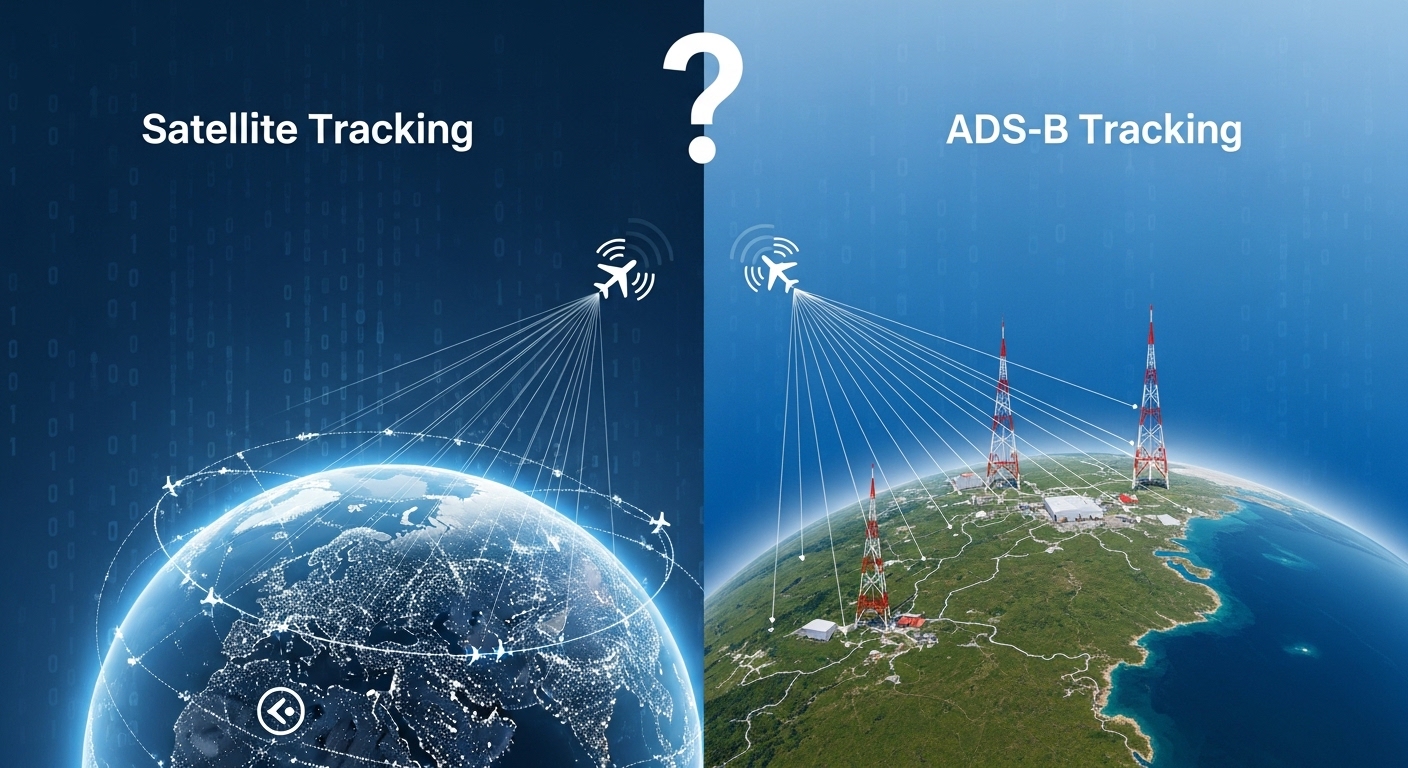
Why Squawk Codes Still Matter in the ADS-B Era
Even with modern ADS-B tracking:
- Squawk codes remain mandatory
- ATC still relies on SSR
- Emergency codes remain the fastest alert method
They act as a backup and verification system.
Common Misconceptions About Squawk Codes
❌ “Squawk codes track planes by GPS”
✔ Squawk codes identify aircraft; GPS comes from ADS-B.
❌ “Pilots choose emergency squawks casually”
✔ Emergency codes are used only when necessary.
❌ “Squawk codes are outdated”
✔ They remain essential in modern aviation.
Who Assigns Squawk Codes?
- ATC assigns codes in controlled airspace
- Pilots use standard codes in uncontrolled airspace
- Automation systems assign codes in busy regions
Codes are carefully managed to avoid duplication.
Why Spotters and Enthusiasts Track Squawk Codes
Aviation fans use squawk codes to:
- Identify emergencies
- Track special flights
- Understand ATC procedures
- Learn how airspace works
It adds deeper insight into live flight tracking.
Frequently Asked Questions (FAQs)
Q: Can passengers see the squawk code?
No, it’s managed by the cockpit and ATC.
Q: Are squawk codes reused?
Yes, once a flight ends, the code returns to the pool.
Q: Do military aircraft use squawk codes?
Yes, but many restrict public visibility.
Q: What happens if a pilot enters the wrong code?
ATC will quickly notice and correct it.
Conclusion
Squawk codes may be simple four-digit numbers, but they are a cornerstone of aviation safety and air traffic control. From identifying aircraft to signaling emergencies, these codes ensure order in some of the busiest airspace on Earth.
Even in an era of ADS-B, satellites, and AI-driven systems, squawk codes remain reliable, fast, and universally understood – making them as important today as ever.