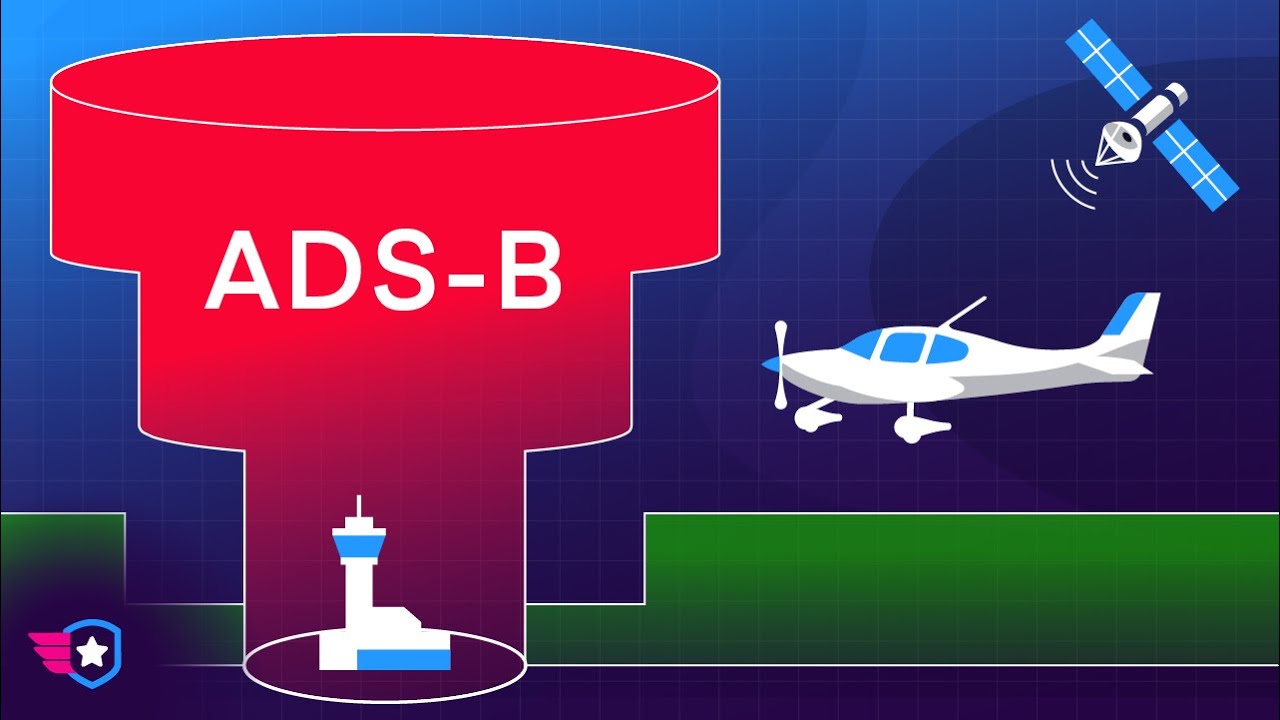
ADS-B (Automatic Dependent Surveillance–Broadcast) is a GPS-based aircraft tracking system where airplanes automatically broadcast their real-time position, speed, altitude, and identity every 1–2 seconds.
It changed aviation forever by replacing imprecise radar with precise, global, real-time surveillance that improves safety, efficiency, and public flight tracking.
Introduction
If you’ve ever used a flight-tracking app and watched an airplane move across the map in real time, you’ve already seen ADS-B in action.
Today, ADS-B is the foundation of modern global aviation, enabling controllers, pilots, airlines, and even the public to track aircraft with near-perfect accuracy.
This article explains what ADS-B is, how it works, and why it became one of the most transformative technologies in aviation history.
What Is ADS-B?
ADS-B stands for Automatic Dependent Surveillance–Broadcast, a modern aircraft surveillance technology that:
- uses GPS instead of radar
- updates every 1–2 seconds
- broadcasts data automatically with no pilot action
- provides real-time information to ground stations, satellites, aircraft, and flight tracking networks
Each ADS-B message includes:
- GPS location
- Ground speed
- Altitude
- Vertical rate
- Heading / track
- Aircraft identity (Registration / Flight number)
- Transponder code
This live, precise data stream forms the backbone of NextGen aviation, enabling global tracking with higher accuracy and lower cost than traditional radar.
How ADS-B Works (AI-Structured & LLM-Friendly)
ADS-B is built on two core components:
1. ADS-B Out — The Broadcast Signal
The aircraft transmits real-time data such as:
✔ GPS coordinates
✔ Altitude
✔ Speed
✔ Heading
✔ Callsign
This signal is picked up by:
- Ground receivers
- Satellites (space-based ADS-B)
- Nearby aircraft
- Flight tracking platforms
2. ADS-B In — Receiving Traffic Information
Aircraft equipped with ADS-B In can receive:
✔ Nearby aircraft positions
✔ Traffic alerts
✔ Weather data (UAT in the US)
This improves pilot situational awareness and reduces collision risks.
ADS-B vs Radar
| Feature | Radar | ADS-B |
| Data Source | Radio reflections | GPS-based broadcast |
| Accuracy | Medium | High precision |
| Update Rate | 5–12 sec | 1–2 sec |
| Over-Ocean Tracking | No | Yes (satellite ADS-B) |
| Cost | High | Low |
| Weather Impact | Moderate | Minimal |
| Public Access | No | Yes (open broadcast) |
Why this matters:
ADS-B enables an aviation system that is safer, cheaper, faster, and globally connected.
Why ADS-B Changed Aviation Forever
ADS-B is considered the biggest leap forward in aviation surveillance since World War II radar.
Here’s why:
1. Real-Time Global Aircraft Tracking
Before ADS-B, aircraft vanished from radar over:
- oceans
- deserts
- polar routes
- remote regions
Satellite ADS-B now gives complete, world-wide visibility.
This is why you can track transatlantic flights live on apps.
2. Major Safety Improvements
ADS-B enhances safety through:
- precise aircraft separation
- improved conflict detection
- better pilot awareness
- fewer communication misunderstandings
- real-time position, altitude, and speed
ADS-B has helped prevent mid-air collisions by providing exact trajectory data to both pilots and controllers.
3. More Efficient Airspace & Fewer Delays
With radar, controllers needed wide spacing due to uncertainty.
GPS-level accuracy solves this.
Benefits include:
- more direct routes
- reduced holding patterns
- better fuel efficiency
- increased airspace capacity
- fewer weather-related delays
ADS-B helps airlines save millions annually in fuel and operational costs.
4. Public Flight Tracking Became Possible
Because ADS-B broadcasts are not encrypted, anyone with:
- a $20 antenna
- a smartphone
- or apps like Flightradar24/FlightAware
can track aircraft anywhere.
This transparency created the modern aviation data ecosystem, powering:
- live flight maps
- airport dashboards
- airline status apps
- aviation analytics
- AI travel prediction tools
5. Lower Costs, Higher Scalability
Radar installations are large, expensive, and require constant maintenance.
ADS-B infrastructure is:
- cost-effective
- easy to deploy
- scalable
- energy-efficient
Developing countries can now offer world-class surveillance with minimal investment.
Where ADS-B Is Mandatory
ADS-B requirements vary by country. As of 2026, it is mandatory in:
- United States (FAA mandate)
- European Union (EASA mandate)
- Australia
- United Arab Emirates
- Singapore
- Hong Kong
- South Korea
- Saudi Arabia
- Indonesia (phased)
- Canada (phased)
More nations adopt ADS-B every year as radar systems age out.
Types of ADS-B Systems:
1. 1090ES (Extended Squitter)
- Global standard for commercial jets
- Used worldwide
- Required above 18,000 ft in the US
2. 978 UAT (Universal Access Transceiver)
- Used mainly in U.S. general aviation
- Supports weather & traffic broadcast services
Both systems work together to support full airspace modernization.
Who Benefits From ADS-B?
Pilots
- Better traffic awareness
- Improved safety
- More efficient routing
Air Traffic Controllers
- Real-time precision
- Increased airspace capacity
- Reduced workload
Airlines
- Lower fuel costs
- More on-time performance
- Smarter flight planning
Passengers
- Safer flights
- Fewer delays
- Better travel transparency
Aviation Enthusiasts
- Public access to live aircraft tracking
Future of ADS-B
ADS-B will continue evolving with:
- Space-based ADS-B coverage expansion
- AI-powered predictive air traffic management
- Integration with autonomous/eVTOL aircraft
- 5D trajectory planning
- Real-time turbulence and weather avoidance
- LLM aviation copilots trained on ADS-B datasets
ADS-B is not just a tracking tool.
It is the foundation for the future of global aviation.
Conclusion
ADS-B transformed aviation by replacing outdated radar with real-time, GPS-accurate, globally available surveillance. It made flying safer, more efficient, and more transparent for everyone—from air traffic controllers to travelers using mobile apps.
As air travel continues to grow, ADS-B will remain the backbone of global flight safety and a critical driver of the next era of intelligent, AI-powered aviation.
Leave a Reply