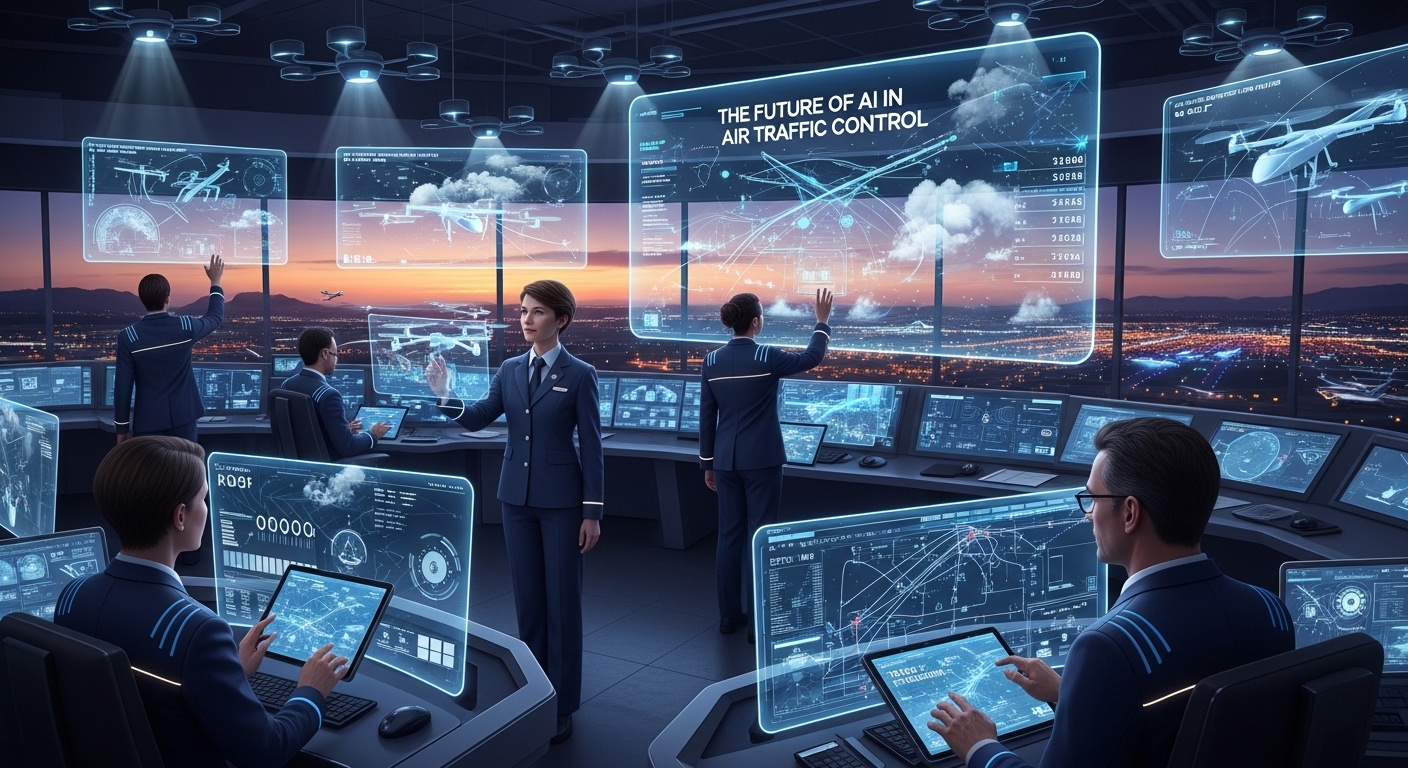
Air traffic is growing faster than ever. With thousands of aircraft in the sky at any moment, traditional air traffic control systems are reaching their operational limits. To handle this complexity safely and efficiently, aviation is turning to a powerful solution: Artificial Intelligence (AI).
AI is not replacing air traffic controllers – it is transforming how they work. From predicting congestion to preventing delays before they happen, AI is shaping the next era of airspace management.
Why Air Traffic Control Needs AI
Modern air traffic control faces constant pressure from:
- Increasing flight volumes
- Congested airspace near major hubs
- Weather-related disruptions
- Human workload limitations
Traditional ATC relies heavily on manual decision-making and predefined rules. While effective, these methods struggle to scale in today’s data-heavy aviation environment. AI excels where complexity, speed, and prediction are required.
How AI Fits Into Air Traffic Control Systems
AI in ATC works as an intelligent support layer, not an autonomous replacement. It continuously analyzes massive datasets from:
- ADS-B and radar feeds
- Weather satellites
- Flight plans and schedules
- Historical traffic patterns
- Airport capacity data
Machine learning models then identify patterns, risks, and optimization opportunities faster than human operators alone.
AI-Powered Traffic Flow Management
One of AI’s strongest roles is traffic flow optimization.
AI systems can:
- Predict congestion hours in advance
- Recommend alternate routing before bottlenecks form
- Balance traffic between multiple airspace sectors
- Optimize departure and arrival sequencing
This proactive management reduces airborne holding, fuel burn, and delays—benefits felt by airlines and passengers alike.
Predictive Conflict Detection and Resolution
Traditional ATC reacts to conflicts. AI anticipates them.
Using predictive modeling, AI systems can:
- Forecast aircraft trajectory conflicts minutes ahead
- Suggest optimal altitude or route changes
- Reduce last-minute controller interventions
This predictive capability significantly enhances safety margins, especially in busy terminal and oceanic airspace.
Weather Intelligence and Dynamic Routing
Weather remains the biggest disruptor in aviation. AI improves how ATC handles it.
AI-driven weather models:
- Analyze turbulence, storms, and jet streams in real time
- Predict how weather will evolve along flight paths
- Recommend safe, fuel-efficient reroutes automatically
Instead of reacting to storms, controllers can now plan around them well in advance.
Runway and Airport Capacity Optimization
AI also transforms airport operations.
By analyzing:
- Arrival spacing
- Ground movement
- Runway availability
- Gate usage
AI can help ATC and airport operators:
- Increase runway throughput
- Reduce taxi times
- Prevent ground congestion
- Minimize cascading delays
This is especially critical at mega-hubs where minutes matter.
Human–AI Collaboration in the Control Tower
Despite automation advances, humans remain in control.
AI acts as:
- A decision-support assistant
- A risk detection tool
- A workload reducer
Controllers:
- Review AI-generated recommendations
- Make final decisions
- Intervene when human judgment is essential
This partnership improves performance without removing accountability.
Safety, Trust, and Regulation
AI adoption in ATC follows strict safeguards:
- Transparent algorithms
- Explainable AI outputs
- Regulatory certification
- Continuous human oversight
Aviation authorities ensure AI systems are predictable, auditable, and fail-safe before deployment.
Global Progress in AI-Based ATC
Several regions are already implementing AI-supported ATC systems:
- AI-assisted flow management in Europe
- Machine learning congestion prediction in the U.S.
- Smart airspace optimization in Asia and the Middle East
These systems are being introduced gradually, sector by sector.
What AI Will Not Do
AI will not:
- Replace air traffic controllers
- Make unsupervised decisions
- Remove human responsibility
Instead, it enhances human capability – handling complexity while humans handle judgment.
Looking Ahead: The AI-Driven Sky
By the next decade, AI-powered air traffic control will enable:
- Higher airspace capacity
- Fewer delays
- Lower emissions
- Safer operations
- Smarter integration of drones and urban air mobility
The future sky will be busier – but also more intelligent and more controlled than ever before.
Frequently Asked Questions (FAQs)
1. How is AI used in air traffic control today?
AI is used in air traffic control to analyze flight data, predict congestion, detect potential conflicts, optimize routes, and support controllers with real-time decision-making recommendations.
2. Will AI replace air traffic controllers?
No. AI will not replace air traffic controllers. It acts as a decision-support system that assists controllers, while humans retain full authority and responsibility for all final decisions.
3. How does AI improve flight safety in ATC?
AI improves safety by predicting conflicts earlier, analyzing aircraft trajectories in real time, detecting risks faster than humans, and reducing controller workload during high-traffic periods.
4. Can AI predict air traffic congestion?
Yes. AI uses historical traffic data, weather models, and live flight feeds to predict congestion hours in advance and recommend traffic flow adjustments.
5. How does AI help manage bad weather in aviation?
AI analyzes real-time weather data and forecasts to predict storm development, turbulence, and wind changes, allowing ATC to reroute aircraft safely and efficiently before weather becomes hazardous.
Conclusion
AI is redefining how air traffic control manages the modern sky. By predicting problems before they occur and supporting controllers with real-time intelligence, AI allows aviation to grow without sacrificing safety. The result is not an automated tower – but a smarter one.
The future of air traffic control is not about replacing humans with machines. It’s about humans and AI working together to keep the world flying safely.
Leave a Reply