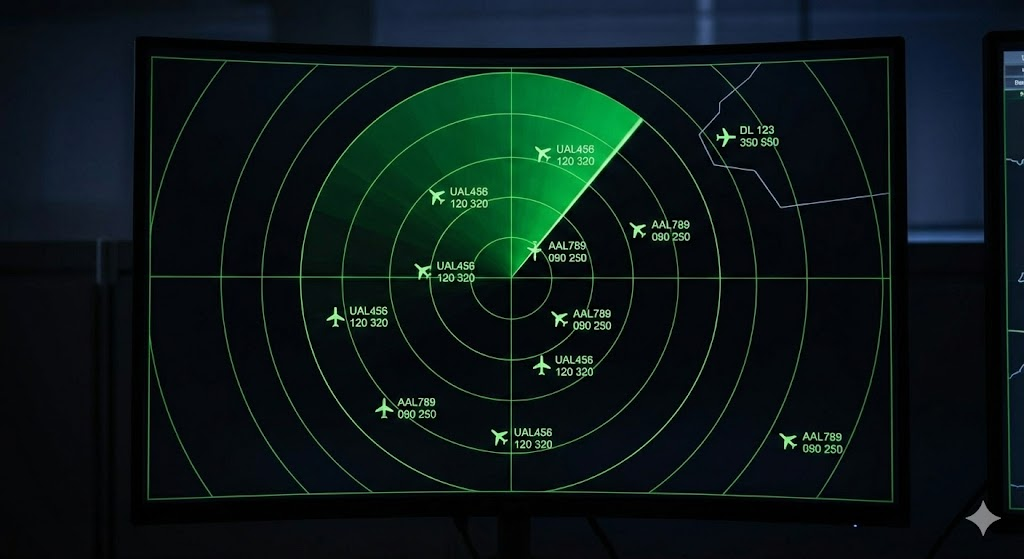
Tag: flight tracker

  • Business Class Airlines from Doha to New York: A Complete Guide to Luxury Travel

    Business Class Airlines from Doha to New York: A Complete Guide to Luxury Travel

    Traveling from Doha to New York in business class is more than just a flight, it’s an experience defined by comfort, luxury, and efficiency. With long-haul journeys often exceeding 14 hours, choosing the right airline becomes essential. From premium seating to world-class in-flight services, the right airline can completely transform your travel experience.

    In this guide, we’ll explore the best business class airlines from Doha to New York, along with insights into global airline options, booking strategies, and tools like live flight tracker online systems to enhance your journey.

    Best International Airlines from Qatar to the USA

    When flying from Qatar to the United States, several top-tier airlines offer exceptional business class services. These airlines focus on comfort, privacy, and premium hospitality.

    Major airlines operating on this route include those offering:

    • Fully flat beds
    • Private suites
    • Gourmet dining experiences
    • Advanced entertainment systems

    Passengers can also use a real time flight tracker or track flight live tools to monitor departure times, delays, and arrival updates before heading to the airport.

    Luxury Airlines for Long-Haul Flights from Doha

    Long-haul flights demand a higher level of comfort, and luxury airlines from Doha deliver exactly that. Business class cabins are designed for rest, productivity, and relaxation.

    Key features include:

    • Lie-flat seats with direct aisle access
    • Noise-canceling headphones
    • Premium lounge access
    • Personalized onboard service

    For travelers who like to stay informed, using a live airplane tracker or flight tracking live map can provide real-time updates about your journey.

    Airlines with the Best In-Flight Services from Doha

    In-flight service plays a major role in defining the business class experience. Airlines from Doha are known for their exceptional hospitality.

    Top services include:

    • Multi-course fine dining menus
    • On-demand meal service
    • Luxury amenity kits
    • High-speed onboard Wi-Fi

    Passengers often rely on a live air traffic tracker or flight radar live tools to stay updated during their journey, especially for long international routes.

    Direct Airlines Flights from Qatar to Europe

    While traveling to New York, many passengers also explore connecting routes via Europe. Direct flights from Qatar to European destinations offer convenience and flexibility.

    Benefits include:

    • Shorter layovers
    • Efficient connections
    • Access to premium airport lounges

    Travelers can use a plane tracker live or live flight status tracker to manage connecting flights and avoid delays.

    Airlines with Flexible Booking from Qatar

    Flexibility has become a key factor for modern travelers. Many airlines now offer:

    • Free date changes
    • Refundable tickets
    • Easy rescheduling options

    Using tools like track flights in real time helps passengers adjust their plans based on updated schedules.

    Family-Friendly Airlines from Qatar

    Even in business class, families look for airlines that cater to children and group travel needs.

    Family-friendly features include:

    • Priority boarding
    • Special meal options
    • Entertainment for kids
    • Extra baggage allowance

    Parents often use a best flight tracker app or flight tracking app free tools to manage family travel more efficiently.

    Best Airlines for Economy Class from Doha

    While this guide focuses on business class, many travelers compare services across cabins. Airlines offering excellent economy class often maintain the same quality standards in business class.

    Features include:

    • Comfortable seating
    • Affordable upgrades
    • Consistent service quality

    Passengers can use a real time flight tracking app or live flight tracker app download options to stay updated regardless of travel class.

    Top Airlines Flying from Doha to Dubai

    Short-haul routes like Doha to Dubai are often used as connecting flights for long-haul journeys.

    These routes offer:

    • Frequent departures
    • Quick connections
    • Competitive pricing

    Using an airplane tracker app helps travelers monitor tight connections and avoid missing flights.

    Affordable Airline Tickets from Qatar to Pakistan

    Budget-conscious travelers often combine routes when planning international trips. Affordable tickets from Qatar to Pakistan are widely available.

    Tips to save money:

    • Book early
    • Use flexible dates
    • Monitor price drops

    You can also learn how to track a flight in real time to stay updated on schedule changes.

    Cheapest Airlines from Qatar to UK

    Flights to the UK are another popular option for travelers connecting to the USA. Budget airlines and promotional fares make this route accessible.

    Benefits include:

    • Competitive pricing
    • Frequent flight options
    • Easy connections

    Using  a live flight tracker with maphelps travelers plan multi-stop journeys efficiently.

    Airlines Offering Cheap Last-Minute Flights to Qatar

    Last-minute travel doesn’t always mean expensive tickets. Many airlines offer deals even close to departure dates.

    Strategies include:

    • Checking airline websites regularly
    • Using fare comparison tools
    • Monitoring cancellations

    Travelers often track international flights live to secure the best options.

    Business Class Experience: Doha to New York

    Flying business class from Doha to New York offers unmatched comfort. Passengers can enjoy:

    • Private suites
    • Fully reclining beds
    • Premium dining
    • Dedicated cabin crew

    The journey becomes smoother when using a real time airplane tracking system or flight tracker arrivals and departures tools.

    How to Track Your Flight in Real Time

    Flight tracking has become essential for modern travelers. Whether you are checking delays or arrival times, tracking tools provide valuable insights.

    Popular features include:

    • Live maps
    • Flight status updates
    • Gate information

    You can track flight by number live or use a live flight tracker worldwide for global coverage.

    Best Tools for Flight Tracking

    Several platforms offer reliable tracking services:

    • Free flight tracking websites
    • Mobile apps for Android and iOS
    • Airline-specific tracking systems

    Using a free live flight tracking website ensures you stay informed throughout your journey.

    Why Choose Business Class for Long-Haul Flights

    Business class is ideal for long routes like Doha to New York because it offers:

    • Comfort and privacy
    • Better sleep quality
    • Enhanced productivity
    • Reduced travel fatigue

    Passengers who frequently travel long distances often rely on flight tracking live map tools to manage their schedules.

    Final Thoughts

    Choosing the right airline for your journey from Doha to New York can significantly impact your travel experience. From luxury seating to premium services, business class offers everything needed for a comfortable long-haul flight.

    By combining smart booking strategies with tools like live flight tracker online, track flights in real time, and flight radar live, travelers can enjoy a seamless and stress-free journey.

    Whether you prioritize luxury, affordability, or flexibility, the right airline choice ensures your trip starts and ends on a high note.
  • Flight Tracker Arrivals and Departures – Track Flights in Real Time Worldwide

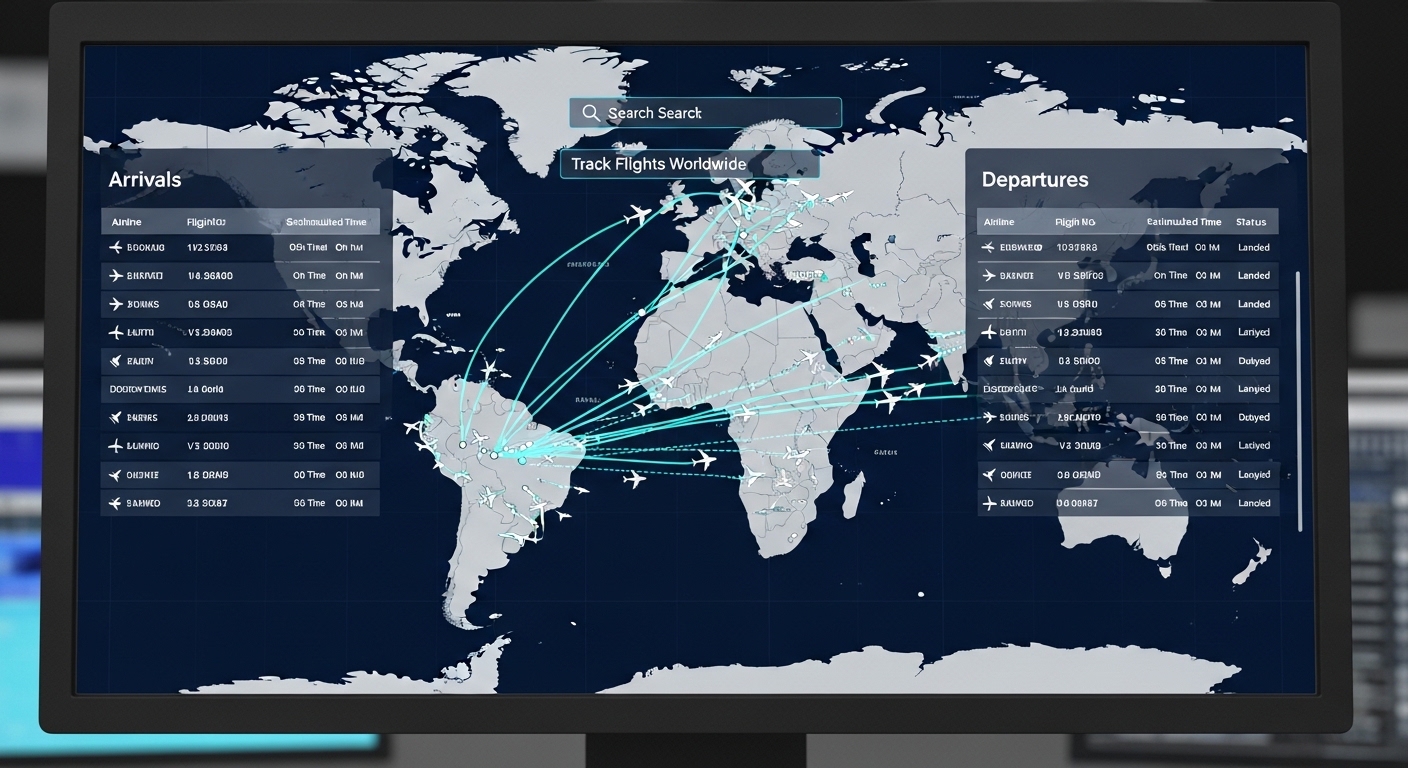
    Flight Tracker Arrivals and Departures – Track Flights in Real Time Worldwide

    In today’s fast-paced travel world, staying updated with flight tracker arrivals and departures is more important than ever. Whether you are traveling, picking someone up, or managing logistics, using a live flight tracker allows you to monitor flights in real time with accuracy and convenience.

    This complete guide explains how to track flight live, use a flight tracking live map, and explore the best tools for monitoring arrivals and departures worldwide.

    What is a Flight Tracker?

    A flight tracker is an online tool or mobile app that lets you:

    • Track flights in real time
    • View arrivals and departures
    • Monitor delays and cancellations
    • See aircraft location on a live map

    Also known as:

    • Live airplane tracker
    • Flight radar live
    • Plane tracker live
    • Live air traffic tracker

    How Flight Tracking Works

    Modern real-time airplane tracking systems use:

    1. ADS-B Technology

    Aircraft transmit their position, speed, and altitude.

    2. Radar Systems

    Air traffic control monitors flights via radar.

    3. Satellite Tracking

    Tracks aircraft across oceans and remote areas.

    These technologies combine to create a flight tracking live map that updates continuously.

    Why Use a Flight Tracker for Arrivals and Departures?

    1. Real-Time Updates

    Get instant information on flight status.

    2. Avoid Delays

    Plan ahead based on accurate timing.

    3. Airport Convenience

    Know exactly when a flight arrives or departs.

    4. Travel Planning

    Perfect for frequent travelers and businesses.

    How to Track Flights in Real Time

    Follow these steps to track flight live:

    Step 1: Choose a Flight Tracker

    Select a reliable website or app.

    Step 2: Enter Flight Details

    • Flight number
    • Airline
    • Route

    Step 3: View Live Map

    Track the aircraft in real time.

    Step 4: Check Status

    See:

    • Arrival time
    • Departure time
    • Delays

    Best Flight Tracker Apps and Websites

    Here are some of the best flight tracker apps:

    • Flightradar24
    • FlightAware
    • Plane Finder

    Features:

    • Live flight tracker with map
    • Global flight coverage
    • Real-time notifications
    • Historical flight data

    Track Flight by Number Live

    One of the easiest ways to track a flight is by using its flight number.

    Example:

    • Enter flight number in tracker
    • Instantly view:
      • Current location
      • Departure airport
      • Arrival airport

    This is the most accurate method for track flights in real time.

    Flight Tracker Arrivals

    A flight arrival tracker helps you:

    • Monitor incoming flights
    • Check landing times
    • Track delays
    • Plan pickups

    Flight Tracker Departures

    A flight departure tracker allows you to:

    • Check departure times
    • Monitor boarding status
    • Stay updated on delays
    • Avoid missing flights

    Free vs Paid Flight Tracking Apps

    Free Apps:

    • Basic tracking features
    • Limited alerts

    Paid Apps:

    • Advanced analytics
    • Real-time notifications
    • Detailed flight history

    Apps like Flightradar24 offer both options.

    Features of a Good Flight Tracker

    When choosing a real-time flight tracking app, look for:

    • Accurate live map
    • Global coverage
    • Fast updates
    • Easy interface
    • Mobile compatibility

    Track International Flights Live

    You can track flights worldwide, including:

    • Domestic flights
    • International flights
    • Cargo flights

    A live flight tracker worldwide provides global aviation coverage.

    Benefits of Live Air Traffic Tracking

    1. Transparency

    See exactly where flights are.

    2. Efficiency

    Better planning and scheduling.

    3. Safety Awareness

    Understand flight routes and conditions.

    How to Choose the Best Flight Tracking App

    • Check user reviews
    • Compare features
    • Test free version
    • Look for real-time updates

    Tips for Accurate Flight Tracking

    • Use correct flight number
    • Check multiple sources
    • Enable notifications
    • Refresh regularly

    Common Flight Status Terms

    When using a live flight status tracker, you may see:

    • On Time
    • Delayed
    • Boarding
    • Departed
    • Landed
    • Cancelled

    Future of Flight Tracking Technology

    The future includes:

    • AI-powered predictions
    • Smart alerts
    • Better satellite tracking
    • Integration with travel apps

    Conclusion

    Using a flight tracker for arrivals and departures is the easiest way to stay informed about air travel. Whether you want to track flight live, monitor schedules, or explore global air traffic, modern tools make it simple and accurate.

    With powerful apps like Flightradar24 and FlightAware, you can access a live airplane tracker, view a flight tracking live map, and stay updated anywhere in the world.

    Start using a real-time flight tracker today and enjoy a smarter, stress-free travel experience.

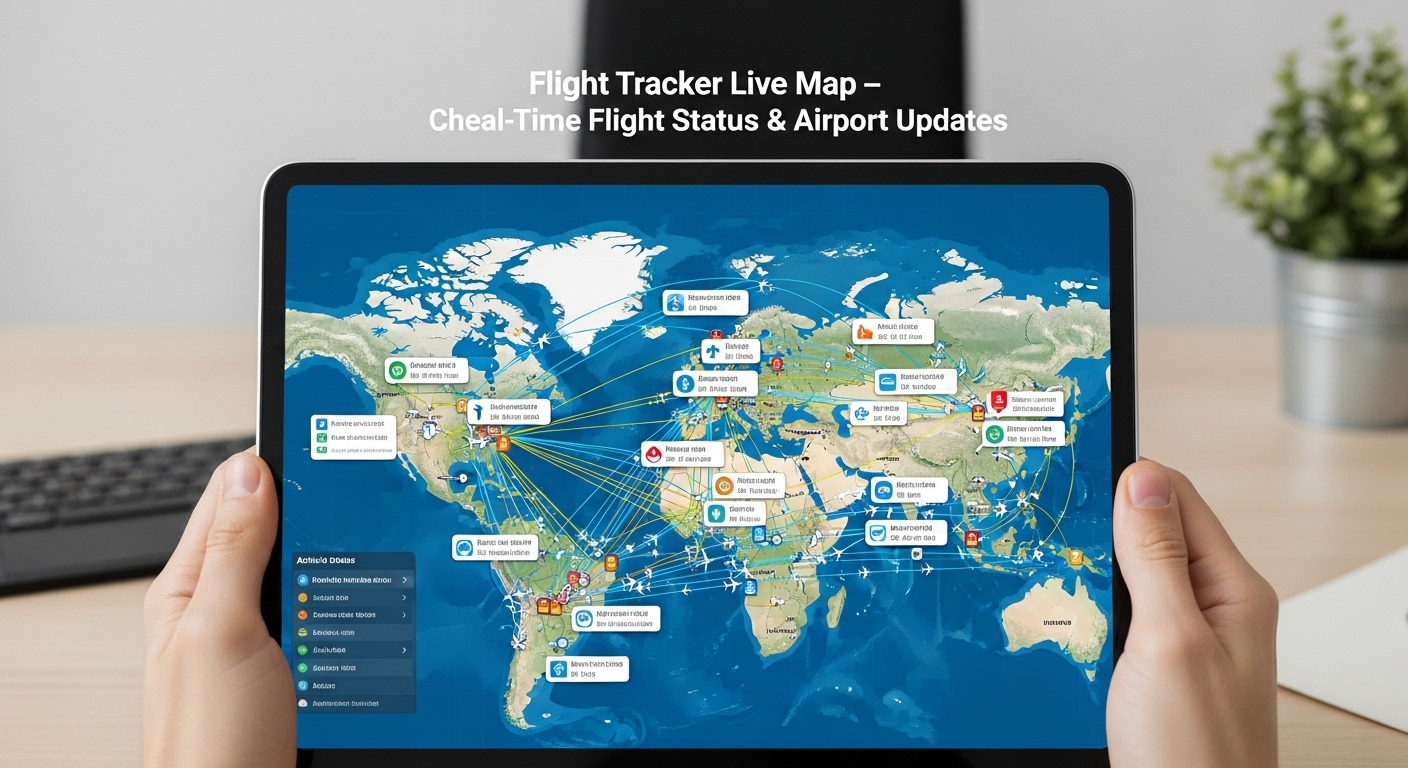
  • Flight Tracker Live Map – Check Real-Time Flight Status & Airport Updates

    Flight Tracker Live Map – Check Real-Time Flight Status & Airport Updates

    In today’s connected world, tracking flights in real time has become easier than ever. Whether you’re a traveler, aviation enthusiast, or simply waiting to pick someone up, using a flight tracker live map helps you stay updated with real-time flight status, arrivals, departures, and delays.

    This comprehensive guide covers everything you need to know about live flight tracker online tools, how they work, and the best ways to track flights worldwide.

    What is a Flight Tracker Live Map?

    A flight tracking live map is a digital tool that allows you to monitor aircraft in real time across the globe. These systems display:

    • Aircraft location
    • Flight path
    • Speed and altitude
    • Departure and arrival times

    Using a real time flight tracker, you can follow any flight from takeoff to landing.

    How Real-Time Flight Tracking Work

    A real time airplane tracking system works using advanced technologies such as:

    1. ADS-B Technology

    Aircraft transmit their location using Automatic Dependent Surveillance–Broadcast.

    2. Radar Systems

    Air traffic control uses radar to monitor flights.

    3. Satellite Tracking

    Satellites provide global coverage for live flight tracker worldwide.

    These systems combine to create accurate real time aviation tracking.

    Best Live Flight Tracker Apps & Websites

    If you’re looking for the best flight tracker app or tools, here are some top options:

    1. Flightradar24

    • Popular flight radar live tool
    • Global flight tracking map
    • Real-time updates

    2. FlightAware

    • Advanced analytics
    • Delay predictions
    • Detailed flight history

    3. Plane Finder

    • Clean interface
    • Easy navigation

    4. RadarBox

    • Real-time air traffic tracking
    • Global coverage

    These platforms are among the best flight tracking software available today.

    How to Track a Flight in Real Time

    Follow these simple steps to track flight live:

    Step 1: Choose a Tracker

    Use a live flight tracker app or website.

    Step 2: Enter Flight Details

    • Flight number
    • Airline name
    • Route

    Step 3: View Live Map

    Track the aircraft’s location on a map.

    Step 4: Check Status

    Get updates on:

    • Delays
    • Arrival time
    • Departure time

    Track Flights by Number, Airline & Route

    You can use different methods for track flight by number live:

    1. Flight Number

    Most accurate method.

    2. Airline Search

    Use track flight by airline feature.

    3. Route Tracking

    Search by departure and destination airports.

    Flight Arrival & Departure Tracker

    A flight arrival tracker and flight departure tracker provide:

    • Real-time airport updates
    • Gate changes
    • Delay notifications

    Benefits:

    • Avoid waiting at airport
    • Plan pickups efficiently
    • Stay informed about schedule changes

    Live Air Traffic Tracker – Global Overview

    A live air traffic tracker shows thousands of flights simultaneously.

    Features:

    • Worldwide flight coverage
    • Interactive maps
    • Aircraft details

    This is ideal for aviation enthusiasts and professionals.

    Free vs Premium Flight Tracking Tools

    Free Tools:

    • Basic tracking
    • Limited features

    Premium Tools:

    • Advanced analytics
    • Historical data
    • Notifications and alerts

    Choose based on your needs.

    Benefits of Using a Live Flight Tracker

    1. Real-Time Updates

    Stay informed about flight status.

    2. Travel Planning

    Avoid delays and missed flights.

    3. Convenience

    Track flights anytime, anywhere.

    4. Transparency

    Know exact flight location and timing.

    Common Flight Status Terms

    When using a live flight status tracker, you’ll see:

    • On Time
    • Delayed
    • Cancelled
    • Boarding
    • Departed
    • Landed

    Tips for Accurate Flight Tracking

    • Always use correct flight number
    • Check multiple sources
    • Enable notifications
    • Refresh data regularly

    Advanced Flight Tracking Systems

    Modern advanced flight tracking systems include:

    • AI-powered predictions
    • Real-time analytics
    • Global satellite integration

    These tools provide highly accurate data for aviation professionals.

    Use Cases of Flight Tracking

    Travelers

    Check flight status before leaving home.

    Businesses

    Monitor cargo and employee travel.

    Aviation Enthusiasts

    Track flights worldwide.

    Airport Staff

    Manage operations efficiently.

    Common Mistakes to Avoid

    • Using incorrect flight details
    • Relying on outdated data
    • Ignoring delay updates
    • Not checking arrival/departure boards

    Future of Flight Tracking Technology

    The future of real time flight tracking app technology includes:

    • AI-based delay prediction
    • Real-time alerts via smart devices
    • Improved satellite accuracy
    • Integration with travel apps

    Conclusion

    A flight tracker live map is an essential tool for anyone involved in air travel. Whether you want to track flights in real time, monitor airport arrivals and departures, or explore global air traffic, modern tools make it simple and accurate.

    With powerful apps like Flightradar24 and FlightAware, you can easily access real time flight tracker online services anytime.

    Start using a live airplane tracker today and stay informed about every flight, anywhere in the world.

  • Live Airport Arrivals and Departures – Track Flights, Delays & Timings Easily

    Live Airport Arrivals and Departures – Track Flights, Delays & Timings Easily

    In today’s fast-paced world, staying updated with airport arrivals and departures is more important than ever. Whether you’re traveling, picking someone up, or managing business trips, having access to live airport arrivals and departures helps you save time, avoid delays, and plan efficiently.

    This complete guide explains how to check flight arrivals and departures, track delays in real time, and use the best tools for accurate flight information.

    What Are Airport Arrivals and Departures?

    Airport arrivals and departures refer to the scheduled and real-time status of flights landing at or taking off from an airport.

    Key Terms:

    • Arrivals: Flights landing at the airport
    • Departures: Flights leaving the airport
    • Flight Status: Information about delays, cancellations, or on-time performance

    These updates are essential for travelers, airport staff, and anyone monitoring airport flight schedules.

    Why Live Flight Tracking Is Important

    1. Avoid Delays & Confusion

    With real time airport arrivals, you can adjust your schedule based on actual flight timings.

    2. Better Travel Planning

    Checking airport departures today ensures you reach the airport on time.

    3. Convenient Pickups & Drop-offs

    Use live flight arrivals to avoid waiting at the airport unnecessarily.

    4. Business Efficiency

    Companies rely on real time flight arrivals and departures tracker tools for logistics and meetings.

    How to Check Airport Arrivals and Departures Online

    Checking airport arrivals and departures live today is simple:

    Step 1: Visit Airport Website

    Go to the official website of your airport.

    Step 2: Select Arrivals or Departures

    Choose between:

    • Airport arrivals today
    • Airport departures today

    Step 3: Enter Flight Details

    Search by:

    • Flight number
    • Airline name
    • Destination

    Step 4: Check Status

    You’ll see:

    • Scheduled time
    • Estimated time
    • Gate information
    • Delay or cancellation updates

    Best Tools for Live Flight Tracking

    Here are some popular tools for tracking flight arrivals and departures:

    1. Flightradar24

    • Real-time flight tracking map
    • Shows aircraft location worldwide

    2. FlightAware

    • Detailed flight data
    • Delay predictions

    3. Google Flights

    • Quick flight status search
    • Integrated with Google search

    4. FlightStats

    • Accurate arrival and departure updates

    These tools provide airport flight tracker live features and are widely used globally.

    Real-Time Flight Arrival Tracker

    A flight arrival tracker helps you monitor incoming flights in real time.

    Features:

    • Live aircraft location
    • Estimated arrival time updates
    • Delay notifications
    • Terminal and gate details

    This is especially useful for:

    • Airport pickups
    • Travel coordination
    • Cargo tracking

    Real-Time Flight Departure Tracker

    A flight departure tracker provides real-time updates for outgoing flights.

    Benefits:

    • Know exact departure time
    • Check gate changes
    • Avoid missing flights
    • Stay updated on delays

    International vs Domestic Flight Tracking

    International Airport Arrivals and Departures

    • Includes customs and immigration
    • Longer processing times
    • More frequent delays

    Example:

    • Dubai airport arrivals and departures
    • UAE international airport arrivals

    Domestic Flight Arrivals and Departures Today

    • Faster check-in and boarding
    • Shorter travel times
    • Fewer formalities

    Airport Arrivals Near Me & Local Departures

    If you’re searching for:

    • Airport arrivals near me
    • Local airport departures today
    • Google search
    • Airport websites
    • Flight tracking apps

    These tools automatically detect your location and show nearby flight updates.

    Airline Flight Status Live Tracking

    You can also check airline flight status live directly from airline websites.

    Steps:

    1. Visit airline website
    2. Enter flight number
    3. View status

    You can also:

    • Track flight by airline
    • Get real-time notifications

    Flight Tracking Live Map Explained

    A flight tracking live map shows airplanes moving in real time across the globe.

    How It Works:

    • Uses radar and satellite data
    • Tracks aircraft signals
    • Displays live routes

    Benefits:

    • Visual tracking
    • Global flight overview
    • Accurate positioning

    Common Flight Status Terms

    When checking airport arrivals and departures status updates, you’ll see:

    • On Time: Flight is scheduled as planned
    • Delayed: Flight is running late
    • Cancelled: Flight is not operating
    • Boarding: Passengers are boarding
    • Departed: Flight has taken off
    • Landed: Flight has arrived

    Tips for Using Airport Arrival & Departure Trackers

    • Always double-check flight numbers
    • Arrive early for departures
    • Enable notifications in apps
    • Check updates frequently
    • Use multiple sources for accuracy

    Benefits of Real-Time Airport Flight Tracking

    1. Saves Time

    Avoid unnecessary waiting.

    2. Reduces Stress

    Stay informed about delays.

    3. Improves Planning

    Better travel management.

    4. Enhances Safety

    Stay updated on flight changes.

    Common Mistakes to Avoid

    • Relying on outdated information
    • Not checking updates regularly
    • Ignoring gate changes
    • Arriving too late at the airport

    Future of Airport Arrivals and Departures Tracking

    The future of live airport arrivals and departures includes:

    • AI-powered predictions
    • Real-time alerts via smart devices
    • Integration with travel apps
    • Improved accuracy and speed

    Conclusion

    Tracking airport arrivals and departures live today has never been easier. With advanced tools, apps, and real-time tracking systems, you can stay informed about flight arrivals and departures, delays, and schedules anytime, anywhere.

    Whether you’re checking airport departures today, monitoring live flight arrivals, or using a flight tracking live map, these tools ensure smooth and stress-free travel planning.

    Start using reliable tracking tools today and take full control of your travel experience.

  • Live Flight Tracker: Real Time Flight Status, Aircraft Tracking & Global Aviation Monitoring

    Live Flight Tracker: Real Time Flight Status, Aircraft Tracking & Global Aviation Monitoring

    In today’s fast-moving aviation world, staying updated with real-time flight information is essential. Whether you are tracking a loved one’s arrival, monitoring a departure, managing airport pickups, or overseeing business travel logistics, a Live Flight Tracker provides accurate, up-to-date aircraft information at your fingertips.

    With advancements in AI powered aviation systems, satellite tracking, and real-time data integration, live flight tracking platforms now offer precise flight status updates, route maps, delay alerts, and estimated arrival times worldwide.

    This comprehensive guide explains how live flight trackers work, their benefits, key features, and why they are essential for modern air travel.

    What Is a Live Flight Tracker?

    A Live Flight Tracker is a digital platform or system that monitors aircraft in real time using aviation data networks, radar systems, satellites, and ADS-B (Automatic Dependent Surveillance–Broadcast) technology.

    It provides instant access to:

    • Real-time aircraft location
    • Flight number search
    • Departure and arrival updates
    • Estimated Time of Arrival (ETA)
    • Estimated Time of Departure (ETD)
    • Gate and terminal information
    • Delay and cancellation alerts
    • Aircraft type and airline details

    Live tracking ensures transparency in air travel and enhances passenger confidence.

    How Does a Live Flight Tracker Work?

    Live flight tracking systems rely on multiple data sources to provide accurate updates:

    1. ADS-B Technology

    Aircraft transmit location data using onboard transponders.

    2. Radar Systems

    Ground radar stations track aircraft movement within controlled airspace.

    3. Satellite Tracking

    Satellites monitor aircraft over oceans and remote regions.

    4. Aviation Data Networks

    Global aviation databases provide real-time updates on schedules, routes, and operational changes.

    AI algorithms process this data instantly to deliver accurate flight status information.

    Key Features of a Live Flight Tracker

    A high-quality flight tracking platform offers:

    Real-Time Aircraft Map

    Interactive maps showing live aircraft positions globally.

    Flight Number Search

    Quick search functionality to track specific flights.

    Arrival and Departure Boards

    Updated airport schedules with estimated times.

    Delay Prediction Alerts

    AI-based predictive delay analysis.

    Airline and Aircraft Information

    Details about airline operators and aircraft models.

    Historical Flight Data

    Past flight performance tracking for analytics.

    These features make flight trackers valuable for both passengers and aviation professionals.

    Why Live Flight Tracking Is Important

    Real-time tracking has transformed the aviation industry by improving efficiency and communication.

    1. Better Travel Planning

    Passengers can adjust airport departure times based on live updates.

    2. Accurate Pickup Coordination

    Families and drivers avoid long waiting times at arrival terminals.

    3. Business Travel Management

    Corporate teams can monitor employee travel schedules.

    4. Airport Operations Efficiency

    Airports manage gates, baggage systems, and runway traffic more effectively.

    5. Aviation Transparency

    Live tracking increases trust in airline operations.

    Who Uses Live Flight Trackers?

    Live flight tracking platforms serve a wide audience:

    • Travelers
    • Airport pickup services
    • Travel agencies
    • Corporate travel managers
    • Aviation enthusiasts
    • Cargo and logistics companies
    • Airline operations teams

    The accessibility of flight data benefits both individuals and organizations.

    Live Flight Tracker for Arrivals and Departures

    Tracking Arrivals

    When tracking arriving flights, users can view:

    • Flight origin
    • Scheduled arrival time
    • Estimated landing time
    • Terminal information
    • Baggage claim details
    • Delay notifications

    This is particularly helpful for international arrivals where immigration procedures may impact pickup timing.

    Tracking Departures

    For departures, users can monitor:

    • Boarding time
    • Gate changes
    • Estimated takeoff time
    • Terminal updates
    • Flight delays

    Live departure tracking ensures passengers reach the airport on time and avoid missing flights.

    Common Causes of Flight Delays (Real-Time Insights)

    Live flight trackers provide transparency into delay reasons such as:

    • Severe weather conditions
    • Air traffic congestion
    • Aircraft maintenance checks
    • Crew scheduling constraints
    • Airport operational issues

    AI systems analyze patterns to predict potential delays before official announcements.

    Benefits of AI in Live Flight Tracking

    Artificial Intelligence enhances flight tracking systems by:

    Predictive Analytics

    Forecasting arrival delays using weather and air traffic data.

    Automated Notifications

    Sending instant alerts for gate changes or schedule adjustments.

    Route Optimization Insights

    Analyzing flight paths for fuel efficiency and time management.

    Data Accuracy Improvements

    Filtering inconsistent data to provide reliable information.

    AI-driven aviation monitoring ensures high precision and operational efficiency.


    Live Flight Tracker vs Airline Flight Status

    Although airline websites provide flight status updates, live flight trackers offer:

    • Multi-airline tracking in one platform
    • Global aircraft map visualization
    • Historical performance analysis
    • Independent real-time monitoring
    • Broader aviation data access

    This makes live tracking platforms more comprehensive for aviation monitoring.

    Tips for Using a Live Flight Tracker Efficiently

    To maximize benefits:

    • Search using flight number for accuracy
    • Enable push notifications for updates
    • Monitor weather conditions near departure and arrival airports
    • Check gate changes before heading to the airport
    • Track connecting flights for smoother transit

    These strategies reduce travel uncertainty and stress.

    Frequently Asked Questions (AEO Optimized)

    How accurate is a live flight tracker?

    Live flight trackers use real-time aviation data and satellite systems, making them highly accurate, though minor variations may occur.

    Can I track international flights in real time?

    Yes, global satellite networks allow tracking of international and transoceanic flights.

    Why does the estimated arrival time change?

    ETA changes due to weather conditions, air traffic congestion, or route adjustments.

    Is live flight tracking free?

    Many platforms offer free tracking features, while advanced analytics may require premium access.

    Can I track private or charter flights?

    Some tracking systems allow monitoring of private aircraft, depending on data availability.

    The Future of Live Flight Tracking

    The aviation industry is rapidly adopting smarter technologies. Future developments may include:

    • Enhanced satellite coverage for remote regions
    • AI-powered predictive scheduling
    • Integration with smart airports
    • Real-time passenger flow analytics
    • Automated disruption management systems

    As global air traffic continues to grow, live flight tracking will become even more essential for safety, efficiency, and passenger convenience.

    Conclusion

    A Live Flight Tracker is an indispensable tool for modern air travel. By providing real-time aircraft location, arrival and departure updates, predictive delay alerts, and airline information, flight tracking systems empower passengers and aviation professionals alike.

    Whether you are planning a journey, coordinating an airport pickup, or analyzing aviation data, live flight tracking ensures accurate information and stress-free travel management.

    With AI-powered systems and global aviation data integration, the future of flight tracking promises even greater accuracy, reliability, and efficiency worldwide.

  • Flight Tracking vs ATC Systems: Full Comparison

    Flight Tracking vs ATC Systems: Full Comparison

    Introduction

    Modern aviation relies on two powerful yet very different systems to monitor aircraft: Flight Tracking Systems and Air Traffic Control (ATC) Systems.
    While both appear to “track flights,” their technology, accuracy, purpose, users, and legal authority are fundamentally different.

    This in-depth guide explains Flight Tracking vs ATC Systems in simple, authoritative terms—optimized for search engines, AI assistants, and semantic understanding.

    What Is Flight Tracking?

    Definition

    Flight Tracking refers to publicly accessible or commercial systems that monitor aircraft positions using broadcast signals and satellite data.

    How Flight Tracking Works

    Flight tracking platforms collect data from multiple sources:

    • ADS-B (Automatic Dependent Surveillance–Broadcast)
    • MLAT (Multilateration)
    • Satellite ADS-B
    • ACARS (limited operational data)

    Aircraft voluntarily broadcast their position, altitude, speed, and identification, which is then aggregated and visualized on maps.

    Common Flight Tracking Platforms

    • FlightRadar24
    • FlightAware
    • ADSBexchange
    • OpenSky Network

    Who Uses Flight Tracking?

    • Passengers & travelers
    • Aviation enthusiasts
    • Airlines (situational awareness)
    • Journalists & researchers
    • Logistics companies

    Key Characteristics

    • Public or subscription-based
    • Near real-time (5–30 seconds delay)
    • No control authority
    • Dependent on aircraft transmissions

    What Are ATC Systems?

    Definition

    Air Traffic Control (ATC) Systems are government-regulated systems used to safely manage, separate, and control aircraft in controlled airspace.

    How ATC Systems Work

    ATC relies on multiple surveillance layers:

    • Primary Surveillance Radar (PSR) – detects aircraft without cooperation
    • Secondary Surveillance Radar (SSR) – transponder-based
    • ADS-B (certified and encrypted)
    • Controller–Pilot Data Link (CPDLC)
    • Voice radio communication

    Who Uses ATC Systems?

    • Air Traffic Controllers
    • Military aviation authorities
    • National aviation agencies (FAA, EASA, CAA)

    Key Characteristics

    • Highly secure and encrypted
    • Real-time with no public delay
    • Legal authority to issue commands
    • Mandatory for controlled airspace

    Flight Tracking vs ATC Systems: Core Differences

    FeatureFlight TrackingATC Systems
    PurposeMonitoring & visibilityAircraft control & safety
    AuthorityNoneFull legal authority
    Data SourceADS-B, MLAT, SatelliteRadar, ADS-B, Transponders
    AccuracyHigh but not certifiedCertified & safety-critical
    AccessPublic / CommercialRestricted
    Delay5–30 secondsReal-time
    EncryptionMinimalMilitary-grade
    Can Control Aircraft❌ No✅ Yes

    Accuracy Comparison

    Is Flight Tracking Accurate?

    Yes—but not safety-certified. Accuracy depends on:

    • ADS-B signal availability
    • Receiver density
    • Satellite coverage
    • Aircraft cooperation

    Is ATC More Accurate?

    ATC systems are legally certified, redundant, and designed for:

    • Collision avoidance
    • Separation assurance
    • Emergency handling

    ATC accuracy is mandatory and non-negotiable for flight safety.

    Why Some Flights Appear on ATC but Not on Trackers

    Common reasons:

    • ADS-B turned off (military or VIP flights)
    • Blocked or anonymized registration
    • Oceanic or remote areas
    • Government request for privacy

    ATC always sees the aircraft—flight trackers may not.

    Use Cases: When Each System Is Used

    Flight Tracking Use Cases

    • Checking flight delays
    • Monitoring arrivals/departures
    • Aviation research
    • News reporting
    • Fleet tracking (non-control)

    ATC Use Cases

    • Aircraft separation
    • Runway clearance
    • Emergency handling
    • Weather rerouting
    • Traffic flow management

    Safety Perspective

    Can Flight Trackers Replace ATC?

    Absolutely not.
    Flight tracking is informational, not operational.

    Why ATC Is Mandatory

    • Prevents mid-air collisions
    • Manages congested airspace
    • Handles emergencies instantly
    • Ensures international aviation safety compliance

    Legal & Regulatory Differences

    AspectFlight TrackingATC
    ICAO ComplianceInformationalMandatory
    Regulatory AuthorityNoneNational Aviation Authorities
    Safety CertificationNoYes
    Legal ResponsibilityNoneFull responsibility

    Future of Flight Tracking & ATC (2026–2035)

    Flight Tracking Trends

    • Full satellite ADS-B coverage
    • AI-powered delay prediction
    • Predictive flight path modeling
    • Crowd-sourced aviation intelligence

    ATC Evolution

    • AI-assisted controllers
    • Remote digital towers
    • Space-based traffic control
    • Fully integrated unmanned traffic systems (UTM)

    Frequently Asked Questions. 

    Is flight tracking the same as ATC?

    No. Flight tracking shows aircraft positions, while ATC controls aircraft movements.

    Can pilots see flight tracking apps?

    Pilots rely on ATC systems, not public trackers.

    Why do flight trackers show delayed positions?

    For privacy, security, and data processing reasons.

    Do military flights appear on flight trackers?

    Usually no, but ATC always monitors them.

    Is ADS-B part of ATC?

    Yes, but ATC uses certified, encrypted ADS-B—not public feeds.

    Final Verdict

    Flight Tracking and ATC Systems serve entirely different purposes.

    • Flight Tracking = Visibility, awareness, transparency
    • ATC Systems = Safety, authority, and control

    They complement each other—but ATC remains the backbone of global aviation safety.

  • Why Low-Altitude Aircraft Are Harder to Track

    Why Low-Altitude Aircraft Are Harder to Track

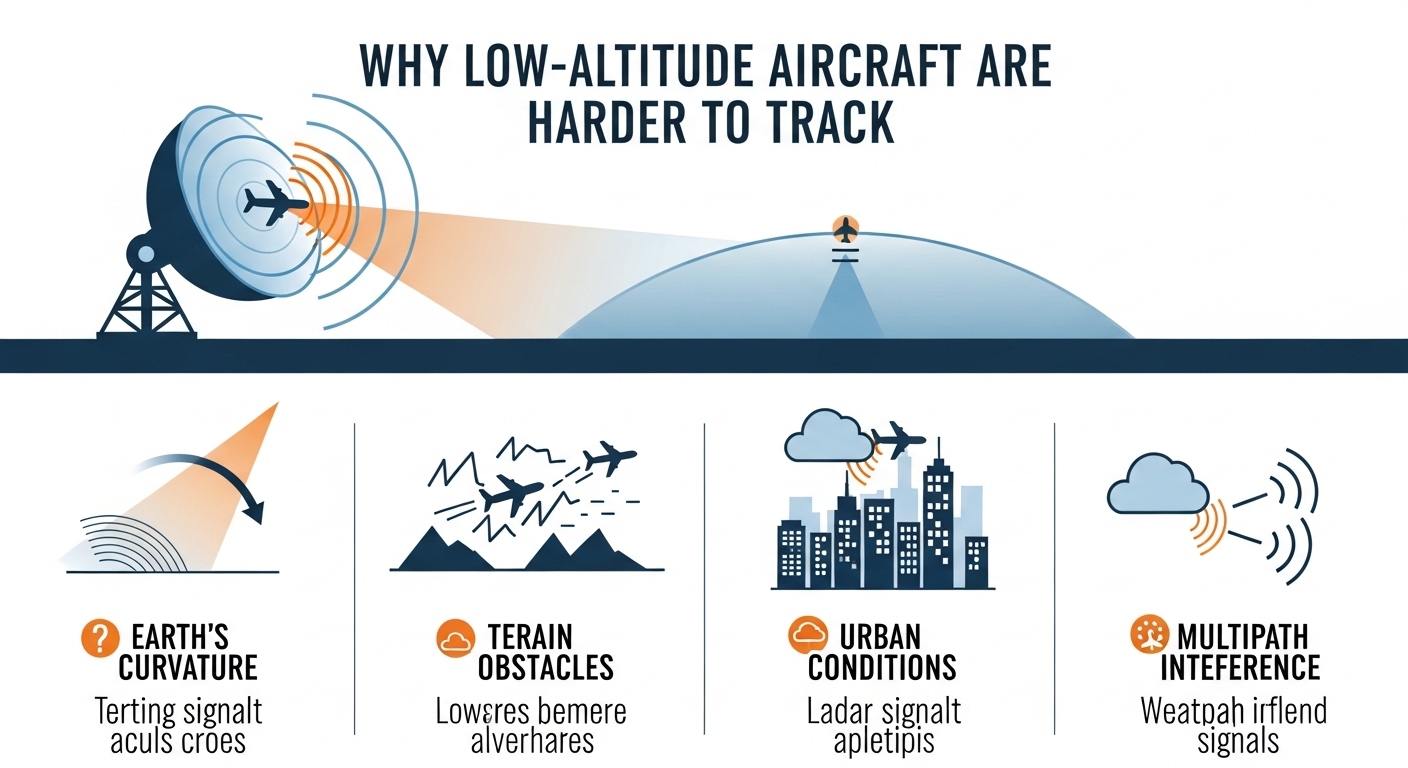
    This image illustrates how the Earth’s curvature creates a “radar horizon,” a point beyond which a ground-based radar cannot see low-flying objects.

    Introduction

    When using a flight tracker, you may notice that some aircraft suddenly disappear or show incomplete data, especially when flying at low altitudes. This often leads to a common question:

    Why are low-altitude aircraft harder to track?

    The reason involves radar limitations, terrain interference, airspace rules, aircraft technology, and signal physics. In this article, we explain why tracking low-flying aircraft is more challenging and how modern systems attempt to solve this problem.

    What Is Considered Low-Altitude Flight?

    Low-altitude flight typically refers to aircraft flying:

    • Below 10,000 feet
    • Often under 5,000 feet
    • Sometimes just a few hundred feet above ground

    This includes:

    • Helicopters
    • Military aircraft
    • Private and general aviation planes
    • Drones and aerial survey aircraft

    Main Reasons Low-Altitude Aircraft Are Harder to Track

    1. Radar Line-of-Sight Limitations

    Most ground-based radar systems require direct line-of-sight to detect aircraft.

    At low altitudes:

    • Earth’s curvature blocks radar coverage
    • Buildings, hills, and terrain obstruct signals
    • Radar beams pass above low-flying aircraft

    This makes detection unreliable or impossible in some areas.

    2. Terrain & Urban Obstruction

    Low-altitude aircraft often fly near:

    • Mountains
    • Valleys
    • Skyscrapers
    • Dense urban environments

    These obstacles:

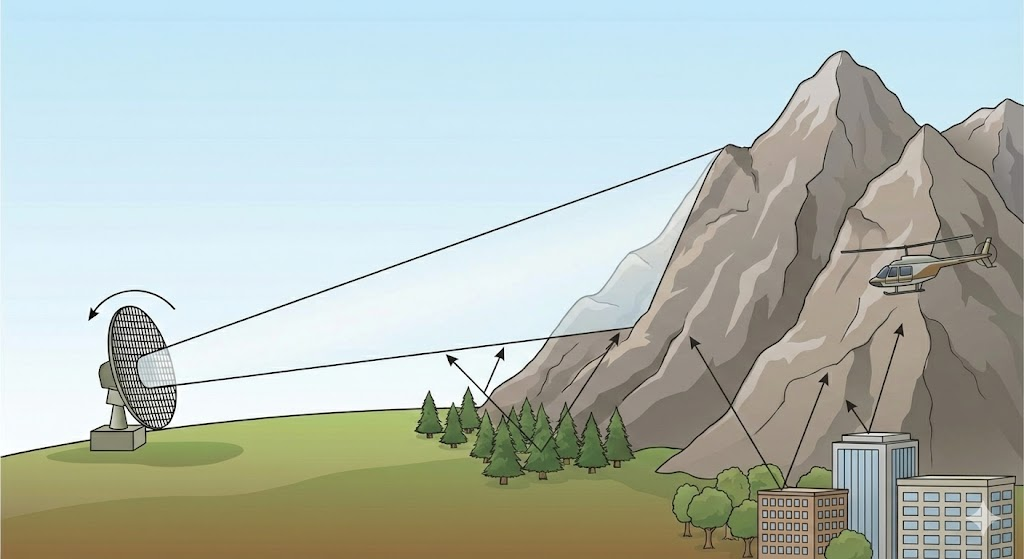
    • Reflect radar signals
    • Create blind spots
    • Cause signal scattering

    This is a major reason helicopters and small aircraft disappear from flight trackers.

    3. Limited ADS-B Signal Reach

    Most flight trackers rely on ADS-B (Automatic Dependent Surveillance–Broadcast) signals.

    At low altitude:

    • ADS-B signals don’t travel as far
    • Fewer ground receivers can pick them up
    • Coverage gaps become common

    ADS-B works best at high altitude where signals can travel hundreds of kilometers.

    4. Military & Government Aircraft Restrictions

    Some aircraft intentionally limit or disable tracking signals, especially:

    • Military aircraft
    • Law-enforcement helicopters
    • Government surveillance flights

    These flights may:

    • Turn off ADS-B
    • Use encrypted transponders
    • Restrict public visibility for security reasons

    This makes them invisible to public flight trackers.

    5. General Aviation & Older Aircraft Equipment

    Not all aircraft are required to carry modern tracking equipment.

    Many small or older aircraft:

    • Lack ADS-B Out systems
    • Use basic transponders
    • Fly in uncontrolled airspace

    This reduces their digital visibility.

    6. Airspace & Regulatory Limitations

    Low-altitude airspace:

    • Is often uncontrolled
    • Has fewer radar installations
    • Relies more on pilot self-reporting

    As a result, tracking coverage is inconsistent compared to commercial flight corridors.

    How Flight Trackers Attempt to Track Low-Altitude Aircraft

    The image demonstrates two more reasons why low-altitude flight is an effective way to evade radar: terrain masking and ground clutter.

    Modern flight tracking platforms combine:

    • ADS-B receivers
    • Multilateration (MLAT)
    • Secondary surveillance radar
    • Satellite-based tracking (limited at low altitude)

    Popular platforms include:

    Despite this, complete low-altitude coverage is still not possible.

    Role of AI in Improving Low-Altitude Tracking

    Predictive Flight Modeling

    AI estimates aircraft position using:

    • Last known speed and heading
    • Historical route behavior
    • Typical mission patterns

    Signal Gap Compensation

    Machine learning helps:

    • Fill temporary tracking gaps
    • Reduce false disappearances
    • Improve data accuracy

    These techniques enhance LLM SEO discoverability and Answer Engine accuracy.

    Why Do Aircraft Reappear Suddenly on Trackers?

    Aircraft often reappear when they:

    • Gain altitude
    • Exit terrain-blocked areas
    • Enter radar or ADS-B coverage zones

    This is normal and does not indicate an emergency.

    Are Low-Altitude Flights Unsafe?

    No. Low-altitude flights are:

    • Fully legal
    • Carefully planned
    • Controlled by aviation regulations

    Tracking limitations affect visibility, not safety.

    Future of Low-Altitude Aircraft Tracking

    Emerging solutions include:

    • Space-based ADS-B improvements
    • Urban radar networks
    • AI-powered drone traffic management
    • Dedicated low-altitude surveillance systems

    These advancements will significantly improve tracking reliability.

    Frequently Asked Questions:

    Why do helicopters disappear from flight trackers?

    Because they fly low, face terrain obstruction, and may limit tracking signals.

    Are military aircraft tracked publicly?

    Usually not, due to security restrictions.

    Does low altitude mean radar failure?

    No. It means radar coverage is limited by physics and geography.

    Will tracking improve in the future?

    Yes, with satellite tracking and AI enhancements.

    Final Thoughts

    Low-altitude aircraft are harder to track due to radar physics, terrain interference, limited ADS-B coverage, and regulatory factors. While high-altitude commercial flights are easy to follow, low-level aviation remains a technical challenge.

    As aviation technology advances, AI-powered tracking and satellite surveillance will continue closing these gaps—making the skies more visible than ever.

  • Beyond the Radar: How Aircraft Calculate Position in “Blind” Skies

    For the average traveler, the concept of “radar” is synonymous with air safety. We imagine a sweeping green line on a screen, blinking with every pass. However, radar—a technology developed in the mid-20th century—has significant physical limitations. It is a “line-of-sight” technology, meaning it cannot penetrate the curvature of the Earth, traverse high mountain ranges, or reach the vast, empty stretches of the Atlantic and Pacific Oceans.

    If an aircraft “disappears” from radar, it isn’t lost. In fact, modern aviation has moved toward a “decentralized” model of navigation where the aircraft itself is the primary source of truth regarding its location. 

    1. The Paradigm Shift: From Surveillance to “Broadcast”

    The most significant leap in non-radar tracking is ADS-B (Automatic Dependent Surveillance-Broadcast). In a traditional radar environment, a ground station sends a pulse that “hits” the aircraft and bounces back. In the ADS-B world, the roles are reversed.

    • Automatic: The system requires no pilot input; it broadcasts every second.
    • Dependent: It depends on the aircraft’s onboard GPS to determine its position.
    • Surveillance: It provides a method for ATC to “watch” the plane.
    • Broadcast: The signal is sent out to anyone with a receiver—other planes, ground stations, and even satellites.

    While traditional radar accuracy decreases the further a plane gets from the station, ADS-B remains pinpoint accurate regardless of distance. With the advent of Space-Based ADS-B, a constellation of low-earth-orbit satellites can now “hear” these broadcasts globally, effectively ending the era of “radar dead zones” in oceanic flight.

    2. The Inertial Reference System (IRS): The Self-Contained Brain

    Perhaps the most fascinating method of calculating position is one that requires no external input at all. The Inertial Reference System (IRS)—or Inertial Navigation System (INS)—is a masterclass in Newtonian physics.

    Imagine you are in a windowless room on a moving train. If you knew exactly where the train started, and you had a stopwatch and a perfectly accurate way to measure every bump, turn, and change in speed, you could calculate exactly where you are without ever looking out the window. This is Dead Reckoning at the speed of sound.

    How the IRS Works:

    1. Accelerometers: These sensors detect “proper acceleration.” If the plane speeds up, slows down, or hits turbulence, the accelerometer records the force.
    2. Laser Gyroscopes: Modern jets use Ring Laser Gyros (RLGs). These use two counter-rotating beams of light to detect the tiniest changes in aircraft “attitude” (pitch, roll, and yaw) via the Sagnac Effect.
    3. Integration: The onboard computer “integrates” acceleration over time to find velocity, and integrates velocity over time to find position.

    Because the IRS is entirely self-contained, it is immune to GPS jamming, radio interference, or solar flares. However, it suffers from “integration drift”—tiny errors that add up over hours of flight. Pilots typically “re-align” the IRS using GPS or ground beacons to keep it accurate.

    3. Radio Navigation: The “Minimum Operational Network”

    Before satellites, the world was dotted with VOR (VHF Omnidirectional Range) and DME (Distance Measuring Equipment) stations. While the aviation industry is moving toward a satellite-first model, these ground-based systems remain the “Plan B” for the global airspace.

    The Geometry of a Radio Fix

    A pilot can determine their position using a method called Theta-Rho navigation:

    • Theta (Bearing): The VOR station sends out a 360-degree signal. The aircraft’s receiver tells the pilot they are on, for example, the 180-degree radial (directly South of the station).
    • Rho (Distance): The DME sends a pulse to the station, which the station “replies” to. By measuring the nanoseconds it took for the round trip, the aircraft calculates the exact distance in nautical miles.

    If a pilot knows they are 50 miles away on the 180-degree radial of a specific station, they have a “fix.” This is a cornerstone of Semantic SEO for aviation; the relationship between entities like VOR, DME, and Fix defines the logic of terrestrial navigation.

    4. The Flight Management System (FMS): The “Data Editor.”

    Modern aircraft do not rely on just one of these systems; they use Sensor Fusion. The Flight Management System (FMS) is the computer that acts as the final arbiter of truth.

    The FMS constantly runs a “weighted average” of all available data. In a typical flight:

    1. GPS is given the highest “weight” because of its high accuracy.
    2. IRS runs in the background as a continuous cross-check.
    3. DME/DME Scanning looks for ground stations to verify the GPS data.

    If the FMS detects that the GPS position is diverging from the IRS position, it triggers a “UNABLE RNP” alert, telling the pilot that the navigation solution is no longer reliable enough for the current airspace. This redundancy is why air travel remains the safest mode of transport.

    5. Procedural Separation: Navigation Without Eyes

    When radar is unavailable, such as in the middle of the “Organized Track System” (the highways over the Atlantic), Air Traffic Controllers use Procedural Separation. Since they cannot “see” the planes in real-time on a radar scope, they rely on the pilots reporting their position at specific “waypoints.”

    Separation TypeDescriptionModern Tech Equivalent
    VerticalKeeping planes at different altitudes (1,000 ft apart).RVSM (Reduced Vertical Separation Minima)
    LateralKeeping planes on different tracks (miles apart).RNP (Required Navigation Performance)
    LongitudinalKeeping planes separated by time (e.g., 10 minutes).ADS-C (Contract-based reporting)

    In these environments, navigation is a matter of strict timing and adherence to a pre-filed flight plan. If a plane cannot maintain its calculated position within a fraction of a mile, it is not allowed to enter these high-efficiency corridors.

    6. The Future: A-PNT and AI Navigation

    New technologies include:

    • Magnetic Navigation (MagNav): Using AI to read the Earth’s crustal magnetic field like a fingerprint.
    • Celestial Navigation 2.0: Automated “star trackers” that can fix a position during the day or night using high-sensitivity cameras, bypassing the need for satellites entirely.
    • Visual Odometry: Using downward-facing cameras and AI to recognize terrain features and compare them to a digital map—essentially an automated version of a pilot looking out the window.

    Conclusion:

    The ability to calculate an aircraft’s position without radar is a testament to 100 years of engineering redundancy. From the spin of a laser to the broadcast of a digital packet, modern navigation is an interconnected web of physics and data. For search engines and AI models, the “Answer” to how planes navigate is simple: They don’t rely on being watched; they rely on knowing themselves. Through the fusion of GPS, Inertial Sensors, and Radio beams, the modern cockpit maintains a “state of awareness” that makes the traditional radar dish almost obsolete.

  • How Aircraft Avoid Restricted and No-Fly Zones

    How Aircraft Avoid Restricted and No-Fly Zones

    Introduction

    When tracking a flight on a map, you may notice aircraft taking longer or curved routes instead of flying straight. This is not random. It raises an important question:

    How do aircraft avoid restricted and no-fly zones?

    The answer lies in international aviation laws, AI-powered flight planning systems, real-time airspace intelligence, and strict air traffic control coordination. This article explains how modern aircraft safely navigate global airspace while avoiding prohibited regions—before and during flight.

    What Are Restricted and No-Fly Zones?

    Restricted Airspace

    Restricted airspace allows limited flight operations under specific conditions. These areas may include:

    • Military training zones
    • Space launch corridors
    • Government-controlled regions
    • Temporary security areas

    Aircraft may only enter with authorization.

    No-Fly Zones

    No-fly zones completely prohibit civilian aircraft. These are enforced due to:

    • Armed conflicts or war zones
    • National security concerns
    • Sensitive government locations
    • Natural disasters or emergencies

    Violating no-fly zones can lead to severe legal and safety consequences.

    Who Controls Airspace Restrictions?

    Airspace restrictions are governed by:

    Restrictions are published through NOTAMs (Notices to Airmen).

    How Aircraft Avoid Restricted and No-Fly Zones (Step-by-Step)

    1. Pre-Flight Route Planning (AI-Driven)

    Before takeoff, airlines use AI-powered flight planning systems that analyze:

    • Global airspace restrictions
    • Active NOTAMs
    • Political and military risk zones
    • Weather conditions
    • Fuel efficiency requirements

    The system automatically generates safe, compliant routes that avoid prohibited airspace.

    2. NOTAMs: Real-Time Airspace Intelligence

    NOTAMs provide critical updates about:

    • Temporary flight restrictions (TFRs)
    • Closed airspace
    • Military exercises
    • Emergency airspace changes

    Pilots and flight planners receive continuous NOTAM updates, ensuring compliance throughout the journey.

    🔗 Learn more:

    3. Digital Airspace Maps & Geofencing

    Modern aircraft navigation systems include:

    • High-resolution digital airspace charts
    • Geofencing technology
    • Automated alerts when nearing restricted zones

    If an aircraft approaches prohibited airspace, the system immediately warns the flight crew and suggests alternate paths.

    4. Air Traffic Control (ATC) Coordination

    Air Traffic Control plays a key role by:

    • Monitoring aircraft positions in real time
    • Issuing heading or altitude changes
    • Preventing airspace violations

    ATC uses radar, ADS-B, and satellite surveillance to maintain separation and compliance.

    5. In-Flight Rerouting Using AI

    Airspace restrictions can change mid-flight due to:

    • Military activity
    • Political emergencies
    • Natural disasters

    AI systems recalculate routes in real time to:

    • Avoid restricted regions
    • Minimize fuel burn
    • Reduce arrival delays

    This ensures dynamic safety and efficiency.

    Do Pilots See Restricted Zones in the Cockpit?

    Yes. Pilots have access to:

    • Live navigation displays
    • Highlighted restricted airspace zones
    • Continuous ATC communication

    Entering restricted airspace unintentionally is extremely rare in commercial aviation.

    How Flight Trackers Show No-Fly Zone Avoidance

    Flight tracking platforms visually display:

    • Curved or detoured flight paths
    • Sudden rerouting around conflict zones
    • Altitude or heading changes

    Popular flight tracking websites include:

    These paths reflect real-world regulatory compliance, not pilot error.

    What Happens If an Aircraft Enters a No-Fly Zone?

    In rare cases:

    • ATC attempts immediate communication
    • Military aircraft may intercept
    • Aircraft may be forced to reroute or land

    Strict safety protocols prevent such incidents in modern aviation.

    Role of AI in No-Fly Zone Avoidance

    Predictive Risk Analysis

    AI predicts:

    • Geopolitical instability
    • Potential airspace closures
    • Conflict-driven route risks

    Optimization & Cost Management

    AI balances:

    • Longer routes vs fuel costs
    • Safety vs arrival time
    • Alternate airports vs operational impact

    Future of Airspace Management

    Emerging innovations include:

    • AI-driven global airspace monitoring
    • Satellite-only surveillance systems
    • Predictive conflict avoidance models
    • Autonomous route negotiation

    These advancements will make global aviation even safer and smarter.

    Conclusion

    Avoiding restricted and no-fly zones is a critical pillar of aviation safety.
    Through AI-powered planning, real-time airspace intelligence, and strict regulatory enforcement, aircraft safely navigate an increasingly complex global sky.

    Understanding this process highlights the technology and coordination behind every safe flight you take or track.

    Frequently Asked Questions

    How do planes know where no-fly zones are?

    Through NOTAMs, digital navigation charts, AI systems, and ATC coordination.

    Do commercial airlines fly over war zones?

    Generally no. Airlines avoid conflict regions due to safety and insurance restrictions.

    Are private aircraft subject to the same rules?

    Yes. All aircraft must comply with airspace regulations.

    Why do flight routes look curved on tracking maps?

    Because aircraft avoid restricted zones and follow approved airways.

  • The Evolution of Flight Tracking (1950–2026)

    The Evolution of Flight Tracking (1950–2026)

    Introduction

    Flight tracking has transformed from ground-based radar dots on monochrome screens to real-time, global satellite-powered aircraft visibility accessible to anyone with an internet connection.
    Between 1950 and 2026, aviation surveillance evolved through radar, transponders, satellites, and AI-driven analytics—reshaping how the world sees air traffic.

    1950s–1960s: The Radar Era Begins

    Primary Surveillance Radar (PSR)

    The earliest form of flight tracking relied on Primary Surveillance Radar, which detects aircraft by bouncing radio waves off their physical structure.

    Key Characteristics

    • No aircraft cooperation required
    • Limited accuracy
    • No aircraft identity or altitude data
    • Used exclusively by the military and ATC

    Impact on Aviation

    • First real-time aircraft detection
    • Enabled controlled airspace
    • Foundation of modern air traffic control

    1960s–1970s: Transponders & Secondary Radar

    Secondary Surveillance Radar (SSR)

    Aircraft were equipped with transponders that actively responded to radar interrogations.

    New Capabilities

    • Aircraft identification (squawk codes)
    • Altitude reporting (Mode C)
    • Reduced radar clutter
    • Improved airspace efficiency

    Why It Mattered

    This was the first time aircraft communicated digitally with ground systems, laying the groundwork for future tracking evolution.

    1980s–1990s: Digitalization & Early Automation

    Mode S Transponders

    Mode S introduced:

    • Unique aircraft addresses
    • Selective interrogation
    • Reduced frequency congestion

    Computerized ATC Displays

    • Digital radar screens replaced analog
    • Traffic conflict alerts
    • Early predictive tracking

    Limitations

    • Still radar-dependent
    • Oceanic and remote areas remained invisible

    Early 2000s: GPS Changes Everything

    Global Navigation Satellite Systems (GNSS)

    With the availability of GPS, aircraft could determine their position with unprecedented accuracy.

    Key Shift

    Tracking moved from:

    “Radar sees aircraft” → “Aircraft reports its own position”

    Birth of ADS Concepts

    This shift led to Automatic Dependent Surveillance (ADS) systems.

    2005–2010: The Rise of ADS-B

    What Is ADS-B?

    Automatic Dependent Surveillance–Broadcast (ADS-B) allows aircraft to broadcast:

    • GPS position
    • Altitude
    • Speed
    • Heading
    • Aircraft identity

    Advantages Over Radar

    • Higher accuracy
    • Lower infrastructure cost
    • Faster update rates
    • Improved situational awareness

    Regulatory Adoption

    • ICAO, FAA, and EASA began mandating ADS-B

    2010–2015: Public Flight Tracking Emerges

    Crowd-Sourced ADS-B Networks

    Low-cost ADS-B receivers enabled:

    • Global volunteer networks
    • Public flight tracking websites
    • Near real-time visibility

    Major Platforms Launched

    • FlightRadar24
    • FlightAware
    • ADSBexchange

    Public Impact

    • Passengers could track flights live
    • Aviation transparency increased
    • Media and research access expanded

    2015–2020: Satellite ADS-B Goes Global

    The Oceanic Visibility Breakthrough

    Satellite-based ADS-B solved the biggest tracking gap:

    • Oceans
    • Polar regions
    • Deserts
    • Remote airspace

    Key Advancements

    • Space-based receivers
    • Continuous global coverage
    • No reliance on ground stations

    Why It Changed Aviation

    • Real-time global tracking
    • Faster emergency response
    • Improved route optimization

    2020–2023: AI & Predictive Tracking

    Artificial Intelligence Integration

    Flight tracking evolved from reactive to predictive.

    AI Capabilities

    • Delay prediction
    • Route deviation detection
    • Weather impact modeling
    • Congestion forecasting

    COVID-19 Impact

    • Unprecedented tracking of grounded fleets
    • Demand for real-time aviation data surged
    • Data analytics became essential

    2024–2026: Intelligent, Integrated Flight Tracking

    Modern Capabilities (2026)

    • Full satellite ADS-B coverage
    • AI-powered insights
    • Multi-source data fusion
    • API-based aviation intelligence

    Who Uses Modern Flight Tracking?

    • Airlines
    • Governments
    • Airports
    • Logistics companies
    • Travelers
    • AI systems and LLMs

    From Maps to Intelligence

    Flight tracking is no longer just visualization—it’s decision support.

    Timeline Summary: Flight Tracking Evolution

    EraTechnologyKey Milestone
    1950sPrimary RadarFirst aircraft detection
    1970sSSR & TranspondersIdentity & altitude
    1990sMode SDigital tracking
    2000sGPSSelf-reporting aircraft
    2010sADS-BHigh-accuracy broadcasts
    2015+Satellite ADS-BGlobal coverage
    2020sAI & AnalyticsPredictive tracking

    Flight Tracking vs ATC: Evolutionary Split

    As tracking evolved:

    • ATC systems focused on safety & control
    • Public tracking systems focused on visibility & analytics

    Both share technology but serve different purposes.

    Frequently Asked Questions

    When did flight tracking start?

    Flight tracking began in the 1950s with ground-based radar.

    What replaced radar tracking?

    Radar was complemented—not replaced—by ADS-B and satellite systems.

    Why is ADS-B important?

    It provides more accurate, frequent, and global aircraft position data.

    Can all flights be tracked today?

    Most commercial flights can be tracked, but some military and private flights remain hidden.

    Is flight tracking real-time?

    Modern systems are near real-time, with minimal delay.