Tag: flight tracker

  • Best Real-Time Flight Tracking Systems and Their Features

    Best Real-Time Flight Tracking Systems and Their Features

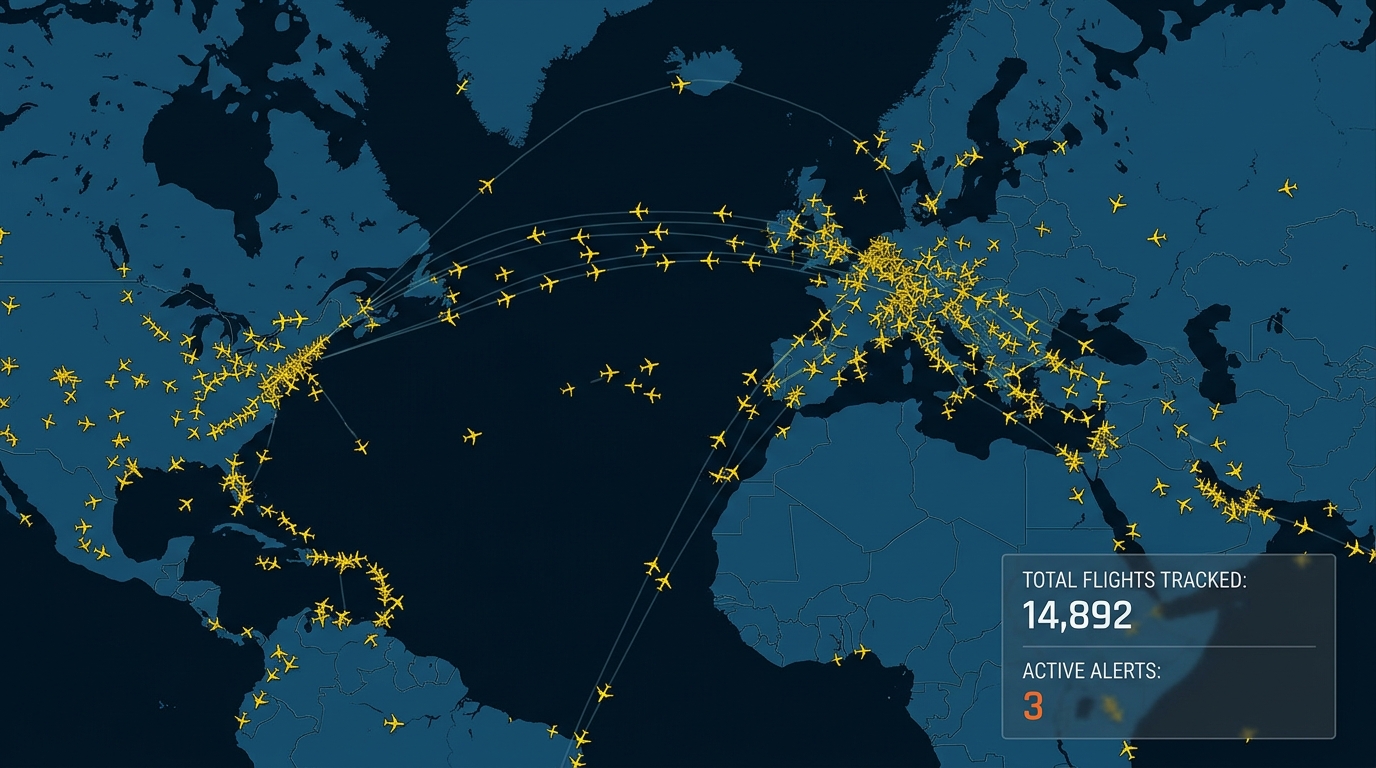
    Every day, tens of thousands of aircraft cross the sky, and anyone with a phone can now watch them move. A traveler checks whether a relative’s plane has landed. An aviation enthusiast follows a rare freighter across the Atlantic. An airline operations team watches hundreds of aircraft at once. Behind all of these use cases sits the same idea: real-time flight tracking.

    Modern tracking platforms combine radio signals, satellite positioning, ground receivers, and powerful data processing into live maps that update every few seconds. This guide explains how the technology works, which features matter most, which platforms lead the market, and how developers can build on live flight data through APIs.

    How Real-Time Flight Tracking Actually Works

    Before comparing platforms, it helps to understand where the data comes from. Most live flight information originates from a handful of surveillance technologies.

    Automatic Dependent Surveillance-Broadcast (ADS-B)

    Automatic Dependent Surveillance-Broadcast, or ADS-B, is the backbone of modern flight tracking. An ADS-B equipped aircraft determines its own position using satellite navigation and then broadcasts that position, along with other data, roughly once per second. Anyone with a compatible receiver within range can pick up these messages. No special permission is required.

    A typical ADS-B message includes the aircraft’s unique identifier, its position, altitude, speed, heading, and vertical rate. Because the broadcast is open and unencrypted, a worldwide community of volunteers has built networks of low-cost ground receivers that feed data to tracking platforms. This crowdsourced model is why coverage is so dense over populated regions.

    Aircraft Transponder Data

    Long before ADS-B, aircraft carried transponders that replied when interrogated by radar. Aircraft transponder data still matters today. Mode S transponders transmit a unique 24-bit address for each airframe, along with altitude information. Older Mode A and Mode C transponders provide a squawk code and pressure altitude.

    Even when an aircraft does not broadcast full ADS-B data, its transponder replies can often be received and used. This makes transponder signals a valuable fallback and a cross-check for other sources.

    GPS-Based Aircraft Tracking

    ADS-B depends on GPS-based aircraft tracking at its core. The aircraft’s navigation system calculates its position from global navigation satellite signals and feeds that position into the transmitter. This is why ADS-B positions are generally more precise than older radar-derived ones, which depend on the geometry and range of a radar antenna.

    GPS-based tracking is also used by satellite communication trackers on aircraft that operate beyond ground receiver coverage, such as over oceans and remote regions.

    Multilateration and Satellite Reception

    Two other techniques fill the gaps. Multilateration (MLAT) estimates the position of an aircraft by measuring the tiny differences in the time a signal arrives at several ground receivers. It works for aircraft that carry Mode S transponders but do not broadcast positions.

    Space-based ADS-B receivers, carried on satellites, extend coverage to oceans, polar routes, and deserts where ground stations cannot be built. Together, these methods give modern platforms near-global coverage.

    Aviation Surveillance Technology and Air Traffic Control Systems

    Flight tracking for the public is built on aviation surveillance technology that was originally designed for safety. Air traffic control systems rely on a mix of primary radar, secondary surveillance radar, ADS-B, and in some regions wide-area multilateration to keep aircraft separated.

    Controllers see aircraft as labeled targets on a display, with identification, altitude, speed, and flight plan information attached. Many air navigation service providers now use ADS-B as a primary or supplementary surveillance source, because it is accurate, updates quickly, and costs less to deploy than radar in remote areas.

    Public tracking sites use a subset of the same signals, but they are not air traffic control systems. They do not direct aircraft, and their data should never be used for navigation or separation. What they offer is transparency: the general public can see roughly what controllers see, with a slight delay and with some limits on coverage and filtering.

    Key Features of a Great Flight Tracking Platform

    Not all trackers are equal. When evaluating a platform, these are the features that separate the best from the average.

    Accurate Aircraft Identification

    Good platforms make aircraft identification effortless. A single target should show the callsign, registration, aircraft type, operator, and the airports of origin and destination. Many also display a photo of the actual airframe and its history. Accurate identification relies on matching transponder addresses to registration databases and merging in schedule data.

    Aircraft Speed and Altitude

    Live aircraft speed and altitude readings tell the story of a flight at a glance. You can see whether an aircraft is climbing, cruising, or descending, and whether it is holding or deviating. The best platforms show ground speed, vertical rate, and heading, and let you view altitude and speed graphs over the course of the flight.

    Flight Route Monitoring

    Flight route monitoring lets users follow a flight from departure to arrival. Useful tools include the planned route, the actual track flown, estimated arrival times, and alerts for delays, diversions, or gate changes. For frequent travelers, notifications can be more valuable than the map itself.

    Flight Path Visualization

    Flight path visualization is where design matters. Strong platforms offer smooth map animation, color-coded altitude trails, 3D views, and playback of historical flights. Playback is especially useful for reviewing weather deviations, holding patterns, or go-arounds after an event.

    Aircraft Position Updates and Latency

    Aircraft position updates should arrive quickly and consistently. In areas with dense receiver coverage, updates can arrive every second or two. Over oceans, updates may be much less frequent. A platform that is transparent about data sources and latency is more trustworthy than one that hides them.

    Live Flight Information

    Beyond the map, live flight information includes departure and arrival boards, airport weather, runway information, and airline schedules. This is the information most travelers actually want: is the flight on time, and where is it now?

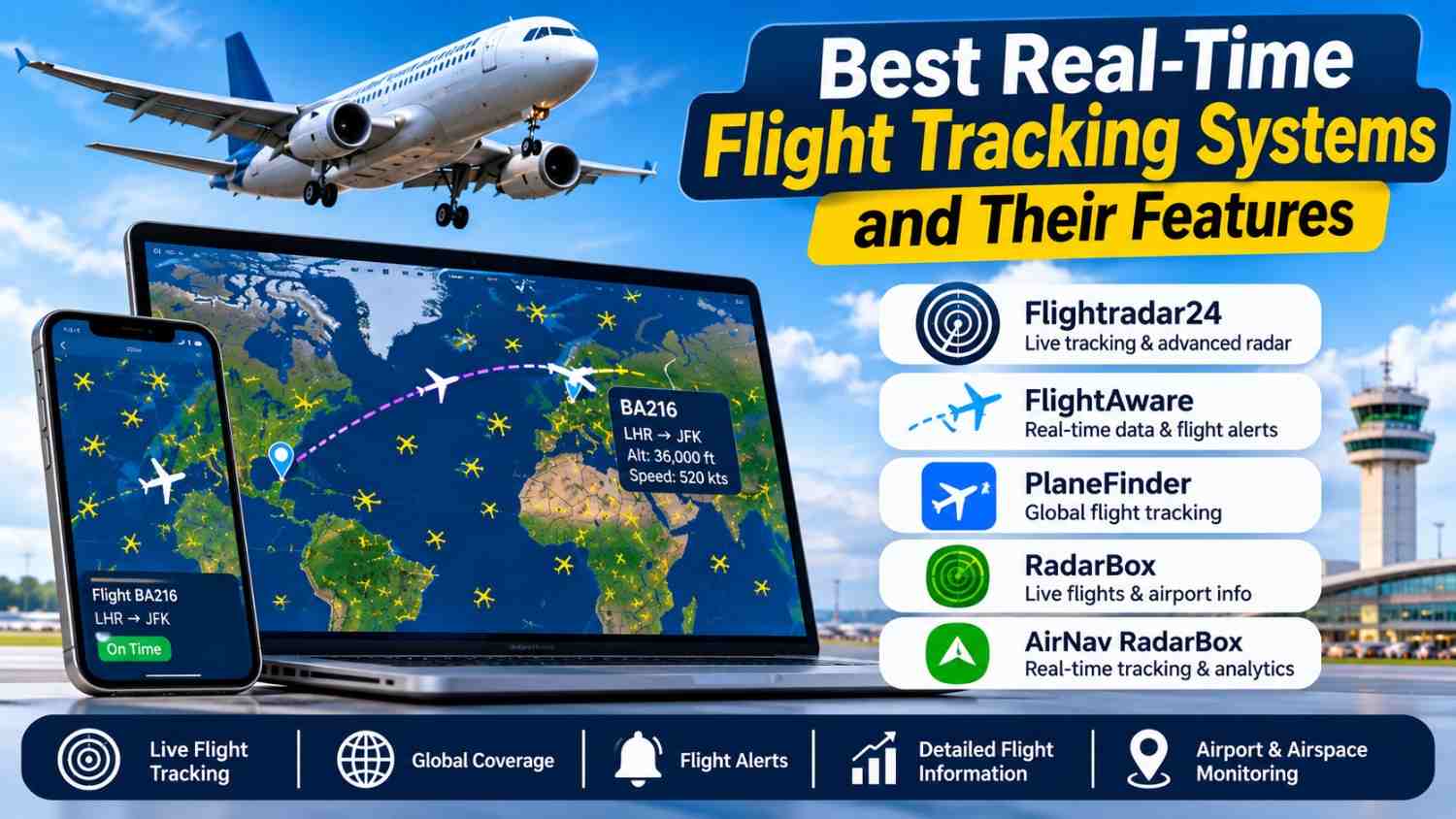
    The Best Real-Time Flight Tracking Systems

    Several platforms stand out. Features and pricing change frequently, so check each provider’s current offering before committing.

    Flightradar24

    Flightradar24 is probably the best-known consumer flight tracker. It combines a very large network of ADS-B receivers with MLAT, satellite data, and air traffic control feeds. Its strengths are an intuitive interactive map, a polished mobile app, detailed aircraft pages with photos, 3D and cockpit views, and flight history and playback on paid tiers. It is a strong all-around choice for travelers and enthusiasts who want a good experience out of the box.

    FlightAware

    FlightAware has a long history in aviation data and is heavily used by both the public and the industry. In addition to its tracking map, it provides detailed flight status, airport delay information, and notifications. FlightAware is especially notable for its data services, including its AeroAPI product for developers and business tools aimed at airlines, airports, and aviation businesses. If you need reliable status data and a path to integration, it is one of the first places to look.

    ADS-B Exchange

    ADS-B Exchange is known for publishing unfiltered data. Where many platforms block or hide certain aircraft at the request of owners, ADS-B Exchange has positioned itself around showing everything that receivers pick up. This appeals to researchers, journalists, and enthusiasts who want raw, community-sourced data. It may feel less polished than consumer-focused competitors, but its openness is its main feature.

    Plane Finder

    Plane Finder offers a clean interface, an augmented reality mode that identifies aircraft overhead through your phone camera, and its own receiver network. It is a good option for people who like to point their phone at the sky and see what is flying by.

    RadarBox

    RadarBox offers global coverage with a particular focus on data products for aviation professionals. It supports live maps, airport views, historical data, and business-oriented analytics. It is also worth considering for teams that want data feeds along with a visual interface.

    The OpenSky Network

    The OpenSky Network is a community-based receiver network aimed largely at research and education. It provides access to raw surveillance data for academic and non-commercial purposes, making it popular among researchers studying air traffic patterns, emissions, and safety. For students and scientists, it is a valuable resource.

    Flight Data Monitoring and Aviation Data Analytics

    Real-time tracking is only the surface. Behind many platforms sits a layer of flight data monitoring and aviation data analytics that turns raw positions into insight.

    Airlines and airports use analytics to measure on-time performance, predict delays, and optimize fuel burn and routing. Airport planners study approach patterns and noise exposure. Researchers use historical tracks to measure the effect of weather, congestion, or policy changes on flight paths. Journalists use flight data to verify events and follow the movements of specific aircraft.

    For these users, historical archives, bulk data downloads, and clean data schemas matter as much as the live map. When you evaluate a platform for analytics, ask how far back the history goes, how complete it is, and how easily it can be exported.

    Real-Time Flight Information APIs for Developers

    If you are building an app, dashboard, or internal tool, a real-time flight information API is the way to bring live data into your own product. Most providers expose REST endpoints that return JSON, and some also offer streaming feeds for continuous updates.

    Typical API capabilities include:

    • Live positions for aircraft within a bounding box or around an airport.
    • Flight status lookups by callsign, flight number, or registration.
    • Airport boards for scheduled and actual departures and arrivals.
    • Historical tracks for past flights.
    • Push alerts for status changes, delays, and diversions.

    When choosing an API, consider the following:

    1. Coverage and accuracy. Does the provider have strong receiver density in the regions you care about?
    2. Latency. Is data delivered within seconds, or on a delay?
    3. Rate limits and pricing. Some plans are built for hobby projects, others for enterprise volume.
    4. Licensing. Check whether you can display the data publicly, redistribute it, or use it commercially.
    5. Documentation and support. Clear docs and example code save significant development time.

    Several providers, including FlightAware, Flightradar24, and others, offer developer access, and community-driven sources provide data for research and non-commercial use. Always review current terms of service before building a product on top of any feed.

    Limitations and Privacy Considerations

    Flight trackers are powerful, but they have limits. Coverage can be thin over remote areas, and not every aircraft broadcasts ADS-B. Military and some government aircraft may not appear, or may appear only partially. Some operators can request filtering of their aircraft on certain platforms, and others can use privacy programs that obscure ownership details.

    Data can also be delayed, incomplete, or occasionally wrong, especially when a signal is blocked or a transponder is misconfigured. Treat public trackers as a convenient information source, not as an authoritative or safety-critical system. For operational decisions, aviation professionals rely on official sources and certified systems.

    There is also an ongoing public discussion about privacy, particularly for private aircraft. Anyone building tools on top of flight data should think carefully about how the information is presented and used.

    How to Choose the Right Flight Tracking System

    The best option depends on who you are.

    • Travelers who want simple, reliable flight status and alerts will do well with a polished consumer app that offers notifications and airport information.
    • Aviation enthusiasts will appreciate rich aircraft detail, photo databases, historical playback, and visualization tools.
    • Researchers and journalists may prefer platforms with unfiltered data, bulk downloads, or open research access.
    • Developers and businesses should prioritize API quality, licensing terms, scalability, and support.
    • Airline and airport teams may need enterprise analytics, integration with operational systems, and service-level guarantees.

    Trying a free tier, or testing two platforms side by side on a flight you know well, is often the quickest way to learn which one fits your needs.

    The Future of Global Aviation Tracking

    Global aviation tracking is evolving quickly. Space-based ADS-B continues to improve coverage over oceans and polar routes. More aircraft are being equipped with ADS-B, and regulators in many regions are expanding requirements for it. Machine learning is being applied to predict arrival times, delays, and congestion more accurately than schedules alone can. And as data becomes easier to access, new applications keep appearing, from emissions monitoring to smarter airport operations.

    For users, the result is a steady improvement in accuracy, coverage, and tools. The line between consumer tracking and professional aviation data keeps getting thinner.

    Conclusion

    Real-time flight tracking turns invisible radio signals into a live picture of the world’s skies. ADS-B, transponder data, GPS-based tracking, multilateration, and satellite reception work together to deliver accurate aircraft position updates, speed and altitude readings, and route information to anyone with an internet connection.

    Platforms such as Flightradar24, FlightAware, ADS-B Exchange, Plane Finder, RadarBox, and the OpenSky Network each bring a different balance of polish, openness, and data depth. Whether you are following a loved one’s flight, analyzing air traffic patterns, or building an app on a real-time flight information API, understanding the technology behind the map helps you choose the right tool and use it well.

    The skies are busier and more connected than ever. With the right tracking system, you can watch it all unfold in real time.

  • Real-Time Airplane Tracking System: How It Works, Technology, Software and Best Tools

    Real-Time Airplane Tracking System: How It Works, Technology, Software and Best Tools

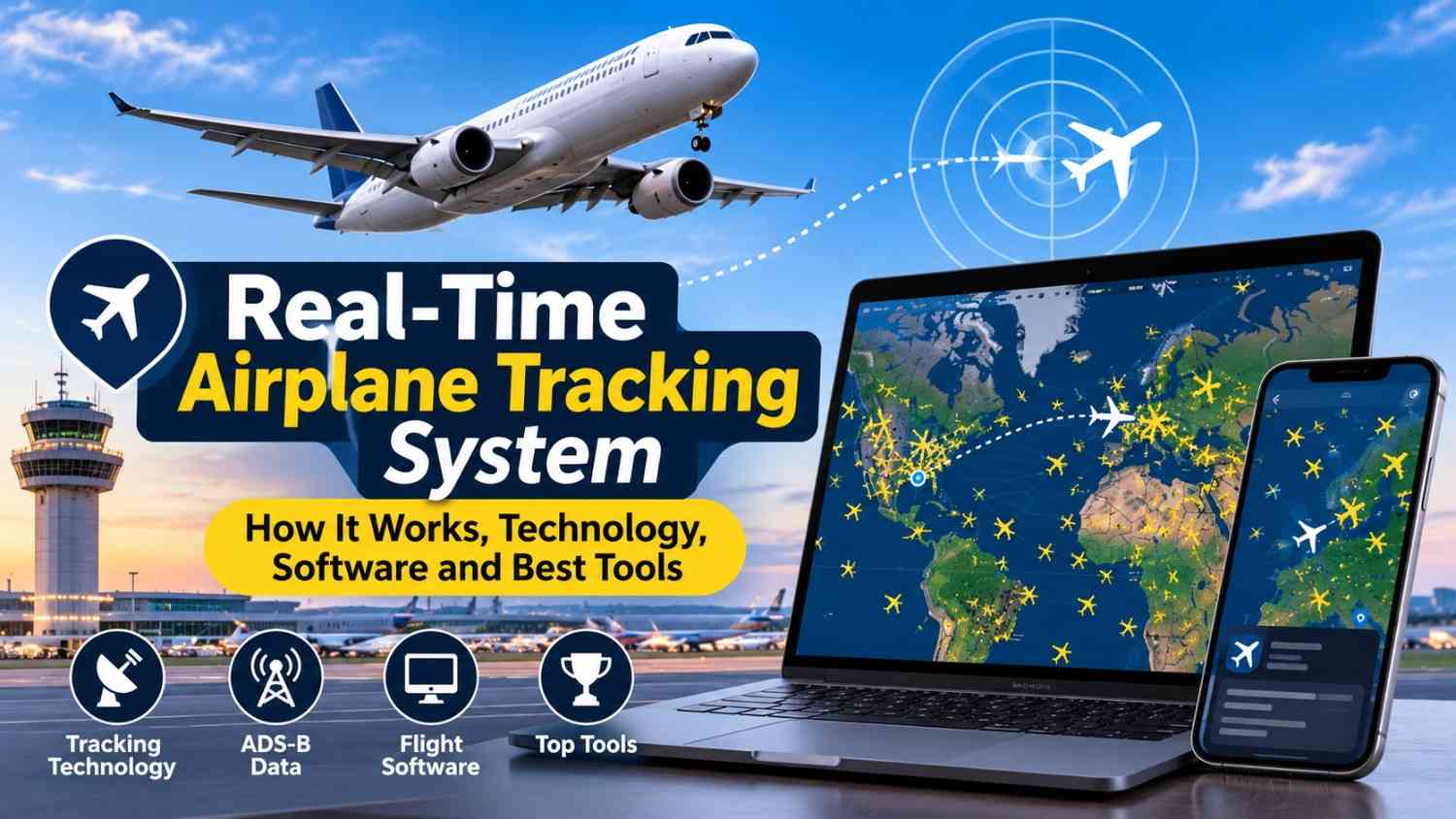
    Have you ever watched a plane cross the sky and wondered where it came from and where it is going? Today, you can answer that in seconds. A real-time airplane tracking system shows the exact position of thousands of aircraft on a live map, along with their speed, altitude, heading and route.

    Airlines, airports, aviation businesses, logistics companies and everyday travelers all rely on live airplane tracking to stay informed. In this guide, you will learn what a real-time airplane tracking system is, how it works, which technologies power it, how accurate it is, and how to choose the best flight tracking software for your needs.

    What Is a Real-Time Airplane Tracking System?

    A real-time airplane tracking system is a combination of hardware, data networks and software that collects an aircraft’s position and flight data and displays it almost instantly on a map. Instead of waiting for updates, you see where an aircraft is right now.

    A typical live aircraft tracking platform shows:

    • Current latitude and longitude (airplane location tracking)
    • Aircraft speed and altitude
    • Heading and vertical rate
    • Flight number and aircraft identification
    • Departure and arrival airports
    • Estimated arrival time
    • Flight path history

    These systems are also called an aircraft tracking system, an online flight tracker, or a flight radar tracking system, depending on the provider and the use case.

    How Does a Real-Time Airplane Tracking System Work?

    The process can be broken into four simple stages:

    1. Data transmission: The aircraft broadcasts its identity and position using onboard equipment such as a transponder.
    2. Data reception: Ground receivers, satellites or radar stations pick up those signals.
    3. Data processing: Servers combine, clean and validate the data from many sources, which supports flight data monitoring and aviation data analytics.
    4. Data display: The processed aircraft position updates appear on a website, mobile app or dashboard as moving icons on a map.

    Because this chain works in seconds, the map you see is a near-live picture of the sky.

    How ADS-B Aircraft Tracking Works

    Automatic Dependent Surveillance-Broadcast (ADS-B) is the backbone of modern real-time flight tracking.

    Here is how it works:

    1. The aircraft determines its position using satellite navigation (GPS-based aircraft tracking).
    2. Its aircraft transponder data broadcasts that position, together with identification, altitude, speed and heading, roughly once per second.
    3. Ground-based ADS-B receivers, other aircraft, and in some cases satellites receive the broadcast.
    4. A tracking network collects these messages and sends them to servers and maps.

    ADS-B is called “automatic” because no pilot input is needed, and “dependent” because it depends on the aircraft’s own navigation data. Many regions, including the United States and Europe, require ADS-B equipment on aircraft flying in most controlled airspace, which is why coverage on commercial flights is so strong.

    MLAT and Radar Support

    When an aircraft does not broadcast ADS-B, some networks use multilateration (MLAT). Several receivers measure tiny differences in signal arrival time to estimate the aircraft’s position. Traditional radar also remains an important part of air traffic control systems.

    Satellite Coverage

    Ground receivers cannot cover oceans or remote regions. Space-based ADS-B receivers fill those gaps, giving global flight tracking system coverage on long-haul routes.

    Technologies Used in Aircraft Tracking

    If you are asking, “What technology is used for aircraft tracking?”, these are the main components:

    TechnologyWhat It Does
    ADS-BBroadcasts position, speed, altitude and identity
    GPS / GNSSProvides precise aircraft GPS tracking
    Mode S transpondersShare aircraft identification and altitude
    MLATEstimates position when ADS-B is unavailable
    Primary and secondary radarUsed by air traffic control for air traffic monitoring system needs
    Satellite ADS-BExtends coverage over oceans and poles
    ACARS and datalinkSend operational messages between aircraft and airlines
    Cloud servers and APIsProcess and deliver live flight information

    Together, these form modern aviation surveillance technology and flight tracking technology.

    Key Features of Flight Tracking Software

    Not all flight tracking software is equal. Whether you want an online flight tracker for personal use or a platform for your business, look for these features:

    • Live map view with smooth aircraft movement
    • Search by flight number, airline, registration or airport
    • Flight path visualization with historical routes
    • Aircraft speed and altitude details
    • Live flight status tracker with delays, gates and arrival estimates
    • Alerts and notifications for departures, landings and delays
    • Weather and airspace layers
    • Filters for aircraft type, airline or altitude
    • Analytics dashboards for aviation data analytics
    • API access for developers and businesses
    • Mobile apps for iOS and Android

    For aviation businesses, features such as fleet monitoring, geofencing and exportable reports are especially valuable.

    How to Track Airplanes Live on a Map

    Tracking a flight is simple:

    1. Open a trusted online flight tracker or flight radar tracking system.
    2. Allow the map to load live aircraft icons.
    3. Search by flight number, airline, airport or aircraft registration.
    4. Click the aircraft to view its altitude, speed, route and estimated arrival time.
    5. Turn on route or weather layers for additional detail.
    6. Set alerts if you want updates sent to your phone.

    This is the easiest way to see live airplane tracking whether you are waiting for a relative at the airport or simply watching global air traffic.

    Can You Track an Aircraft Using Its Flight Number?

    Yes. Live airplane tracking with flight number is one of the most popular uses. Enter the airline code and number (for example, an airline’s two-letter code followed by digits) into a flight tracker. The system matches it with the aircraft currently operating that flight and shows its position, status and flight route monitoring details.

    A few tips:

    • Use the correct airline code and number printed on your ticket.
    • If the flight has not departed yet, you will usually see its scheduled status and the previous inbound aircraft.
    • Codeshare flights may have a different number than the operating airline’s flight.

    Real-Time Flight Tracking API Integration

    If you are a developer, travel company or airline partner, a real-time flight information API lets you add live tracking to your own app or website.

    A good real-time flight tracking API typically provides:

    • Live aircraft positions and aircraft identification
    • Flight schedules, delays and cancellations
    • Airport and airline data
    • Historical flight data for analytics
    • Webhooks or streaming for instant updates

    Integration Steps

    1. Choose an API provider that matches your coverage and budget.
    2. Get your API key and review the documentation.
    3. Request flight or aircraft data in JSON format.
    4. Display positions with a mapping library.
    5. Cache responses and respect rate limits to keep costs down.
    6. Add error handling for missing or delayed data.

    This approach is ideal for aircraft tracking system for aviation businesses, logistics platforms, travel apps and airport information displays.

    Benefits for Airlines and Aviation Businesses

    Real-time aircraft tracking for airlines and related companies provides strong operational value:

    • Better fleet visibility: Know where every aircraft is at any moment.
    • Improved on-time performance: Spot delays early and adjust turnaround plans.
    • Customer communication: Send accurate arrival updates to passengers.
    • Safety and compliance: Support real-time aircraft monitoring and incident response.
    • Fuel and route efficiency: Review flight route monitoring data to improve planning.
    • Data-driven decisions: Use aviation data analytics to study trends in delays, routes and performance.

    Airports, ground handlers, cargo firms and charter operators gain similar advantages.

    How Accurate Are Live Airplane Tracking Systems?

    Accuracy is usually very good for commercial aircraft tracking, but several factors matter:

    • Source of data: ADS-B based on GPS is generally precise, often within a few meters.
    • Receiver coverage: Ground receivers work by line of sight, so low-altitude aircraft in remote areas may disappear from the map.
    • Update frequency: ADS-B messages are frequent, but some websites show data with a short delay of a few seconds to a minute.
    • MLAT and estimated positions: These can be less precise than direct ADS-B data.
    • Filtered aircraft: Some military or sensitive flights may be limited or hidden from public trackers.

    In short, public trackers are highly reliable for airline flights but should not replace official air traffic control information for safety-critical decisions.

    Is Real-Time Flight Tracking Free?

    Many platforms offer a free online airplane tracking system with basic features such as live maps, flight search and arrival times. Paid plans typically add:

    • Extended flight history
    • Advanced filters and alerts
    • Ad-free viewing
    • Weather and airspace layers
    • Higher data limits and API access
    • Business and enterprise dashboards

    For casual use, free tools are usually enough. For airlines, aviation businesses and developers, a paid plan or commercial API is a better choice.

    Best Practices When Choosing a Tracking Solution

    When comparing the best real-time aircraft tracking software, ask these questions:

    1. Coverage: Does it include satellite, ground and MLAT data for global reach?
    2. Latency: How quickly does it refresh positions?
    3. Data depth: Does it show speed, altitude, route, aircraft type and history?
    4. Reliability: Is uptime high, and is the data source transparent?
    5. Integration: Is there a well-documented API?
    6. Scalability: Can it support many users or aircraft?
    7. Security and privacy: Does it follow data protection rules?
    8. Cost: Does the pricing fit your usage?

    The Future of Flight Tracking Technology

    Aircraft tracking is evolving quickly. Expect to see:

    • Wider satellite coverage for true global aviation tracking
    • AI-powered delay prediction and route optimization
    • Richer flight path visualization in 3D
    • Integration with airport systems, weather and drone traffic management
    • Faster, more accurate aircraft position updates

    As these improvements arrive, a real-time airplane tracking system will become even more useful for safety, planning and passenger experience.

    Conclusion

    A real-time airplane tracking system brings together ADS-B, GPS, radar, satellites, cloud servers and user-friendly software to show where aircraft are right now. From travelers checking a live flight status tracker to airlines managing fleets and developers using a real-time flight tracking API, this technology makes aviation more transparent, efficient and safe.

    If you want to explore it, start with a free online flight tracker. If you are building a business solution, choose flight tracking software with strong coverage, reliable data and flexible API integration.

    Ready to start tracking? Pick a trusted platform, search your flight number, and watch the sky in real time.

    Frequently Asked Questions

    What is a real-time airplane tracking system?

    It is a system that collects aircraft position and flight data from transponders, GPS, ADS-B receivers, radar and satellites, then displays it live on a map or dashboard.

    How can I track an airplane in real time?

    Open an online flight tracker, search by flight number, airline or airport, and select the aircraft on the map to see its live location, speed, altitude and route.

    How accurate are live airplane tracking systems?

    They are very accurate for commercial flights because they rely on GPS-based ADS-B data. Accuracy can drop in areas with limited receiver coverage or when positions are estimated using MLAT.

    Can I track an aircraft using its flight number?

    Yes. Enter the airline code and flight number into a flight tracker to view the aircraft’s current position, status and estimated arrival.

    What technology is used for aircraft tracking?

    Common technologies include ADS-B, GPS, Mode S transponders, MLAT, radar, satellite receivers, ACARS and cloud-based software with APIs.

    Is real-time flight tracking free?

    Basic tracking is free on many websites and apps. Advanced features, historical data and API access are usually part of paid plans.

    How does ADS-B tracking work?

    An aircraft uses GPS to find its position, then broadcasts that position and identification data about once per second. Ground stations or satellites receive the signal and send it to tracking servers, where it appears on a live map.

  • Flydubai 1073: What the Incident Could Mean for Aviation Security (2026)

    Flydubai 1073: What the Incident Could Mean for Aviation Security (2026)

    Flydubai 1073 was a September 30, 2026 flight from Dubai to Tel Aviv that diverted to Tabuk, Saudi Arabia, after the first officer allegedly attacked the captain and tried to crash the Boeing 737 MAX. The UAE attorney general says it was a planned suicide attack on Ben Gurion Airport. For aviation security, the case shifts attention from passengers and luggage to insider threats: pilot vetting, cross-border information sharing, and extra checks on sensitive routes.

    What happened on Flydubai flight FZ1073?

    1. Departure. Flydubai flight FZ1073, a Boeing 737-8 MAX (registration A6-FKF), left Dubai at 03:05 UTC and climbed to 34,000 feet, according to Flightradar.
    2. The attack. Over Saudi airspace, the UAE says the first officer attacked the captain with a crash axe kept on the flight deck for emergencies. Early Israeli accounts described a stabbing. Captain Smit Machchhar, badly injured, managed to open the cockpit door.
    3. The dive. FlightAware data cited by ABC News showed altitude swings starting around 8:21 a.m. Israel time and a drop of more than 14,000 feet in under 30 seconds.
    4. The recovery. Passengers and two off-duty flydubai pilots subdued the first officer. One passenger told reporters he pulled the nose up. The off-duty pilots landed the jet at Tabuk.
    5. The aftermath. Saudi authorities arrested the co-pilot. Flydubai suspended its flights to and from Israel while the investigation continues.

    Anyone with a live flight tracker could see part of this. Flightradar24 reported that the aircraft squawked 7700 (general emergency) and 7500 (unlawful interference). A plane tracker can’t show a cockpit, but it did give journalists a timestamped, public record of the dive. That is why a live flights tracker now sits next to official statements in how investigators and reporters reconstruct events.

    Who is saying what about the Flydubai 1073 incident?

    The UAE prosecution view. Attorney General al-Shamsi says first officer Hamam al-Hammami, an Omani national, planned to seize the flight and crash it into a terminal at Ben Gurion. The Times of Israel reports that he used two earlier Tel Aviv flights to learn the route and airport, viewed pro-terror material and took boxing lessons. The UAE also says its procedures found no sign of extremist views or a plot beforehand.

    The Israeli government view. Israeli officials say they will strengthen precautions and pilot vetting for incoming flights, per AviationA2Z. Prime Minister Netanyahu credited the captain with saving everyone aboard by holding on long enough to open the door.

    The security-analyst view. Eyal Hulata, Israel’s former national security adviser, told the AP that security has traditionally focused far more on passengers and baggage than on a threat from a pilot or crew member. Aviation blogger Cranky Flier goes further, arguing that Israel relies on airlines to police a pilot-origin rule and that flydubai should not have rostered this first officer on the route. That is commentary, not a finding.

    The airline and passenger view. Flydubai has urged against speculation while authorities investigate. Meanwhile, Calcalist reports that most passengers are preparing a class action against the airline and the Israeli and UAE transport ministries.

    Insider threat vs outside hijacking: what is the difference?

    The one distinction that explains most of the others is where the threat enters the system. A classic hijacking starts in the cabin, so defenses sit at the checkpoint and the cockpit door. An insider attack starts on the flight deck, so those same defenses can work against the crew. AP reporting notes that cockpit doors were reinforced and locked after September 11 to keep intruders out, and that the FZ1073 case highlights the risk when the danger is already inside.

    Outside hijackingInsider (pilot) attack
    Where the threat startsPassenger cabinFlight deck
    Main defensesPassenger and baggage screening, reinforced doorHiring checks, information sharing, crew oversight
    Effect of the locked doorKeeps the attacker outCan keep help out
    Who intervened on FZ1073Not applicableWounded captain, passengers, two off-duty pilots

    What security gaps did Flydubai 1073 expose?

    Three gaps recur in the reporting. All three are reported or alleged, and investigators have not yet ruled on any of them.

    1. Vetting that stops at paperwork. Minute Mirror reports that Omani authorities identified a security concern about the first officer in 2024, yet his licence was not revoked and no criminal case was filed. It also cites the Wall Street Journal as reporting that flydubai did not contact his previous employer, Oman Air, before hiring him. Flydubai has not publicly answered those specific claims.

    2. Information that does not travel. The International Civil Aviation Organization sets baseline vetting and licensing standards, while national regulators and airlines may add their own, according to the AP. The open question is whether a concern raised by one aviation employer or country reliably reaches the next one.

    3. Route rules that rely on self-policing. Cranky Flier argues that Israel leaves it to airlines to enforce which pilots may fly its routes. Israeli officials have said they will tighten pilot checks for incoming flights. If an airline’s roster is the last line of defense, the quality of that roster check matters as much as any checkpoint.

    What could change in aviation security after Flydubai 1073?

    Only one change has been announced so far: Israel’s stronger checks on pilots flying into the country. The other four below are my read of where the pressure points to, not confirmed policy.

    1. Stronger pilot checks on sensitive routes. Announced by Israeli officials, details pending.
    2. Deeper pre-employment vetting. Airlines could be expected to contact previous employers and regulators directly, not just verify a licence.
    3. A cross-border channel for security concerns. A flag raised by one country’s authorities could be made visible to the next employer, with privacy and legal safeguards.
    4. Review of flight-deck procedures. Regulators could revisit what is kept in the cockpit and how the door protocol works when the threat is inside.
    5. Closer oversight of route-familiarization patterns. The UAE says the first officer flew two earlier Tel Aviv services to learn the airport, a detail investigators will likely weigh.

    For travelers, the practical effect may be small. For airlines flying politically sensitive routes, the compliance burden could grow.

    Which Flydubai 1073 numbers are reliable, and which are disputed?

    Sources disagree on several figures. Here is what each reported, so you can cite the right one.

    DetailReported figureSource
    People on board174 in some reports; 182 including eight crew in othersAP versions, AviationA2Z
    Altitude lostMore than 14,000 ft in under 30 secondsFlightAware via ABC News
    Altitude lost16,000 ft in 30 secondsUAE account via Times of Israel
    Altitude lost17,000 ft in under a minuteFlightradar24
    Cruise altitude34,000 ftFlightradar24
    AircraftBoeing 737-8 MAX, A6-FKFFlightradar24

    Myth-busting

    Myth: locked cockpit doors make a hijacking impossible. The doors were designed to keep intruders out. On FZ1073 the alleged attacker was already inside, and the door that mattered was the one the injured captain opened.

    Myth: this was a failure of airport screening. The reporting centers on hiring and information sharing. Checkpoint screening of passengers and bags would not obviously stop a licensed crew member.

    Myth: a single passenger saved the flight. Accounts differ. The captain opened the door, passengers subdued the first officer, one passenger said he leveled the jet, and two off-duty pilots landed it.

    Is Flydubai 1073 a hijacking, sabotage or a pilot suicide?

    It depends on the finding, and the finding isn’t in yet. Flightradar24 describes the incident as most likely a failed hijacking. The UAE describes a planned terror attack. Neither matches the pilot-suicide cases that shaped earlier security thinking.

    • Clearly an insider-caused crash: Germanwings Flight 9525 (2015), in which the co-pilot deliberately crashed the aircraft.
    • Borderline: EgyptAir Flight 990 (1999), where a US finding pointed to deliberate action by a relief first officer, which Egyptian authorities disputed.
    • FZ1073: an alleged ideologically driven plot, according to the UAE, stopped before it could succeed. As Cranky Flier notes, everyone on board survived.

    The label matters because each leads to a different fix: mental-health screening for one, hiring and intelligence checks for the other.

    What is the takeaway from Flydubai 1073?

    The plain version: the most dangerous gap in aviation security may sit in the hiring file, not at the checkpoint.

    If you follow the industry, watch for three things: the formal investigation findings, any rule changes from Israel and the UAE, and whether regulators set up a way to share pilot security concerns across borders. If you want to follow the next incident as it unfolds, open a plane tracker, search the flight number, and compare what the data shows with what officials later say.

    Figures in this article are as reported on October 14, 2026, and may change as the investigation proceeds.

    FAQ

    What happened on Flydubai flight 1073? On September 30, 2026, the first officer allegedly attacked the captain on a Dubai–Tel Aviv flight. Passengers and two off-duty pilots intervened, and the jet landed at Tabuk, Saudi Arabia.

    Did anyone die on Flydubai 1073? No deaths have been reported. Captain Smit Machchhar was badly injured but opened the cockpit door that let others reach the flight deck.

    Who is the co-pilot accused in the Flydubai incident? Media reports and UAE officials identify him as Hamam al-Hammami, an Omani national. Saudi authorities arrested him after the landing, and the allegations have not been tested in court.

    Why did Flydubai 1073 dive so fast? The UAE says that once the plan to reach Tel Aviv failed, the first officer pushed the jet into a dive. Reported losses range from 14,000 to 17,000 feet in 30 to 60 seconds.

    Can I see the Flydubai 1073 flight path on a live flight tracker? Past flights need a tracker’s history feature, which is how reporters cited FlightAware and Flightradar24 data. A live flights tracker shows current altitude, speed and squawk codes for aircraft in the air.

    How do I track airline flights live? Open a plane tracker, search the flight number or airline, and read the altitude, speed and squawk code. Squawk 7700 signals a general emergency and 7500 signals unlawful interference.

    Will Israel change its pilot checks after Flydubai 1073? Israeli officials have said they will strengthen security checks on pilots flying into the country. Flydubai says the incident has no impact on its other scheduled routes, though its flights to and from Israel are suspended.

  • Live Flight Tracker: How to Track a Flight in Real Time

    Live Flight Tracker: How to Track a Flight in Real Time

    Whether you’re picking someone up from the airport, following a connecting flight halfway across the world, or just curious about the plane passing overhead, a live flight tracker turns what used to be a mystery into something you can watch unfold on a map in real time. A few years ago, the only way to know if a flight was delayed was to call the airline or stare at an airport departure board. Today, anyone with a phone can pull up a real time flight tracker, type in a flight number, and watch that exact aircraft move across the sky.

    This guide walks through what a live flight tracker actually is, how the technology behind it works, and exactly how to track a flight in real time — whether you’re checking a single departure or keeping an eye on global air traffic for fun.

    What Is a Live Flight Tracker?

    A live flight tracker is a website, app, or dashboard that shows the real-world position, altitude, speed, and heading of an aircraft while it’s in the air — updated continuously, often every few seconds. Instead of a static schedule that just tells you when a flight is supposed to depart or arrive, a live airplane tracker shows you where the plane actually is right now, plotted on an interactive map.

    Most modern flight tracking platforms pull this from public aviation data feeds and combine it with airline schedule data, so you get both:

    • The plane’s live position, altitude, and ground speed
    • Scheduled vs. actual departure and arrival times
    • Gate and terminal information (when available)
    • Delay status and estimated arrival updates

    This combination is what makes a flight tracking live map so useful — it’s not just a dot moving on a screen, it’s a dot tied to real, verifiable flight information.

    How Does Real-Time Flight Tracking Actually Work?

    Understanding the mechanics behind a real time airplane tracking system helps explain why some flights show up instantly and others take a moment to appear, or don’t appear at all.

    ADS-B: the backbone of modern flight tracking

    Most commercial aircraft today broadcast a signal called ADS-B (Automatic Dependent Surveillance–Broadcast). This system takes GPS data from the aircraft’s own navigation equipment and broadcasts it out automatically — including position, altitude, speed, and identification — without needing a ground radar station to interrogate the plane first.

    Ground-based receivers, many of them operated by volunteers and aviation enthusiasts around the world, pick up these ADS-B signals and feed them into networks that flight tracking platforms use to power their live maps. That’s how you can watch a flight radar live view updating smoothly instead of relying on outdated schedule data.

    Radar and satellite data fill in the gaps

    ADS-B coverage is excellent over populated areas but weaker over oceans and remote regions, since it depends on ground receivers within range of the aircraft. To track flights over open water — say, a transatlantic or transpacific route — many tracking services also incorporate satellite-based ADS-B data or multilateration techniques, which triangulate an aircraft’s position using multiple receivers instead of a single signal.

    This is why some track international flights live features show slightly delayed or interpolated positions mid-ocean, even though the same flight looks perfectly smooth once it’s back over land.

    Airline and airport data completes the picture

    On top of raw positional data, tracking platforms layer in scheduling information directly from airlines and airports — gate numbers, runway assignments, and updated arrival estimates. This is what powers a proper flight tracker arrivals and departures board, letting you see not just where a plane is, but what that means for its schedule.

    Why People Track Flights Live in the First Place

    It’s worth stepping back for a second, because “tracking a flight” covers a wider range of situations than it might first seem.

    • Airport pickups. Traffic, security lines, and gate walks add unpredictable time on both ends, so knowing the actual landing time — not the printed schedule — saves a lot of wasted waiting (or worse, a rushed arrival).
    • Anxious flyers and worried family. For someone nervous about a loved one’s flight, being able to watch the plane’s actual position climb, cruise, and descend can be genuinely reassuring in a way a static “on time” label isn’t.
    • Connecting flight math. If you’re booking a tight connection, or waiting to see if a delayed inbound flight will make your layover impossible, real-time tracking gives you a much earlier warning than an airport announcement would.
    • Cargo and logistics. Businesses that depend on air freight use the same underlying data to plan warehouse staffing and delivery windows around actual arrival times rather than published schedules.
    • Aviation enthusiasts. A large community of plane-spotters and aviation hobbyists uses live tracking purely for the enjoyment of it — watching specific aircraft types, spotting rare tail numbers, or just observing how busy the skies get during peak travel periods.

    Understanding which of these you actually need helps you pick the right tool. Someone doing an occasional airport pickup doesn’t need the same feature set as a logistics team tracking dozens of cargo flights a day.

    How to Track a Flight in Real Time

    If you’re wondering exactly how to track a flight in real time, the process is simpler than most people expect. Here’s a practical, step-by-step approach.

    Step 1: Get the flight number or route details

    The most reliable way to find a specific aircraft is by its flight number — the airline code plus a number, like “AA100” or “EK202.” You’ll usually find this on a boarding pass, booking confirmation email, or by asking the person you’re tracking. If you don’t have the flight number, the departure and arrival airports plus the approximate departure time are usually enough to narrow it down.

    Step 2: Open a live flight tracker online

    Head to a live flight tracker online tool or app and search using the flight number. Most platforms will show you:

    • Whether the flight is scheduled, boarding, in the air, or landed
    • Its current position on a map (if airborne)
    • Departure and arrival times, both scheduled and actual
    • Any reported delays

    Step 3: Use the live map view for real-time position

    Once you’re viewing an active flight, switch to the map view to track flight live as it moves. You’ll typically see the aircraft’s icon oriented in its direction of travel, along with details like current altitude, ground speed, and estimated time of arrival that update automatically as the flight progresses.

    Step 4: Track flight by number for repeat or connecting flights

    If you need to track flight by number live across a multi-leg journey — say, someone flying with a layover — search each flight segment separately using its own flight number. Many tracking apps let you save flights so you get automatic updates without having to search again each time.

    Step 5: Set up alerts if you want hands-off tracking

    Most flight tracking app free options let you enable push notifications for a specific flight, so you’re alerted automatically about gate changes, delays, or landing — without needing to keep the app open and refresh it manually.

    Live Flight Tracker With Map: What You’re Actually Looking At

    A live flight tracker with map typically layers several types of information on top of a standard world map:

    • Aircraft icons, often color-coded or shaped to indicate altitude bands or aircraft type
    • Flight paths, showing the route already flown as a trailing line, and sometimes a projected path to the destination
    • Airport markers, which you can usually click to see all current arrivals and departures at that specific airport
    • Weather overlays, on more advanced tools, showing cloud cover or storm systems that might explain a delay or reroute

    Clicking on any individual aircraft icon usually opens a details panel with the flight number, airline, aircraft type, altitude, speed, and origin/destination — everything you need to understand exactly what you’re looking at without leaving the map view.

    Tracking Arrivals and Departures at a Specific Airport

    Sometimes you’re not tracking one flight — you’re trying to understand everything happening at a particular airport. A dedicated flight tracker arrivals and departures view lets you search by airport code (like JFK, LHR, or DXB) and see a live, scrolling list of every flight coming and going, along with real-time status updates.

    This view is particularly useful for:

    • Timing an airport pickup around actual (not scheduled) arrival times
    • Checking whether widespread delays are affecting a specific airport due to weather or congestion
    • Comparing multiple flight options if you’re flexible on which flight to meet or book

    How to Track International Flights Live

    Tracking a domestic flight is usually straightforward, since it stays within dense ADS-B receiver coverage the whole way. To track international flights live, especially long-haul routes crossing oceans, a few things are worth knowing:

    • Expect brief data gaps mid-ocean. As mentioned earlier, positional updates over open water rely on satellite coverage or multilateration, which can be slightly less frequent than land-based ADS-B.
    • Time zones affect what “real time” looks like. A flight departing at 11 p.m. local time might display in a very different local time on your tracker, depending on your device’s settings — double-check you’re reading the right time zone before assuming a flight is delayed.
    • Some regions have limited coverage. Areas with fewer ground receivers or airspace restrictions may show sparser tracking data, though major international corridors are generally well covered by modern live air traffic tracker networks.

    The Best Flight Tracker Apps Worth Knowing About

    There isn’t a single universally “best” option — the right choice depends on whether you want a simple one-off search or an app that becomes part of your regular travel routine. That said, when people ask about the best flight tracker app, a few categories of tools consistently come up:

    Free, browser-based trackers

    These are ideal if you just need to check a flight occasionally without installing anything. They typically offer a flight tracking app free tier covering flight number search, basic map view, and delay status — more than enough for casual use like tracking a friend’s arrival.

    Dedicated mobile apps

    A proper live flight tracker app download gives you push notifications, saved flight lists, and often richer detail like gate numbers and terminal maps. These are worth it if you fly often or regularly track flights for family members.

    Real-time flight tracking apps for frequent flyers

    A more advanced real time flight tracking app may include features like predicted delay likelihood based on historical data, boarding time reminders, and integration with your calendar or boarding pass wallet. These tend to be aimed at people who travel often enough that a few minutes saved per trip adds up.

    Enthusiast-grade airplane tracker apps

    If you’re genuinely interested in aviation, some airplane tracker app options go further — showing aircraft registration numbers, historical flight paths for a specific tail number, and even filtering by aircraft type. These tools double as a hobby platform for plane-spotters as much as a practical travel utility.

    When comparing options, it’s worth checking whether the app updates in true real time or on a short delay, since some free tiers intentionally lag behind live paid data by a minute or two.

    Live Air Traffic Tracker: Seeing the Bigger Picture

    Beyond tracking a single flight, a live air traffic tracker view shows every aircraft currently airborne across a region — or the entire globe — at once. Zooming out on most tracking platforms reveals thousands of moving dots representing commercial flights, cargo planes, and sometimes private aircraft, all updating simultaneously.

    This global view is genuinely useful beyond curiosity. It can help you:

    • Spot patterns during major weather events, like widespread rerouting around a storm system
    • Understand air traffic congestion around a specific region or time of day
    • Get a sense of how busy a route is before booking, which can hint at flight frequency and connection options

    How Accurate Is Live Flight Tracking, Really?

    It’s worth setting realistic expectations. A live flight status tracker is highly accurate for aircraft actively broadcasting ADS-B data over well-covered regions — position updates every few seconds are common. But accuracy can dip in a few situations:

    • Ground movement: some trackers show limited or delayed detail while an aircraft is taxiing before takeoff or after landing, since ADS-B ground coverage varies by airport.
    • Military or restricted aircraft: certain flights are intentionally excluded or anonymized on public tracking platforms for security reasons.
    • Data provider delays: free tiers of some tracking tools apply a short delay (commonly a minute or so) compared to their real-time paid feeds.
    • Scheduling vs. tracking data mismatch: a flight status showing “on time” based on airline schedule feeds can occasionally lag slightly behind what the live map position actually suggests, especially right around departure or arrival.

    None of this makes flight tracking unreliable — it just means treating the estimated times as, well, estimates, particularly in the final approach and landing window.

    Tips for Choosing the Right Flight Tracking Tool

    With so many options claiming to be the best way to track flights in real time, a few practical criteria make the decision easier:

    1. Check update frequency. Look for platforms that clearly state how often position data refreshes — true real-time tools update every few seconds, not every few minutes.
    2. Confirm map detail matches your needs. Casual users are usually fine with a simple map; frequent travelers may want terminal maps, gate info, and historical on-time performance data.
    3. Look for airport-level views, not just single-flight search, if you regularly need arrivals and departures information rather than tracking one specific plane.
    4. Test notification reliability before depending on an app for something time-sensitive like an airport pickup — a delayed push notification defeats the purpose of real-time tracking.
    5. Consider whether you need international coverage specifically, since not every free tool handles long-haul, cross-ocean routes with the same consistency as domestic flights.

    Live Flight Tracking vs. Flight Status Checking: What’s the Difference?

    These two terms get used interchangeably, but they’re not quite the same thing, and knowing the difference helps set the right expectations.

    Flight status checking relies on schedule and airline-reported data — it tells you whether a flight is “on time,” “delayed,” or “cancelled,” based on information the airline pushes out. It’s accurate for high-level status, but it won’t show you exactly where the aircraft physically is at a given moment.

    Live flight tracking goes a layer deeper by combining that same status data with the aircraft’s actual broadcast position. Instead of just “delayed,” you can see why it looks delayed — maybe it’s still on the ground, maybe it’s airborne but flying a longer route around weather, or maybe it’s already in its descent and simply running a few minutes behind the printed time.

    For most everyday situations, a good real time flight tracker gives you both pieces of information in one place, which is why dedicated tracking platforms have largely replaced the old habit of just checking an airline’s status page.

    Getting the Most Out of a Flight Tracking App

    A few small habits make live flight tracking noticeably more useful day to day:

    • Save recurring flights, like a partner’s regular commute or a family member’s frequent visiting route, so you’re not re-searching the same flight number every time.
    • Cross-check time zones whenever a flight crosses regions, since a landing time shown in local destination time can look confusing if your app defaults to your home time zone.
    • Use airport-level views during high-traffic periods like holidays, when checking the whole airport’s arrivals board can be faster than tracking one flight in isolation if plans are still in flux.
    • Don’t rely solely on push notifications for anything truly time-critical — a quick manual check a few minutes before you need to leave for the airport is a good habit, since notifications can occasionally lag behind the live map.

    Final Thoughts

    A live flight tracker turns a genuinely useful piece of aviation technology — ADS-B broadcasting — into something anyone can use from their phone or browser. Whether you’re timing an airport pickup, tracking a loved one’s connecting flight, or just watching global air traffic move in real time out of curiosity, knowing how to track a flight in real time takes just a flight number and a few taps. Pick a tool that matches how often you actually need to track flights — a simple free tracker for occasional use, or a dedicated real-time flight tracking app if travel is a regular part of your life — and you’ll never be left guessing whether a flight is actually on time again.

    Frequently Asked Questions

    Can I track any flight, or only certain airlines?

     Most commercial flights from major airlines are trackable, since virtually all modern commercial aircraft broadcast ADS-B data. Smaller private aircraft, older planes without ADS-B equipment, and certain government or military flights may not appear on public trackers.

    Do I need to download an app to track a flight?

     No — a browser-based live flight tracker online works fine for a one-off search. An app is more useful if you want notifications or plan to track flights regularly.

    Why does a flight I’m tracking sometimes disappear from the map?

     This usually happens during takeoff, landing, or over regions with limited ADS-B ground coverage, such as remote areas or open ocean. The aircraft reappears once it’s back within receiver range or transitions to satellite-based coverage.

    Is live flight tracking free?

     Most flight tracking platforms offer a solid free tier covering flight number search, basic map view, and delay status. Paid tiers typically add features like true real-time updates without delay, historical data, and more detailed aircraft information.

    How early can I start tracking a flight before it departs? 

    Scheduling information is usually available as soon as the flight is published by the airline, often months in advance. Live position tracking only becomes available once the aircraft is actually airborne (or sometimes while taxiing, depending on airport ADS-B coverage).

    Can I track a flight worldwide, no matter where it’s flying? 

    A capable live flight tracker worldwide tool should cover the vast majority of commercial routes globally, though coverage density varies by region. Busy international corridors are generally tracked reliably; remote airspace may show sparser updates.

  • Live Flight Status Tracker for Travelers: Never Miss a Flight Update Again

    Live Flight Status Tracker for Travelers: Never Miss a Flight Update Again

    you are sitting at the airport gate, your phone buzzing every few minutes with notifications, and you have absolutely no idea whether your flight is on time, delayed, or about to be cancelled entirely. Or maybe you are at home, anxiously waiting for a loved one’s plane to land, refreshing the airline’s website over and over, hoping for an update that never seems to come fast enough.

    This used to be the normal travel experience. Not anymore. In 2026, a good live flight status tracker has become an essential travel companion — turning that uncertainty into clarity with a single glance at your phone or laptop. Whether you want to track flight live for your own upcoming trip, monitor a connecting flight, or simply watch planes move across a live air traffic tracker out of curiosity, the technology behind modern flight tracking has become remarkably accurate, fast, and easy to use.

    Why Real-Time Flight Tracking Matters More Than Ever in 2026

    Air travel has become busier, more complex, and in many ways more unpredictable than it was just a few years ago. Weather disruptions, air traffic congestion, and operational delays have all increased the importance of having access to a reliable real time flight tracker rather than relying solely on airport announcements or airline apps that often update slower than the actual situation on the ground.

    A modern live flight status tracker pulls data directly from aviation surveillance networks, often updating positions and status information every few seconds. This means travelers, family members waiting at arrivals, and even logistics teams coordinating ground transportation can all access the exact same accurate, real-time picture of where a plane is and when it is expected to arrive.

    Beyond simple convenience, this technology has genuine practical value. Knowing in advance that your flight is delayed means you can adjust your schedule, rebook a connecting flight, or simply relax instead of rushing through security only to wait at a gate for an extra two hours. For frequent flyers and travel-dependent professionals, a dependable flight tracking live map is no longer a nice-to-have — it is a core part of modern travel planning.

    How a Live Flight Tracker Online Actually Works

    Understanding the technology behind flight tracking helps explain why some tools are more accurate and reliable than others. Most modern systems that let you track flights in real time rely on a combination of data sources working together.

    ADS-B Technology

    The majority of commercial aircraft today are equipped with Automatic Dependent Surveillance-Broadcast (ADS-B) transponders. These devices continuously broadcast the aircraft’s exact GPS position, altitude, speed, and heading. A network of ground-based receivers around the world picks up these signals and feeds the data into flight tracking platforms, which is how a live airplane tracker can show you an aircraft’s position updating in near real time, sometimes refreshing every one to two seconds.

    Radar Data Integration

    In regions where ADS-B ground coverage is limited — particularly over oceans and remote areas — flight tracking platforms supplement their data with traditional radar feeds from air traffic control systems. This is why a comprehensive live air traffic tracker can maintain visibility on flights even when they are flying over areas without dense ground receiver networks.

    Airline and Airport Data Feeds

    Beyond raw positional data, the best flight radar live platforms also integrate directly with airline scheduling systems and airport operational databases. This is what allows a tracker to show you not just where a plane is physically located, but also gate information, scheduled versus estimated arrival times, baggage claim details, and the reason behind any delays — information that pure positional radar data alone cannot provide.

    How to Track a Flight in Real Time: Step-by-Step

    If you have never used a flight tracking platform before, the process is simpler than most people expect. Here is exactly how to track a flight in real time, whether you are checking your own upcoming trip or monitoring someone else’s.

    Step 1: Gather Your Flight Information

    The most reliable way to find a specific plane tracker live result is by searching with the airline name and flight number — for example, “Delta 1234” or “BA287.” This information is usually printed on your boarding pass or confirmation email. If you do not have the flight number, most platforms also allow you to search by departure and arrival airport along with the approximate departure time.

    Step 2: Choose Your Tracking Platform

    Open your preferred live flight tracker online — whether that is a dedicated website or a flight tracking app free download on your phone. Enter the flight number into the search bar. Within seconds, most platforms will display the aircraft’s current status, whether it is scheduled, boarding, in the air, delayed, or landed.

    Step 3: View the Live Map

    Once you have located your flight, click through to the live flight tracker with map view. This visual representation shows the aircraft’s exact current position along its route, often including useful details like current altitude, ground speed, and estimated time remaining until arrival. Watching the plane icon move across the map in real time is one of the most reassuring parts of the entire experience for anxious travelers or family members waiting at the airport.

    Step 4: Set Up Notifications

    Most quality flight tracking apps allow you to save a flight and receive push notifications for status changes — gate assignments, delays, boarding announcements, and landing confirmations. This means you do not need to keep manually refreshing the app; the live flight status tracker will alert you the moment anything changes.

    Best Flight Tracker App Options in 2026

    With dozens of options available, choosing the best flight tracker app for your needs depends on what matters most to you — detailed data, a beautiful visual interface, offline access, or simply a fast, no-frills way to track flight live without creating an account.

    For Detailed Global Coverage

    Apps with extensive ground receiver networks provide the most comprehensive global coverage, including detailed aircraft type information, historical flight playback, and 3D visualization options. These platforms work well for aviation enthusiasts and frequent international travelers who want maximum detail from their real time flight tracking app.

    For Quick, No-Download Checks

    If you simply need to verify a flight status quickly without downloading anything, browser-based live flight tracker online tools are often the fastest option. Simply search the flight number directly, and you get an instant status update along with a live air traffic tracker map view — no account creation or app download required.

    For Frequent Travelers

    If you fly often, investing time in a live flight tracker app download that supports saved trips, multiple simultaneous flight tracking, and proactive delay alerts will save significant time and stress over the course of a year. Many of these apps also sync with your email to automatically detect upcoming flights from your confirmation emails.

    Quick Comparison: Popular Flight Tracking Options

    App / ToolBest ForFree Version?Map View
    Flightradar24Global coverage, detailed dataYes (limited)Yes — 3D & 2D
    FlightAwareUS flights, delay predictionsYes (limited)Yes
    Plane FinderHistorical playbackYes (limited)Yes
    Live Flight Tracker SitesQuick browser-based checksYes — FreeYes — Live map

    Key Features to Look for in a Real Time Flight Tracking App

    Not all flight tracking tools are built the same way, and the differences become obvious the moment you actually need accurate, fast information. Here are the features that separate a genuinely useful airplane tracker app from a basic, unreliable one.

    •        Update frequency: The best platforms refresh aircraft position data every few seconds rather than every few minutes, giving you a genuinely live picture rather than a delayed snapshot.

    •        Accurate delay predictions: Quality flight tracking live map tools use historical and weather data to predict potential delays before they are officially announced by the airline.

    •        Gate and terminal information: Knowing exactly which gate and terminal to head toward saves significant time, especially in large international airports.

    •        Multi-flight tracking: If you regularly track flights in real time for connecting trips, family members, or work-related travel, the ability to monitor multiple flights simultaneously within a single dashboard is essential.

    •        Weather overlay: Seeing live weather conditions layered onto the flight tracking live map helps explain delays and gives travelers a clearer picture of what is happening along the route.

    •        Historical flight data: For frequent flyers, being able to check how often a specific flight number has been delayed historically can inform smarter booking decisions for future trips.

    Who Uses Live Flight Trackers — Beyond Just Travelers

    While the most obvious use case for a live flight status tracker is checking your own upcoming flight, the technology has become valuable for a much wider range of people and purposes in 2026.

    Family and Friends Picking Up Travelers

    Anyone heading to the airport to pick someone up can use a live flight tracker with map view to time their arrival perfectly — avoiding both the frustration of arriving too early and the stress of arriving late to find their loved one already waiting outside.

    Business Professionals and Logistics Teams

    Companies coordinating ground transportation, courier pickups, or executive travel rely heavily on real time flight tracking apps to adjust schedules dynamically based on actual arrival times rather than the originally scheduled time, which often shifts due to delays.

    Aviation Enthusiasts

    A significant and growing community of plane spotters and aviation hobbyists use a live air traffic tracker simply for the enjoyment of watching aircraft movement, identifying specific plane models, and tracking interesting routes or rare aircraft passing through their region.

    Anxious Flyers Seeking Reassurance

    For travelers who experience flight anxiety, being able to track flight live and see the aircraft’s smooth progress along its planned route — including altitude and speed — can provide genuine psychological reassurance during the journey, particularly when watching a flight involving someone they care about.

    Pro Tips for Getting the Most Out of Your Flight Tracker

    •        Bookmark or save your flight tracking app before you reach the airport so you are not scrambling to download something with weak airport WiFi.

    •        Cross-reference delay information from your live flight tracker online with official airline communications, since occasional discrepancies can occur during rapidly changing weather situations.

    •        Enable push notifications at least 24 hours before departure so you catch early warning signs of potential delays while you still have time to adjust your plans.

    •        Use the flight tracking live map zoom feature to check for storm systems or air traffic congestion near your departure or arrival airport, which often signals potential delays before they are officially announced.

    •        If picking someone up, track flight live starting about two hours before scheduled arrival, since landing times can shift earlier or later than originally planned.

    Common Questions Travelers Ask About Flight Tracking

    Can I track a flight without knowing the flight number?

    Yes. Most live flight tracker online platforms allow searches by airline, departure airport, and arrival airport combined with an approximate date and time, which is especially useful if you only have a rough idea of someone’s travel itinerary.

    Is real-time flight tracking always 100% accurate?

    While modern ADS-B based tracking is extremely reliable, occasional gaps in coverage — particularly over remote ocean regions — can cause brief delays in position updates. The best platforms compensate for this using radar data and predictive modeling, but it is always wise to cross-check critical information with the airline directly for time-sensitive decisions.

    Do I need to pay for a good flight tracker app?

    Many excellent flight tracking app free options exist that provide accurate real-time data, live maps, and basic notifications at no cost. Premium subscriptions typically unlock additional features like extended historical data, ad-free experiences, and more detailed aircraft information — valuable for enthusiasts but not essential for the average traveler.

    Stay Informed, Travel Smarter

    Air travel will always involve some degree of unpredictability — weather, mechanical issues, and air traffic congestion are simply part of flying. But the anxiety and frustration that used to come with that unpredictability no longer has to be part of the experience. With a reliable live flight status tracker in your pocket, you have instant access to the same real-time data that airlines and air traffic controllers themselves rely on.

    Whether you choose a browser-based live flight tracker online for quick checks or invest in a full-featured real time flight tracking app for frequent travel, the key is building the habit of checking before you head to the airport, setting up notifications so you are alerted automatically, and using the flight tracking live map to visually confirm your aircraft’s progress whenever you want that extra peace of mind.

    The next time you are wondering whether to leave for the airport now or wait another twenty minutes, or whether your loved one’s flight has actually landed, you will not need to guess. Open your tracker, search the flight number, and know exactly what is happening — in real time, every time.

  • Track Live Flights: Can I Check the Status of My Flight? Complete Guide for 2026

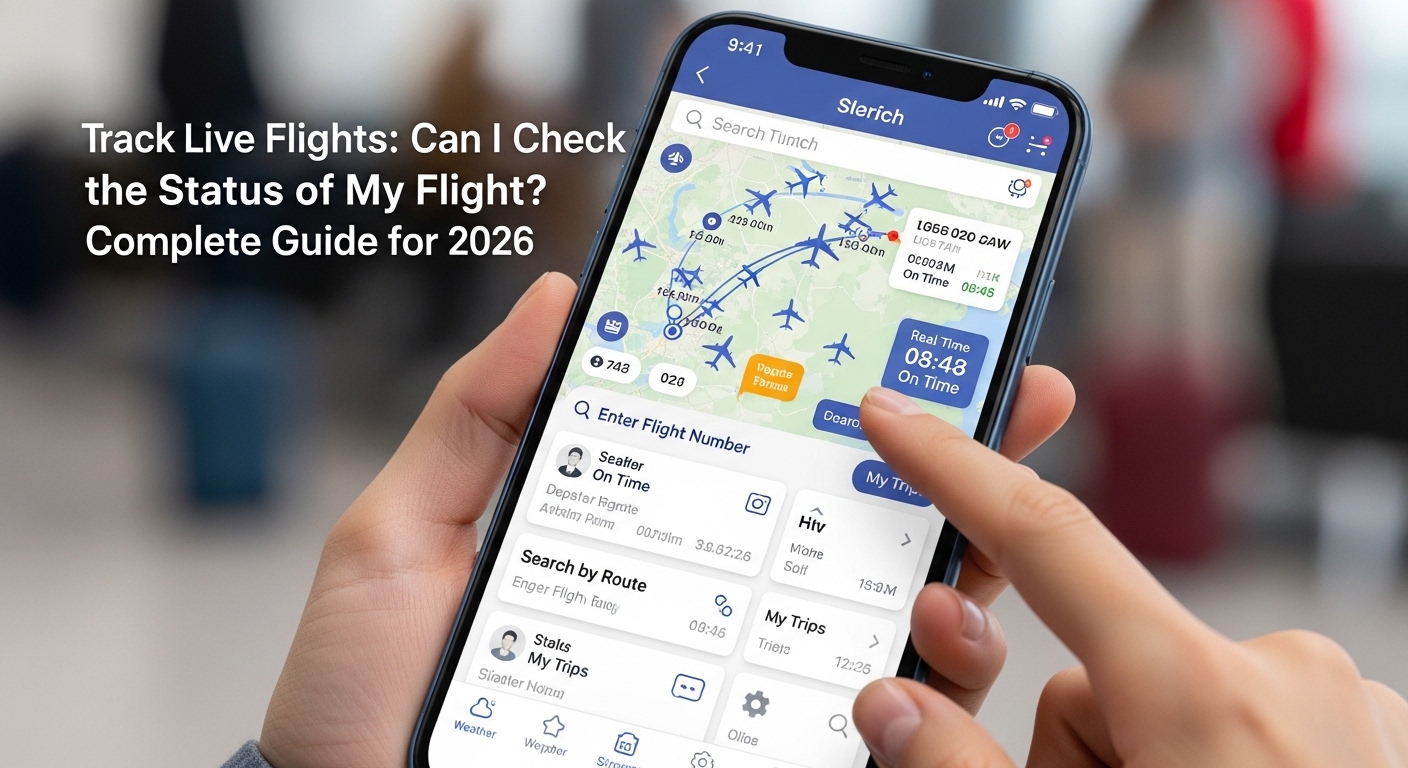
    Track Live Flights: Can I Check the Status of My Flight? Complete Guide for 2026

    In today’s fast-moving world, air travel has become an essential part of business, tourism, and family travel. Whether you’re flying internationally or domestically, knowing the exact status of your flight can save time, reduce stress, and help you plan your journey more effectively. Thanks to modern aviation technology, travelers can now use a flight radar live platform or a plane tracker live service to monitor flights anywhere in the world in real time.

    If you’ve ever wondered, “Can I check the status of my flight?” the answer is yes. Modern live flight status tracker tools allow passengers, airport staff, and aviation enthusiasts to follow aircraft movements from takeoff to landing.

    This comprehensive guide explains everything you need to know about track flights in real time, the best tools available in 2026, and how to use a live flight tracker with map for accurate flight monitoring.

    What Is Live Flight Tracking?

    Live flight tracking is the process of monitoring aircraft positions, routes, speed, altitude, and arrival times in real time using advanced aviation technology.

    A modern real time airplane tracking system collects data from:

    • ADS-B transmitters
    • Ground radar stations
    • Satellites
    • Airline data feeds
    • Airport operational systems

    This information is displayed through a live flight status tracker that shows the aircraft’s exact location on a map.

    Why People Track Flights in Real Time

    Millions of travelers use track flights in real time services daily for various reasons:

    Flight Status Monitoring

    Passengers can check:

    • Delays
    • Gate changes
    • Cancellations
    • Boarding status
    • Arrival schedules

    Airport Pickups

    Families can monitor:

    • Landing time
    • Flight delays
    • Taxiing progress

    Business Travel

    Companies use airline flight status live systems to ensure executives arrive on schedule.

    Aviation Enthusiasts

    Aircraft lovers enjoy watching global air traffic using a real time air traffic control map.

    How to Track a Flight in Real Time

    Many travelers ask: how to track a flight in real time?

    The process is simple.

    Step 1: Get the Flight Number

    Examples:

    • EK202
    • BA115
    • QR701
    • AA100

    Step 2: Open a Flight Tracking Platform

    Use a:

    • flight radar live website
    • live flight tracker app
    • airline website

    Step 3: Enter Flight Information

    Search by:

    • Flight number
    • Airport route
    • Airline name
    • Aircraft registration

    Step 4: View Live Flight Data

    You can see:

    • Aircraft location
    • Altitude
    • Speed
    • Estimated arrival time
    • Departure details

    This is the easiest way to track flight by number live.

    What Information Can Flight Trackers Show?

    Modern advanced flight tracking system platforms display:

    Aircraft Position

    The exact location of the plane on a map.

    Altitude

    Current flight altitude in feet.

    Speed

    Ground speed and airspeed information.

    Route

    Complete flight path from departure to arrival.

    Flight History

    Previous flights operated by the aircraft.

    Arrival Estimates

    Useful for a flight arrival tracker.

    Departure Information

    Useful for a flight departure tracker.

    Flight Radar Live Technology Explained

    A flight radar live service uses ADS-B technology.

    ADS-B stands for:

    Automatic Dependent Surveillance-Broadcast

    Aircraft transmit:

    • Position
    • Speed
    • Altitude
    • Direction

    These signals are received by:

    • Ground stations
    • Satellite networks

    The data is then displayed on a live flight tracker worldwide map.

    Best Flight Tracker App Options in 2026

    Choosing the best flight tracker app depends on your needs.

    Features to Look For

    • Real-time tracking
    • Global coverage
    • Push notifications
    • Airport information
    • Arrival predictions
    • Weather integration

    Top-rated apps generally offer:

    • Live maps
    • Aircraft details
    • Flight alerts
    • Airline schedules

    A quality real time flight tracking app should provide accurate updates every few seconds.

    Benefits of a Flight Tracking App Free Version

    Many platforms offer a flight tracking app free version.

    Benefits include:

    Cost Savings

    No subscription required.

    Real-Time Monitoring

    Track flights instantly.

    Worldwide Coverage

    Monitor domestic and international flights.

    Flight Alerts

    Receive notifications about delays and gate changes.

    For casual travelers, a free version is often sufficient.

    Live Flight Tracker App Download Guide

    Looking for a live flight tracker app download?

    Follow these steps:

    Android Users

    1. Open Google Play Store.
    2. Search flight tracker apps.
    3. Install your preferred app.
    4. Enable notifications.

    iPhone Users

    1. Open App Store.
    2. Search aviation tracking apps.
    3. Download and install.
    4. Allow location access if needed.

    After installation, you can begin using your airplane tracker app immediately.

    Live Flight Tracker With Map Features

    One of the most popular features is the live flight tracker with map.

    Interactive maps display:

    • Aircraft icons
    • Flight routes
    • Airports
    • Weather overlays
    • Traffic congestion

    Benefits include:

    • Easy visualization
    • Better travel planning
    • Real-time route monitoring

    Many travelers prefer visual maps over simple text-based updates.

    Track International Flights Live

    International travel often involves multiple airports and time zones.

    A track international flights live platform helps travelers:

    • Monitor long-haul flights
    • Check customs arrival times
    • Track connecting flights
    • Avoid missed connections

    Popular international routes can be followed from departure to arrival using a global flight tracking system.

    Flight Tracker Arrivals and Departures

    A reliable flight tracker arrivals and departures tool helps passengers and airport visitors.

    Arrival Tracking

    A flight arrival tracker displays:

    • Landing time
    • Terminal information
    • Baggage claim details
    • Arrival delays

    Departure Tracking

    A flight departure tracker shows:

    • Boarding updates
    • Gate assignments
    • Scheduled departure times
    • Aircraft pushback status

    These tools are especially useful during busy travel seasons.

    Track Flight By Airline

    Many systems allow users to track flight by airline instead of entering a flight number.

    Examples include:

    • Emirates
    • Qatar Airways
    • Lufthansa
    • British Airways
    • American Airlines
    • United Airlines

    This feature is useful when you know the airline but not the flight number.

    Airport Flight Tracker Live Systems

    An airport flight tracker live platform focuses on airport-specific activity.

    You can monitor:

    • Departures
    • Arrivals
    • Delays
    • Runway traffic
    • Terminal activity

    This is useful for:

    • Airport staff
    • Taxi services
    • Hotel shuttles
    • Travelers

    Airline Flight Status Live Monitoring

    Airlines provide their own airline flight status live systems.

    Advantages include:

    Direct Updates

    Information comes directly from the airline.

    Gate Changes

    Immediate notifications.

    Boarding Status

    Accurate boarding progress.

    Delay Alerts

    Real-time operational updates.

    Combining airline updates with a live flight status tracker provides maximum accuracy.

    Real Time Aviation Tracking Explained

    Real time aviation tracking involves monitoring aircraft movement using multiple data sources.

    These include:

    • ADS-B networks
    • FAA systems
    • Satellite tracking
    • Airport radar
    • Airline operational centers

    Modern aviation tracking platforms process millions of data points daily.

    Real Time Air Traffic Control Map

    A real time air traffic control map provides a broader view of global aviation activity.

    Users can see:

    • Aircraft density
    • Flight corridors
    • Airport congestion
    • Weather impacts

    This technology is frequently used by:

    • Airlines
    • Airports
    • Aviation analysts
    • Enthusiasts

    Premium Flight Tracker Tools

    Professional users often choose premium flight tracker tools.

    Premium features may include:

    Historical Flight Data

    Analyze previous routes and performance.

    Advanced Filters

    Search by:

    • Aircraft type
    • Airline
    • Airport
    • Registration number

    Weather Layers

    Monitor turbulence and storms.

    Fleet Monitoring

    Track multiple aircraft simultaneously.

    These tools are popular among aviation professionals.

    Best Flight Tracking Software for Professionals

    The best flight tracking software offers advanced aviation analytics.

    Professional users benefit from:

    • Fleet management
    • Predictive arrival estimates
    • Historical reporting
    • Aircraft performance tracking
    • Route optimization

    Industries using such software include:

    • Airlines
    • Cargo companies
    • Private aviation firms
    • Government agencie

    Advanced Flight Tracking System Features

    An advanced flight tracking system goes beyond simple flight status monitoring.

    Features include:

    Satellite Tracking

    Coverage over oceans and remote areas.

    Predictive Analytics

    Forecast delays before they happen.

    AI-Powered Routing

    Suggest efficient flight paths.

    Weather Integration

    Track weather impacts in real time.

    These innovations continue improving flight visibility worldwide.

    Flight Radar 24 Live Tracker Popularity

    The flight radar 24 live tracker concept has become extremely popular among travelers.

    Reasons include:

    • Easy access
    • Global coverage
    • Detailed flight information
    • Mobile compatibility

    Millions of users rely on radar-based tracking every day.

    Google Flight Tracker Live Capabilities

    Many travelers search for google flight tracker live tools.

    Google offers flight information through search results, including:

    • Flight schedules
    • Delays
    • Arrival times
    • Departure updates

    While convenient, dedicated flight tracking platforms often provide more detailed information.

    Live Flight Tracker Map 2026 Trends

    The live flight tracker map 2026 experience is more advanced than ever.

    New trends include:

    AI Flight Predictions

    More accurate arrival estimates.

    Satellite Expansion

    Better oceanic coverage.

    Enhanced Maps

    Higher-resolution visuals.

    Real-Time Weather Layers

    Integrated weather intelligence.

    Smart Notifications

    Personalized flight alerts.

    Global Flight Tracking System Evolution

    A modern global flight tracking system can monitor aircraft almost anywhere on Earth.

    Recent improvements include:

    • Satellite ADS-B coverage
    • Improved airport integration
    • Faster data refresh rates
    • Better prediction algorithms

    As technology advances, flight tracking becomes increasingly accurate.

    Common Reasons for Flight Delays

    When using a live flight status tracker, you may notice delays.

    Common causes include:

    Weather Conditions

    Storms, fog, and strong winds.

    Air Traffic Congestion

    Busy airports create bottlenecks.

    Technical Issues

    Aircraft maintenance requirements.

    Crew Scheduling

    Crew availability can affect departures.

    Airport Operations

    Runway closures and security checks.

    Tracking systems help passengers stay informed about these changes.

    Tips for Accurate Flight Tracking

    To get the most accurate results:

    Use Flight Numbers

    The best way to track flight by number live.

    Enable Notifications

    Receive instant updates.

    Verify Airline Information

    Check official airline sources.

    Use Multiple Sources

    Compare airline data with radar platforms.

    Monitor Weather

    Weather often affects flight schedules.

    Future of Flight Tracking Beyond 2026

    Flight tracking technology continues evolving rapidly.

    Future developments may include:

    • AI-powered forecasting
    • Enhanced satellite tracking
    • Global coverage with minimal delays
    • Smart airport integration
    • Autonomous aircraft monitoring

    The future of real time aviation tracking promises even greater accuracy and transparency.

    Conclusion

    If you’ve ever asked, “Can I check the status of my flight?” the answer is absolutely yes. Modern flight tracking technology makes it easier than ever to monitor aircraft anywhere in the world.

    Whether you’re using a flight radar live service, a plane tracker live platform, a live flight tracker with map, or a dedicated real time flight tracking app, you can access accurate flight information within seconds.

    From checking departures and arrivals to monitoring international routes and analyzing global air traffic, today’s advanced flight tracking system solutions provide unprecedented visibility into aviation operations.

    As we move through 2026 and beyond, tools such as flight tracker arrivals and departures, airport flight tracker live, global flight tracking system, and real time air traffic control map platforms will continue helping travelers stay informed, reduce uncertainty, and enjoy smoother journeys worldwide.

  • Step-by-Step Guide to Track a British Airways Flight Live Online in 2026

    Step-by-Step Guide to Track a British Airways Flight Live Online in 2026

    In today’s connected world, flight tracking has become an essential tool for travelers, families, airport pickups, aviation enthusiasts, and business professionals. Whether you’re waiting for a loved one to arrive or monitoring your own journey, knowing how to track a flight live British Airways can provide peace of mind and real-time travel updates.

    Modern flight tracking technology allows users to see aircraft locations, estimated arrival times, delays, gate information, altitude, speed, and route details. In 2026, flight tracking platforms are more advanced than ever, offering live maps and accurate updates for airlines around the world.

    This comprehensive guide explains how to track a BA flight live, the best tools available, and how flight tracking works. We will also compare tracking options for major international airlines, including emirates flight tracker live, lufthansa live flight tracker, air france live flight tracking, and many others.

    What Is Live Flight Tracking?

    Live flight tracking is the process of monitoring an aircraft’s real-time location during its journey. Flight tracking systems collect data from satellites, radar networks, airport systems, and ADS-B technology to display aircraft movements on interactive maps.

    With live flight tracking, users can view:

    • Current aircraft location
    • Departure and arrival airports
    • Estimated arrival time
    • Flight delays
    • Flight route
    • Aircraft type
    • Altitude and speed
    • Weather conditions affecting flights

    This technology has transformed air travel by making flight information easily accessible to everyone.

    Why Track a British Airways Flight Live?

    There are many reasons why travelers choose to monitor British Airways flights in real time.

    1. Stay Updated on Delays

    Flight schedules can change because of weather, airport congestion, or operational issues. Tracking allows you to receive real-time updates.

    2. Coordinate Airport Pickups

    Family members and transportation services can better plan arrivals when using live tracking.

    3. Monitor Connecting Flights

    Passengers with connecting flights can stay informed about arrival times and potential delays.

    4. Follow Long-Haul International Routes

    British Airways operates flights across Europe, North America, Asia, Africa, and the Middle East. Tracking helps passengers monitor long-distance journeys.

    Step-by-Step Guide to Track a British Airways Flight Live

    Following these simple steps will help you monitor any British Airways flight in real time.

    Step 1: Obtain the Flight Number

    Before tracking a flight, you need the flight number.

    Examples include:

    • BA149
    • BA216
    • BA283
    • BA117

    The flight number usually begins with “BA” followed by numbers.

    Step 2: Visit a Flight Tracking Platform

    Several platforms provide real-time flight monitoring.

    Popular options include:

    • FlightRadar24
    • FlightAware
    • Airline websites
    • Airport websites
    • Aviation tracking apps

    These services allow users to enter the flight number and instantly view live data.

    Step 3: Enter the Flight Number

    Type the British Airways flight number into the search bar.

    For example:

    BA149

    The system will display:

    • Aircraft location
    • Flight route
    • Estimated arrival
    • Departure status
    • Aircraft details

    This is the easiest method to track a BA flight live.

    Step 4: View the Live Flight Map

    Most flight trackers provide an interactive map showing:

    • Current aircraft position
    • Flight path
    • Departure airport
    • Destination airport

    This live map updates continuously throughout the journey.

    Step 5: Monitor Arrival Information

    Travelers can also track:

    • Terminal information
    • Arrival gate
    • Estimated landing time
    • Baggage claim details

    These updates are especially useful for airport pickups.

    Understanding Flight Tracking Technology

    Many travelers wonder how flight trackers work.

    Modern systems rely on:

    ADS-B Technology

    Automatic Dependent Surveillance-Broadcast (ADS-B) transmits aircraft location information directly from the aircraft.

    Satellite Tracking

    Satellites collect flight data over oceans and remote regions.

    Airport Data Systems

    Airports provide arrival and departure information to tracking services.

    Radar Networks

    Ground-based radar systems supplement tracking data.

    Together, these technologies provide highly accurate live flight information.

    Best Platforms for Live Flight Tracking in 2026

    Choosing the right tracking platform can improve your experience.

    FlightRadar24

    One of the world’s most popular flight tracking services.

    Features include:

    • Live aircraft maps
    • Historical flight data
    • Airport information
    • Aircraft photos

    FlightAware

    A trusted aviation tracking platform.

    Benefits include:

    • Real-time flight status
    • Delay alerts
    • Airline schedules
    • Arrival predictions

    Airline Tracking Tools

    Many airlines offer built-in tracking services through their websites and mobile applications.

    British Airways passengers can check:

    • Flight status
    • Departure information
    • Arrival updates

    directly through airline channels.

    Tracking Other Major Airlines Live

    Many travelers fly with different carriers throughout the year.

    Below are examples of popular flight tracking searches.

    Emirates Flight Tracking

    Passengers frequently search for emirates flight tracker live to monitor flights traveling between Dubai and international destinations.

    Many users also search for:

    • live tracking of emirates flight
    • track flight live emirates

    These tools provide detailed information on long-haul flights worldwide.

    Lufthansa Flight Tracking

    Germany’s largest airline offers global connectivity.

    Travelers often use a lufthansa live flight tracker to monitor transatlantic and European flights.

    Benefits include:

    • Real-time route updates
    • Arrival predictions
    • Delay notifications

    Air France Flight Tracking

    Passengers flying through Paris often use air france live flight tracking services.

    Flight trackers display:

    • Aircraft location
    • Gate information
    • Estimated arrival times

    making travel planning easier.

    Cathay Pacific Flight Tracking

    For flights operating through Hong Kong, travelers often search:

    • cathay pacific flight tracker live
    • cathay flight tracker live

    Live maps allow passengers to monitor flights across Asia, Europe, and North America.

    Virgin Atlantic Flight Tracking

    Travelers frequently search for a virgin atlantic flight tracker live free service to monitor flights between the UK and international destinations.

    These tracking platforms provide:

    • Route monitoring
    • Arrival updates
    • Flight history information

    Korean Air Flight Tracking

    International passengers often rely on a live flight tracker Korean Air service to monitor flights across Asia and beyond.

    Real-time updates improve travel planning and reduce uncertainty.

    Spirit Airlines Flight Tracking

    Domestic travelers in the United States often use:

    • spirit airlines flight tracker live
    • spirit live flight tracker
    • live spirit flight tracker

    These services help passengers track low-cost domestic and international routes.

    Spirit Airlines passengers can monitor:

    • Delays
    • Departure times
    • Gate changes
    • Arrival schedules

    in real time.

    Alaska Airlines Live Flight Tracking

    For flights throughout North America, many travelers use an alaska airlines flight tracker live map.

    Features commonly include:

    • Interactive maps
    • Flight routes
    • Arrival updates
    • Aircraft information

    This is especially useful for travelers flying to remote regions of Alaska.

  • Flight Radar & Live Flight Status Tracker Online 24/7

    Flight Radar & Live Flight Status Tracker Online 24/7

    In today’s fast-moving world, air travel has become an essential part of business, tourism, and international connectivity. Millions of people travel daily across countries and continents, making flight tracking more important than ever before. Whether you are waiting for a loved one at the airport, managing business travel, or simply passionate about aviation, a live flight tracker online can provide accurate and real-time flight updates instantly.

    Modern flight tracking tools now allow users to monitor flights worldwide using advanced radar systems, GPS satellites, and aviation databases. From checking delays to monitoring flight routes on a live map, travelers can now stay informed 24/7 with just a smartphone or computer.

    This guide explains everything you need to know about using a real time flight tracker, the benefits of live airplane tracking systems, and the best apps available for tracking flights around the globe.

    What Is a Live Flight Tracker Online?

    A live flight tracker online is a digital system that shows real-time information about aircraft flying across the world. These platforms collect data from aviation authorities, satellites, airline systems, and radar networks to provide accurate updates about airplane locations, speed, altitude, departure times, and arrival schedules.

    Using a track flight live system, travelers can:

    • Monitor airplanes on a live map
    • Check arrivals and departures
    • Receive delay notifications
    • Track international flights live
    • View aircraft routes in real time
    • Search flights by flight number

    Modern flight tracking technology has transformed the way people travel and monitor aviation activities worldwide.

    How Does a Real Time Flight Tracker Work?

    A real time flight tracker works by gathering data from several aviation technologies, including:

    ADS-B Technology

    Automatic Dependent Surveillance-Broadcast (ADS-B) is one of the most important technologies used in modern aviation tracking. Aircraft equipped with ADS-B transmit their location, speed, altitude, and direction to nearby receivers.

    Radar Systems

    Traditional radar stations monitor aircraft movement and send data to aviation authorities and flight tracking platforms.

    Satellite Tracking

    Satellite systems help track airplanes over oceans and remote regions where radar coverage may be limited.

    Airline Data Integration

    Many platforms connect directly with airline systems to provide real-time flight schedules and operational updates.

    These technologies combine to create a highly accurate flight tracking live map for users worldwide.

    Benefits of Using a Live Airplane Tracker

    A live airplane tracker offers many advantages for travelers, businesses, and aviation enthusiasts.

    Real-Time Updates

    Users can instantly receive information about:

    • Delays
    • Gate changes
    • Cancellations
    • Estimated arrival times
    • Flight diversions

    Better Travel Planning

    Using a track flights in real time platform helps travelers plan airport pickups and departures more efficiently.

    Aviation Enthusiast Experience

    Plane spotters and aviation fans love monitoring aircraft routes with a flight radar live platform.

    Safety and Awareness

    Flight tracking tools provide important operational awareness during weather disruptions and emergencies.

    Flight Tracking Live Map Features

    Modern flight tracking websites and apps offer advanced mapping features that make tracking easy and interactive.

    Interactive Global Maps

    A live flight tracker with map allows users to zoom into airports, countries, and flight paths worldwide.

    Aircraft Information

    Most systems display:

    • Aircraft model
    • Airline details
    • Flight speed
    • Altitude
    • Route history

    Real-Time Air Traffic Monitoring

    A live air traffic tracker displays hundreds or even thousands of aircraft moving simultaneously across the globe.

    Airport Information

    Many platforms include airport arrival and departure schedules for real-time monitoring.

    Why Flight Radar Live Platforms Are Popular

    The popularity of flight radar live services continues to grow because they provide instant and accurate aviation data.

    People use these platforms for:

    • Travel planning
    • Airport pickups
    • Business monitoring
    • Aviation research
    • Educational purposes
    • Aircraft spotting

    With global air traffic increasing every year, access to real-time aviation information has become more valuable than ever.

    Best Flight Tracker App Options

    Choosing the best flight tracker app depends on your needs and preferred features. Some apps focus on aviation enthusiasts, while others prioritize traveler convenience.

    Features to Look For

    When selecting a flight tracking app free, consider:

    • Real-time notifications
    • Live maps
    • Flight search functionality
    • Airport information
    • Airline tracking
    • International flight support

    Mobile Compatibility

    A quality real time flight tracking app should work smoothly on both Android and iOS devices.

    Offline Access

    Some apps allow users to save flight information for quick offline access.

    Live Flight Tracker App Download Guide

    Downloading a live flight tracker app download is simple and usually free.

    For Android Users

    Visit the Google Play Store and search for:

    • Flight tracker
    • Airplane tracker
    • Flight radar
    • Live flight status tracker

    For iPhone Users

    Open the Apple App Store and search for similar flight tracking apps.

    Installation Tips

    Before downloading:

    • Check user reviews
    • Compare features
    • Review app permissions
    • Ensure compatibility with your device

    Airplane Tracker App Features Explained

    A professional airplane tracker app provides several advanced aviation tools.

    Push Notifications

    Receive instant alerts about:

    • Flight delays
    • Gate changes
    • Boarding updates
    • Arrival times

    Route Playback

    Many apps allow users to replay completed flights and analyze routes.

    Weather Layers

    Advanced apps integrate live weather data with flight maps.

    Airport Monitoring

    Users can track airport congestion and live runway activity.

    How to Track a Flight in Real Time

    Many travelers ask how to track a flight in real time accurately. The process is usually straightforward.

    Step 1: Open a Flight Tracker

    Use a website or app that provides live flight tracking.

    Step 2: Enter the Flight Number

    Search using the airline code and flight number.

    Example:

    • PK301
    • EK202
    • BA117

    Step 3: View Live Flight Information

    The system displays:

    • Aircraft location
    • Estimated arrival
    • Departure details
    • Route map
    • Speed and altitude

    Track International Flights Live

    Tracking global flights has become easier than ever with modern aviation systems.

    A track international flights live service helps travelers monitor flights across continents in real time.

    Benefits for International Travelers

    • Better airport coordination
    • Time zone awareness
    • Accurate arrival estimates
    • Layover monitoring

    Long-Haul Flight Monitoring

    Users can follow flights across oceans using satellite-supported systems.

    Real Time Airplane Tracking System Technology

    A real time airplane tracking system relies on powerful technologies that constantly update aircraft locations.

    GPS Integration

    Aircraft transmit GPS coordinates during flights.

    Data Processing Centers

    Global aviation networks process millions of data points every second.

    Cloud-Based Infrastructure

    Modern flight tracking systems use cloud technology for fast updates and scalability.

    Flight Tracker Arrivals and Departures

    Monitoring flight tracker arrivals and departures is extremely useful for airport visitors and travelers.

    Arrival Tracking

    Users can check:

    • Arrival terminals
    • Delay status
    • Baggage claim updates

    Departure Tracking

    Track:

    • Boarding times
    • Gate assignments
    • Departure delays

    This information helps passengers avoid confusion and save time.

    Track Flight by Number Live

    One of the most common ways to monitor flights is to track flight by number live.

    Every commercial flight has a unique flight number assigned by the airline.

    Examples include:

    • AA100
    • QR701
    • TK715

    Entering the flight number into a tracker instantly shows live aircraft information.

    Why Travelers Prefer Real-Time Flight Tracking

    Travelers increasingly depend on real-time flight tracking because of the convenience and transparency it provides.

    Reduced Stress

    Passengers stay informed about delays and changes before arriving at the airport.

    Better Coordination

    Friends and family can monitor flight arrivals accurately.

    Improved Business Travel

    Corporate travelers can manage schedules more efficiently.

    Future of Flight Tracking Technology

    The aviation industry continues investing in advanced flight tracking systems.

    AI-Powered Predictions

    Artificial intelligence will improve delay forecasting and route optimization.

    Enhanced Satellite Coverage

    Global satellite systems will provide even more accurate live tracking.

    Smart Airport Integration

    Future systems may connect directly with airport navigation and passenger assistance technologies.

    Importance of Flight Tracking During Emergencies

    Flight tracking systems become especially valuable during severe weather conditions and emergencies.

    Users can monitor:

    • Flight diversions
    • Emergency landings
    • Weather disruptions
    • Air traffic congestion

    This helps travelers stay informed and prepared during unexpected situations.

    Aviation Enthusiasts and Plane Tracking

    Millions of aviation fans use plane tracker live systems daily.

    Popular Activities

    • Aircraft spotting
    • Airline route analysis
    • Watching rare aircraft
    • Monitoring military flights

    Real-time aviation maps have created an entirely new hobby community online.

    Tips for Choosing the Best Flight Tracker

    Selecting the right flight tracking platform depends on your travel needs.

    Consider Accuracy

    Choose services with reliable data sources and fast updates.

    Compare User Experience

    Easy navigation and clean maps improve usability.

    Check Global Coverage

    International travelers should select trackers with worldwide monitoring capabilities.

    Common Problems with Flight Tracking Apps

    Although flight tracking technology is highly advanced, occasional issues may occur.

    Delayed Updates

    Remote regions may experience slower data refresh rates.

    Missing Flights

    Some private or restricted aircraft may not appear on public systems.

    Internet Dependency

    Most live trackers require stable internet access.

    Best Uses for a Live Flight Status Tracker

    A live flight status tracker can be useful in many situations.

    Airport Pickups

    Avoid waiting unnecessarily by checking live arrival times.

    Business Management

    Companies monitor employee travel schedules efficiently.

    Cargo Monitoring

    Logistics companies track cargo aircraft globally.

    Tourism and Travel Planning

    Travelers stay updated about changing schedules.

    Conclusion

    A modern live flight tracker online has become an essential travel tool for millions of people worldwide. Whether you want to use a real time flight tracker, monitor aircraft with a flight tracking live map, or install the best flight tracker app, today’s technology offers unmatched convenience and accuracy.

    From tracking departures and arrivals to following aircraft across continents, live flight tracking systems continue transforming the aviation experience. Travelers can now track flight live, monitor international routes, and receive instant updates anytime, anywhere.

    As aviation technology evolves, flight tracking platforms will become even smarter, faster, and more accurate. Whether you are a frequent flyer, airport visitor, aviation enthusiast, or business traveler, using a reliable live air traffic tracker ensures you stay connected to the skies 24/7.

  • Live Flight Tracker Worldwide – Track Flights in Real Time

    Live Flight Tracker Worldwide – Track Flights in Real Time

    In today’s fast-moving world, air travel has become an essential part of business, tourism, education, and family connections. Whether you are waiting for a loved one at the airport, planning an international journey, or monitoring flight delays, a live flight tracker worldwide system can make travel easier and more convenient. Modern technology now allows travelers to monitor aircraft movements in real time using advanced radar systems, satellite tracking, and GPS-based monitoring tools.

    With a real time flight tracker, users can instantly check departures, arrivals, delays, cancellations, and the exact location of airplanes in the sky. These systems provide accurate updates and interactive maps that help passengers stay informed throughout their journey.

    This complete guide explains everything about live flight tracking, how it works, the best apps and websites to use, and why millions of travelers rely on these tools every day.

    What Is a Live Flight Tracker?

    A live flight tracker worldwide is an online system or mobile application that allows users to monitor airplanes in real time. It uses satellite technology, radar systems, ADS-B receivers, and GPS data to display aircraft locations on a digital map.

    Using a track flight live platform, travelers can:

    • Monitor flight departures and arrivals
    • Check delays and cancellations
    • View flight paths and aircraft speed
    • Track international and domestic flights
    • See airport congestion in real time
    • Follow airplanes on an interactive map

    Today, almost every airline and airport uses some form of real time airplane tracking system to improve safety and passenger convenience.

    How Does Real-Time Flight Tracking Work?

    A real time flight tracker works by collecting information from several aviation technologies. The most common technology used today is ADS-B (Automatic Dependent Surveillance-Broadcast).

    Aircraft transmit signals that include:

    • Flight number
    • Speed
    • Altitude
    • Aircraft type
    • Direction
    • GPS coordinates

    Ground stations and satellites receive this information and send it to tracking platforms. The data then appears on a flight tracking live map where users can watch aircraft movement in real time.

    Main Technologies Behind Flight Tracking

    1. ADS-B Technology

    Most modern aircraft use ADS-B transponders to share location data with air traffic control and tracking systems.

    2. Radar Systems

    Traditional radar systems continue to support live air traffic tracker services, especially around airports.

    3. Satellite Tracking

    Satellites help track airplanes flying over oceans and remote areas.

    4. GPS Systems

    GPS ensures highly accurate positioning for plane tracker live services.

    Benefits of Using a Live Flight Tracker

    A live flight status tracker provides many advantages for travelers, airport staff, and aviation enthusiasts.

    Real-Time Updates

    Passengers receive instant information about delays, gate changes, and cancellations.

    Better Travel Planning

    You can adjust transportation schedules according to actual arrival times.

    Airport Pickup Convenience

    Families and taxi drivers can avoid long waiting times.

    Flight Safety Awareness

    Tracking systems provide transparency and accurate monitoring.

    International Travel Monitoring

    Users can easily track international flights live across multiple countries.

    Features of the Best Flight Tracker Apps

    The best flight tracker app includes advanced features that make travel easier and more efficient.

    Interactive Flight Maps

    A live flight tracker with map displays aircraft movement visually across the globe.

    Flight Status Notifications

    Users receive alerts about delays, boarding times, and gate changes.

    Aircraft Details

    Many apps provide information about aircraft type, airline, and altitude.

    Airport Information

    Travelers can check terminal details, baggage claim areas, and departure schedules.

    Weather Monitoring

    Weather updates help passengers understand possible delays.

    Multi-Flight Tracking

    Business travelers can monitor multiple flights simultaneously.

    Best Uses of a Real-Time Flight Tracker

    A track flights in real time system is useful for many situations.

    Airport Arrivals and Departures

    A flight tracker arrivals and departures service helps passengers monitor exact landing and takeoff times.

    Business Travel

    Companies track employee flights for better scheduling and coordination.

    Family Travel Coordination

    Families stay informed about loved ones’ travel progress.

    Aviation Enthusiasts

    Aviation fans enjoy using flight radar live tools to observe aircraft worldwide.

    Cargo and Logistics

    Shipping companies track cargo aircraft movements in real time.

    How to Track a Flight in Real Time

    Many travelers ask, how to track a flight in real time effectively. The process is simple and only takes a few steps.

    Step 1: Open a Flight Tracking Platform

    Use a website or flight tracking app free on your mobile device.

    Step 2: Enter Flight Details

    Type the airline name or flight number into the search bar.

    Step 3: View Live Flight Data

    The system will display:

    • Current location
    • Estimated arrival time
    • Departure information
    • Flight route
    • Speed and altitude

    Step 4: Enable Notifications

    Receive instant updates directly on your smartphone.

    Popular Live Flight Tracking Platforms

    Several global platforms provide accurate live flight tracker worldwide services.

    FlightRadar24

    One of the most recognized flight tracking platforms globally. It offers:

    • Interactive maps
    • Real-time radar
    • Aircraft details
    • Historical flight data

    FlightAware

    Popular for business travelers and aviation professionals.

    Plane Finder

    Known for its user-friendly interface and accurate tracking.

    ADS-B Exchange

    Provides uncensored aviation tracking data.

    Airline Official Apps

    Many airlines now offer integrated real time flight tracking app features.

    Why Travelers Prefer Live Flight Tracking Apps

    A modern airplane tracker app offers convenience and peace of mind. Travelers no longer need to rely only on airport information boards.

    Instant Information Access

    Everything is available directly from a smartphone.

    Reduced Stress

    Passengers can plan around delays and schedule changes.

    Better Airport Timing

    Travelers avoid unnecessary waiting at terminals.

    Accurate Global Coverage

    Users can track flight by number live anywhere in the world.

    Features to Look for in a Flight Tracking App

    When selecting the best flight tracker app, consider these important features.

    Real-Time Data Accuracy

    Choose apps with fast and reliable updates.

    Interactive Map Interface

    A high-quality flight tracking live map improves user experience.

    Worldwide Coverage

    The app should support both domestic and international flights.

    Push Notifications

    Important updates should appear instantly.

    User-Friendly Design

    Simple navigation improves convenience.

    Free and Premium Versions

    Many platforms provide a free live flight tracking website alongside premium upgrades.

    Understanding Flight Radar Technology

    Flight radar live technology combines aviation radar systems with digital mapping software.

    The system shows:

    • Airplane icons moving live
    • Flight paths
    • Airport congestion
    • Air traffic routes

    This technology is especially useful for:

    • Airlines
    • Airport authorities
    • Pilots
    • Passengers
    • Aviation enthusiasts

    Real-Time Air Traffic Monitoring

    A live air traffic tracker allows users to observe thousands of airplanes flying simultaneously across the globe.

    Major benefits include:

    • Better airport management
    • Improved air traffic safety
    • Accurate scheduling
    • Enhanced passenger communication

    Real-time air traffic systems have transformed modern aviation operations.

    How Airlines Use Flight Tracking Systems

    Airlines rely heavily on real time airplane tracking system technology for operational efficiency.

    Flight Safety

    Tracking helps airlines monitor aircraft positions continuously.

    Fuel Optimization

    Flight paths can be adjusted for efficiency.

    Delay Management

    Airlines notify passengers immediately about disruptions.

    Fleet Monitoring

    Airlines monitor every aircraft in their fleet globally.

    Mobile Apps vs Websites for Flight Tracking

    Both websites and apps offer useful tracking tools.

    Flight Tracking Websites

    A free live flight tracking website is ideal for desktop users who want detailed maps and broader flight information.

    Advantages

    • Larger display
    • Detailed analytics
    • Better for aviation enthusiasts

    Flight Tracking Mobile Apps

    A live flight tracker app download provides flexibility for travelers on the move.

    Advantages

    • Instant alerts
    • Portable access
    • Easy airport navigation

    International Flight Tracking

    Modern systems can easily track international flights live across continents.

    Users can monitor:

    • Long-haul flights
    • Oceanic routes
    • International connections
    • Customs arrival times

    This is especially helpful for:

    • International students
    • Business travelers
    • Families receiving overseas visitors

    Importance of Real-Time Flight Tracking for Airports

    Airports benefit greatly from track flights in real time technology.

    Efficient Ground Operations

    Ground crews prepare gates and baggage handling based on live data.

    Passenger Communication

    Airports provide accurate announcements and display updates.

    Security Monitoring

    Authorities monitor aircraft movement for safety purposes.

    Reduced Congestion

    Traffic management becomes more organized.

    Future of Flight Tracking Technology

    The future of aviation tracking is becoming even more advanced.

    Artificial Intelligence

    AI will improve delay prediction and route optimization.

    Enhanced Satellite Coverage

    Remote regions will receive better tracking support.

    Smart Airports

    Future airports will integrate advanced live tracking systems into passenger services.

    Improved Mobile Experiences

    Upcoming apps will provide faster and more detailed updates.

    Tips for Using a Live Flight Tracker Effectively

    To get the best experience from a plane tracker live platform, follow these tips:

    • Always enter the correct flight number
    • Enable app notifications
    • Use reliable internet connections
    • Compare airline updates with tracker information
    • Monitor weather conditions for possible delays

    Common Problems in Flight Tracking

    Although modern systems are highly accurate, some issues may occur.

    Delayed Data Updates

    Some flights may experience brief signal delays.

    Limited Ocean Coverage

    Tracking over remote oceans can occasionally be slower.

    Incorrect Flight Numbers

    Typing errors may produce incorrect results.

    Connectivity Issues

    Poor internet connections can affect real-time updates.

    Why Flight Tracking Is Important Today

    The aviation industry handles millions of passengers daily. A live flight tracker worldwide system improves transparency, efficiency, and convenience for everyone involved.

    Passengers appreciate:

    • Better travel planning
    • Reduced airport stress
    • Accurate arrival estimates
    • Real-time communication

    Airlines benefit from:

    • Improved operational efficiency
    • Better customer satisfaction
    • Enhanced safety monitoring

    Best Situations to Use Flight Tracking

    You should use a real time flight tracker in these situations:

    • Picking someone up from the airport
    • Monitoring business travel schedules
    • Tracking international flights
    • Checking delays before leaving home
    • Watching live air traffic
    • Planning connecting flights

    Conclusion

    A live flight tracker worldwide has become an essential travel tool in modern aviation. Whether you want to monitor arrivals, track international flights, or check delays instantly, real-time tracking systems provide accurate and reliable information at your fingertips.

    From flight radar live technology to advanced real time flight tracking app solutions, travelers today enjoy unprecedented access to aviation data. These systems improve convenience, reduce stress, and help passengers make informed travel decisions.

    As technology continues to evolve, live flight tracking will become even faster, smarter, and more accurate. Whether you are a frequent traveler, airport visitor, or aviation enthusiast, using a live airplane tracker can greatly enhance your travel experience.

    FAQs

    What is a live flight tracker?

    A live flight tracker is a digital platform that allows users to monitor airplane locations, flight status, arrivals, and departures in real time.

    How accurate are real-time flight trackers?

    Most modern tracking systems are highly accurate because they use GPS, ADS-B, radar, and satellite technology.

    Can I track international flights live?

    Yes, many modern platforms allow users to track international flights live worldwide.

    What is the best flight tracker app?

    Popular choices include FlightRadar24, FlightAware, and Plane Finder.

    Are flight tracking websites free?

    Many platforms offer a free live flight tracking website with optional premium features.

    Can I track a flight using a flight number?

    Yes, you can easily track flight by number live using most flight tracking apps and websites.

    How do flight tracking apps work?

    They collect aircraft data from ADS-B transponders, radar systems, satellites, and GPS technology.

    Can I monitor airport arrivals and departures?

    Yes, a flight tracker arrivals and departures system provides real-time airport activity updates.

    Is there a free flight tracking app available?

    Yes, many companies provide a flight tracking app free for Android and iPhone users.

    Why do travelers use live airplane trackers?

    Travelers use them for convenience, accurate timing, flight updates, and better travel planning.

  • What to Do in the First 24 Hours After Arrival – Complete Traveler’s Guide for 2026

    What to Do in the First 24 Hours After Arrival – Complete Traveler’s Guide for 2026

    Traveling to a new city or country can feel exciting, emotional, and slightly overwhelming all at the same time. The moment your plane lands, reality kicks in. You start thinking about immigration lines, baggage claim, local transportation, hotel check-ins, currency exchange, and staying connected with family members back home. Those first 24 hours after arrival are incredibly important because they can shape your entire travel experience. A smooth first day creates confidence, comfort, and peace of mind, while poor planning can quickly turn excitement into stress.

    Modern travel in 2026 is also heavily dependent on technology. Millions of travelers now rely on live flight tracker online platforms and real time flight tracker apps to monitor delays, gate changes, baggage schedules, and airport traffic. According to aviation technology reports, real-time flight monitoring systems have become one of the most downloaded travel tool categories worldwide because travelers want instant updates before and after landing. Flight tracking technology now helps passengers stay informed about arrivals, departures, weather conditions, and connecting flights in real time.

    Whether you are traveling for business, vacation, study, relocation, or family visits, knowing exactly what to do after landing can save you hours of confusion. This guide covers everything you need to handle during the first 24 hours after arrival, from airport procedures and hotel check-ins to using the best flight tracker app and staying safe in an unfamiliar place.

    Why the First 24 Hours Matter While Traveling

    The Importance of Smart Arrival Planning

    The first 24 hours after arrival are like the opening chapter of a book. If things go smoothly, the rest of the journey often feels easier and more enjoyable. Travelers who prepare carefully after landing usually avoid unnecessary stress, wasted money, and safety issues. Think about it like entering a football match without warming up. You might survive, but you probably will not perform your best.

    Modern travel has become faster and more connected than ever before. Airports are larger, security systems are stricter, and international travel rules constantly evolve. This is why many travelers now use track flight live tools before landing. These systems help passengers monitor gate changes, delays, and arrival schedules instantly. Real-time tracking has become especially useful for families waiting at the airport and travelers with connecting flights.

    Another important factor is mental adjustment. Arriving in a new environment can feel disorienting, especially after long-haul flights. Different languages, unfamiliar signs, currency confusion, and local transportation systems can easily overwhelm travelers during their first few hours. Having a clear arrival plan creates confidence and helps you settle faster.

    Common Mistakes Travelers Make

    One of the biggest mistakes travelers make is rushing immediately after landing. People often skip meals, forget hydration, or ignore rest because they want to explore instantly. Unfortunately, exhaustion mixed with confusion can lead to poor decisions.

    Another common issue is failing to monitor flights properly. Many travelers still depend only on airport screens instead of using a live airplane tracker or flight tracking live map application. This becomes problematic during delays, baggage issues, or sudden terminal changes.

    Travel experts also warn against exchanging large amounts of money at airports because rates are usually unfavorable. Similarly, using random taxi services without verification can increase the risk of scams in tourist-heavy destinations.

    Preparation is everything. Travelers who stay organized during the first 24 hours usually enjoy a smoother and safer trip overall.

    Check Your Flight Status Immediately After Landing

    Using a Live Flight Tracker Online

    Even after your plane lands, flight tracking still matters. Many travelers assume flight monitoring only helps before takeoff, but modern systems provide valuable arrival information too. A reliable live flight tracker online tool helps travelers confirm arrival gates, baggage belt information, connecting flights, and airport traffic updates.

    Real-time tracking technology has advanced significantly in recent years. According to aviation industry reports, modern flight tracking systems now use satellite-based ADS-B technology that allows aircraft to be monitored with remarkable precision worldwide. This is why flight radar live systems are now incredibly accurate.

    Travelers can use these tools to:

    • Monitor connecting flights
    • Check arrival delays
    • Confirm baggage claim areas
    • Track family members traveling separately
    • Monitor airport congestion

    Using a plane tracker live system also helps families coordinate airport pickups more efficiently. Nobody enjoys standing outside an airport for hours waiting because of unexpected delays.

    Benefits of Real-Time Flight Tracking

    Real-time flight monitoring is no longer a luxury. It has become a travel necessity in 2026. A live flight status tracker provides instant notifications about weather disruptions, gate changes, cancellations, and estimated arrival times.

    Imagine arriving at a connecting airport only to discover your next gate changed terminals. Without proper tracking tools, that situation quickly becomes stressful. Real-time tracking minimizes confusion by providing immediate updates directly to your smartphone.

    Flight Tracking FeatureMain Benefit
    Live Map TrackingShows aircraft location in real time
    Arrival NotificationsHelps coordinate pickups
    Gate UpdatesPrevents confusion at airports
    Delay AlertsSaves waiting time
    Weather TrackingHelps travelers prepare

    Modern aviation systems now process enormous amounts of live flight data every second, making track flights in real time tools more reliable than ever before.

    Complete Airport Arrival Process

    Immigration and Passport Control

    The immigration process is usually the first major step after landing internationally. This part can feel intimidating, especially for first-time travelers, but staying calm makes everything easier.

    Before reaching immigration counters, make sure your passport, visa, hotel booking, and return ticket are easily accessible. Immigration officers often ask simple questions about your travel purpose, accommodation, and trip duration. Answer clearly and confidently.

    Many airports now use automated passport systems and facial recognition technology to speed up processing. Airports in major international hubs are increasingly integrating biometric systems to reduce waiting times and improve security efficiency.

    Long immigration lines are common after international arrivals. This is another reason travelers use flight tracker arrivals and departures tools. These apps often estimate airport crowd levels and arrival traffic.

    Baggage Collection and Customs

    After immigration comes baggage claim, which can sometimes feel like organized chaos. Travelers often crowd around conveyor belts anxiously waiting for luggage to appear.

    This is where a real time airplane tracking system becomes surprisingly helpful. Many modern flight apps now provide baggage carousel information alongside flight status updates. Some airports even integrate luggage tracking features directly into airline apps.

    Before leaving baggage claim:

    • Double-check luggage tags
    • Verify all bags are collected
    • Keep valuables in hand luggage
    • Report missing baggage immediately

    Customs procedures vary depending on the country. Some travelers pass through quickly, while others may face inspections. Always declare restricted items honestly to avoid fines or delays.

    Stay Connected with Internet and Mobile Data

    Buying a Local SIM Card

    Staying connected during the first 24 hours is incredibly important. Mobile internet helps with maps, transportation apps, hotel communication, translation tools, and emergency contacts.

    Most travelers now purchase local SIM cards immediately after arrival. Airport kiosks often sell tourist packages with data plans specifically designed for short-term visitors. Some countries also offer eSIM services that activate instantly through apps.

    Reliable internet access also helps travelers use real time flight tracking app services more effectively. Whether you need to monitor a connecting flight or help someone track your arrival, stable internet matters.

    Using Airport Wi-Fi Safely

    Airport Wi-Fi can be useful, but public networks carry security risks. Avoid logging into banking apps or entering sensitive information on unsecured connections.

    Cybersecurity experts recommend:

    • Using VPN services
    • Avoiding suspicious pop-ups
    • Connecting only to official airport networks
    • Turning off auto-connect features

    Think of public Wi-Fi like a crowded train station. Convenient, yes—but you still need to protect your belongings carefully.

    Arrange Safe Transportation from the Airport

    Public Transport vs Taxi Services

    Transportation is often the first major challenge travelers face after landing. Should you take a taxi, train, metro, bus, or rideshare service? The answer depends on your destination, budget, luggage, and arrival time.

    Public transport is usually cheaper and efficient in major cities. Trains and metros often connect airports directly to downtown areas. However, after long flights, some travelers prefer the comfort of taxis or private transfers.

    One mistake travelers make is accepting rides from unofficial drivers inside airports. Always use licensed services or trusted ride-hailing apps.

    Using Ride-Hailing Apps

    Ride-hailing apps have transformed airport transportation worldwide. Many travelers now arrange rides before landing to avoid stress.

    Apps also integrate with flight tracking app free services, allowing drivers to monitor your arrival automatically. This reduces waiting time and improves pickup coordination.

    Safety benefits include:

    • Driver verification
    • GPS tracking
    • Digital payments
    • Shared ride details
    • Transparent pricing

    Using trusted transportation services during the first day significantly reduces travel anxiety.

    Hotel Check-In and Rest Strategies

    Managing Jet Lag Effectively

    Jet lag can completely destroy your first day if ignored. Long flights disrupt sleep patterns, energy levels, and concentration.

    Travel health experts recommend adjusting to local time immediately after arrival. That means avoiding long daytime naps even if you feel exhausted. Natural sunlight exposure also helps reset your body clock faster.

    Hydration matters too. Airplane cabins are extremely dry environments, which contributes to fatigue. Drinking enough water after landing improves recovery significantly.

    Organizing Your Essentials

    After reaching your accommodation, resist the urge to collapse immediately. Spend a few minutes organizing essential items first.

    Smart travelers usually:

    • Charge devices
    • Secure passports
    • Check next-day plans
    • Prepare local currency
    • Set alarms

    This small amount of preparation creates a smoother experience for the rest of the trip.

    Track Flights and Travel Plans in Real Time

    Best Flight Tracker Apps in 2026

    Modern travelers heavily depend on best flight tracker app tools for smoother journeys. These apps provide live maps, delay notifications, airport navigation, and aircraft tracking.

    Popular features now include:

    • Satellite tracking
    • Live weather updates
    • Airport terminal maps
    • Gate change notifications
    • Aircraft information

    A good airplane tracker app feels like having a personal airport assistant inside your pocket.

    Many apps also support live flight tracker app download options for offline notifications and real-time monitoring.

    How to Track International Flights Live

    International travel often involves multiple airlines, time zones, and layovers. This complexity makes track international flights live tools extremely useful.

    Modern flight tracking platforms allow travelers to:

    • Monitor global flights live
    • Track connecting aircraft
    • Receive instant delay alerts
    • View estimated arrival times
    • Check airport conditions

    These systems use advanced aviation databases combined with live satellite information to provide accurate global flight monitoring.

    Safety Tips for Your First Day in a New Place

    Protecting Your Documents

    Your passport is the single most important item during international travel. Losing it creates massive complications.

    Store original documents securely and keep digital backups saved online. Some travelers also carry photocopies separately for emergencies.

    Avoid displaying large amounts of cash publicly, especially in crowded tourist areas or transportation hubs.

    Staying Alert in Busy Tourist Areas

    Tourist-heavy locations attract opportunistic scammers and pickpockets. Fatigued travelers are especially vulnerable during the first day because they are distracted and unfamiliar with surroundings.

    Stay cautious when:

    • Using ATMs
    • Accepting help from strangers
    • Booking unofficial tours
    • Carrying expensive electronics

    Confidence and awareness are your best safety tools while adjusting to a new environment.

    Essential Things to Do Before Sleeping

    Before ending your first day, take time to prepare properly for tomorrow. Many travelers skip this step and wake up confused or disorganized.

    Here are a few important tasks:

    • Confirm next-day transportation
    • Charge all devices
    • Recheck travel documents
    • Monitor weather conditions
    • Use a live flight tracker with map if you have another flight

    Setting yourself up for success the night before creates a far smoother travel experience overall.

    Travel is a marathon, not a sprint. The first 24 hours are about adjusting, organizing, and building confidence in your new surroundings.

    Conclusion

    The first 24 hours after arrival can determine whether your trip feels smooth and exciting or stressful and exhausting. Smart travelers understand that preparation matters just as much after landing as it does before takeoff.

    From immigration procedures and transportation planning to using a real time flight tracker and staying connected online, every small step contributes to a better experience. Technology has transformed modern travel dramatically, and tools like live air traffic tracker, track flight live, and flight tracker arrivals and departures apps now help travelers navigate airports with far greater confidence.

    The key is balance. Do not rush. Give yourself time to adjust physically and mentally while staying organized and alert. A calm and structured first day allows you to enjoy the rest of your journey far more comfortably.

    Travel is supposed to feel exciting, not chaotic. And often, the difference comes down to what you do during those first crucial 24 hours.

    FAQs

    1. What is the best way to track flights in real time?

    Using a live flight tracker online app or website provides real-time aircraft location, delays, gate updates, and arrival notifications.

    2. Why should I use a flight tracker after landing?

    Flight trackers help with baggage information, connecting flights, airport navigation, and pickup coordination even after arrival.

    3. What is the best flight tracker app in 2026?

    Several popular apps offer live aircraft maps, delay notifications, and airport updates. The best choice depends on your travel needs and preferred features.

    4. Is airport Wi-Fi safe to use?

    Airport Wi-Fi is generally safe for basic browsing, but avoid accessing sensitive banking or personal information without using a VPN.

    5. How can I reduce stress during my first 24 hours abroad?

    Stay organized, hydrate properly, monitor flights using a real time airplane tracking system, secure your documents, and avoid rushing through important arrival procedures.