Author: 12d

  • Why Planes Sometimes Take Strange Routes

    Why Planes Sometimes Take Strange Routes

    When you look at a live flight tracker, you might notice something odd:
    Some aircraft fly long curves, zig-zag lines, detours, or routes that look completely wrong.
    So why don’t airplanes always fly in a straight line?

    In reality, every “strange” flight path is the result of safety, efficiency, weather, geopolitical rules, or air traffic management. This guide breaks down the real reasons why aircraft sometimes take unusual, unexpected routes.

    1. The Earth Is Round — Straight Lines Look Curved on Maps

    The most common “strange route” is actually completely normal.

    Airplanes fly along Great Circle Routes, the shortest path between two points on a spherical planet.

    On a flat map:

    • The route looks curved
    • It may even look like the plane is going the wrong direction

    But in reality:

    • It’s the most fuel-efficient path
    • Long-haul flights always follow these arcs

    This is why flights like London → Los Angeles or Dubai → Seattle appear to bend over the Arctic.

    2. Weather Avoidance (Storms, Turbulence, Jetstreams)

    Weather is one of the biggest reasons aircraft deviate from expected paths.

    Aircraft avoid:

    • Thunderstorms
    • Turbulent zones
    • Heavy headwinds
    • Volcanic ash
    • Icing layers
    • Tropical cyclones

    Example: During monsoon season or winter storms, flights routinely make long detours to avoid dangerous weather cells.

    Jetstreams also influence routes

    Westbound flights often avoid strong jetstream winds, while eastbound flights ride them for speed and efficiency.

    3. Restricted Airspace & No-Fly Zones

    Many regions of the world are restricted or dangerous for civilian aviation.

    Planes cannot fly over:

    • Active war zones
    • Military operation areas
    • Sensitive borders
    • Nuclear sites
    • Politically restricted regions

    Examples:

    • Flights avoiding Russian, Ukrainian, Syrian, or North Korean airspace
    • Indo-Pak border avoidance
    • U.S. restricted zones like Washington D.C. P-56

    These restrictions can cause major detours.

    4. Air Traffic Control Instructions

    Air Traffic Control (ATC) ensures safe aircraft separation.
    Sometimes that requires routing changes.

    ATC may alter routes for:

    • Traffic congestion
    • Emergencies
    • Spacing during landing
    • Delays on congested airways
    • Weather diversions nearby

    This often results in unusual “S-shaped” or “looping” routes.

    5. Navigation Waypoints & Structured Airways

    Airplanes cannot fly freely everywhere—they must follow pre-defined airways, like highways in the sky.

    These airways are built around:

    • Radio navigation beacons
    • Waypoints
    • Terrain
    • Country boundaries
    • International flight corridors

    Older aircraft especially follow rigid navigation paths, leading to zig-zag-looking routes.

    6. Fuel Optimization & Cost Efficiency

    Airlines sometimes choose a longer path if it saves fuel.

    For example:

    • Avoiding strong headwinds
    • Choosing a slightly longer but smoother jetstream corridor
    • Optimizing flight levels for fuel burn

    AI-powered optimization tools can create flight plans that look strange but save thousands of dollars in fuel.

    7. Avoiding Mountains or High Terrain

    Routes near the Himalayas, Andes, Alps, Rockies, or Alaska may appear odd because aircraft need to stay clear of:

    • Extreme terrain
    • Turbulence zones
    • Icing layers
    • Limited emergency landing options

    This is especially common for long-haul flights over remote terrain.

    8. Emergency Diversions or Medical Issues

    A sudden route change—often a sharp turn—can mean:

    • A medical emergency
    • Aircraft technical issue
    • Cabin pressurization problems
    • Passenger requiring urgent landing

    These situations force planes to divert to the nearest suitable airport, creating unusual paths on tracking apps.

    9. Military Activity or Temporary Flight Restrictions (TFRs)

    Some detours happen because the military temporarily closes an airspace segment.

    Examples:

    • Missile tests
    • Military exercises
    • VIP/diplomatic movement
    • Major events (e.g., Olympics, G20, UN summits)

    These temporary zones force aircraft to reroute around them.

    10. Long Polar Routes & Emergency Airports

    Polar flights appear strange because they:

    • Avoid intense radiation zones
    • Need access to emergency airports
    • Must manage extreme cold impacts on fuel

    Some routes deliberately avoid deep Arctic zones if solar storms are active.

    11. Oceanic Separation Rules

    Flights over the Atlantic, Pacific, and Indian Oceans follow special tracks called:

    • NAT Tracks (North Atlantic Tracks)
    • PACOTS (Pacific Organized Tracks)
    • AUSOTS (Australian Tracks)

    These appear curved, shifting daily based on jetstream movements.
    Aircraft cannot fly direct routes because oceanic ATC has limited radar coverage.

    12. Aircraft Performance Limits

    Planes sometimes detour because of performance constraints:

    • Maximum altitude limits
    • Engine-out diversion rules
    • ETOPS certification
    • Weight restrictions

    A heavily loaded aircraft may choose a different, longer climb route before reaching cruise altitude.

    Frequently Asked Questions (FAQ)

    Q1: Why does my flight fly north to go west?

    Because Great Circle routes curve on a flat map—it’s actually the shortest path.

    Q2: Why do some flights take big detours over water?

    Due to oceanic airways, winds, and limited ATC radar coverage.

    Q3: Why do flights avoid certain countries?

    Due to war zones, political restrictions, or safety concerns.

    Q4: Why do planes sometimes turn back after takeoff?

    Mechanical issues, medical emergencies, or performance limitations.

    Q5: Why don’t airplanes always fly in a straight line?

    Because of weather, ATC, safety, airspace restrictions, and the Earth’s curvature.

    Conclusion

    When a plane takes a strange or unexpected route, it’s rarely a mistake—it’s almost always a carefully planned decision for safety, efficiency, and compliance with global aviation rules. From weather and geopolitics to performance and air traffic control, every curve and detour in the sky has a purpose.

    Understanding these factors helps aviation fans, passengers, and flight-tracking users make sense of the dynamic path every aircraft takes across the skies.

  • Flight Delay Predictions: How Accurate Are They?

    Flight Delay Predictions: How Accurate Are They?

    Flight delays are one of the most frustrating parts of air travel. But in 2026, airlines, airports, and flight-tracking apps now use AI-powered prediction systems to estimate delays before they happen. The question is:

    How accurate are flight delay predictions really?

    This complete guide explains how delay predictions work, what data they use, their accuracy, common failures, and how travelers can use them to plan smarter.

    What Are Flight Delay Predictions?

    Flight delay predictions are automated forecasts generated by airlines, airports, and flight-tracking platforms to estimate whether a flight will:

    • Depart late
    • Arrive late
    • Be cancelled
    • Be diverted
    • Face ATC or weather restrictions

    These predictions analyze historical data + real-time conditions using AI and machine learning.

    How Modern Flight Delay Prediction Works

    Today’s delay models use billions of data points. The most important include:

    1. Historical On-Time Performance

    • Seasonal patterns
    • Airline punctuality
    • Airport congestion cycles

    2. Weather Forecasts

    • Thunderstorms
    • Winds
    • Snow / visibility issues
    • Jetstream patterns

    3. ATC Restrictions (Ground Stops & Flow Programs)

    If ATC limits traffic flow, delays become predictable.

    4. Aircraft Location & Turnaround Time

    If your incoming aircraft is delayed, your flight will be too.

    5. Airport Traffic Levels

    Busy hubs like JFK, LHR, DXB, and LAX have predictable congestion peaks.

    6. Crew Duty Limits

    If a delay pushes crew beyond legal limits, cancellations occur.

    7. Maintenance Reports

    Unexpected mechanical checks cause sudden delays.

    8. Airline Network Behavior

    Some airlines buffer their schedules more than others.

    9. Global Disruptions

    • Strikes
    • Warzones
    • Fuel shortages
    • Airspace closures

    AI combines all these signals to predict delay probabilities.


    How Accurate Are Flight Delay Predictions? 

    Accuracy varies by platform and region. In 2026, most flight prediction systems achieve:

    ⦿ Short-term (0–3 hours before departure): 75–90% accuracy

    Excellent when real-time conditions are known.

    ⦿ Medium-term (3–12 hours before departure): 55–70% accuracy

    Useful but vulnerable to sudden weather or ATC changes.

    ⦿ Long-term (12+ hours in advance): 30–50% accuracy

    These are rough estimates, not reliable forecasts.

    ⦿ Cancellations: 60–80% accuracy

    Cancellations usually signal early through aircraft or crew data.

    ⦿ Airport-level predictions: 80%+ accuracy

    Airport congestion patterns are consistent and easier to forecast.

    Overall:
    AI systems are accurate at spotting near-term operational risks, but long-term delays remain unpredictable.

    Why Flight Delay Predictions Can Be Wrong

    Even the best AI cannot predict sudden events such as:

    1. Rapid Weather Changes

    Storms can develop faster than forecast models update.

    2. ATC Ground Stops

    Unexpected staffing shortages or airspace closures cause sudden delays.

    3. Last-Minute Mechanical Issues

    A simple maintenance warning can delay a flight instantly.

    4. Crew Duty-Time Expirations

    If crew timeouts happen late, the system may not detect them early.

    5. Tight Airline Schedules

    Some airlines run aircraft so close to capacity that one disruption cascades unpredictably.

    6. Geopolitical Events

    • Military activity
    • Airport security closures
    • Unexpected diversions

    These events are almost impossible to predict.


    Which Flight Tracking Apps Have the Best Delay Predictions?

    Accuracy varies by data access. Here’s a 2026 ranking:

    1. FlightAware

    Excellent predictive analytics + access to FAA data.

    2. Flightradar24

    Strong for global tracking + real-time delays.

    3. FlightStats

    Best for historical performance analysis.

    4. Airline Apps

    Most accurate for internal operational delays (crew, maintenance).

    5. Google Flights

    Uses machine learning + historical patterns.

    6. Airport Apps

    Best for gate changes and local delays.

    The most accurate predictions combine multiple sources.


    How Airlines Use Delay Predictions

    Airlines rely on AI prediction engines to:

    • Plan gate assignments
    • Re-route aircraft
    • Adjust crew schedules
    • Apply buffer times
    • Avoid cascading delays
    • Improve on-time performance

    Some airlines even use prediction models to prevent delays before they happen.


    How Travelers Can Use Delay Predictions

    ✔ Check multiple flight trackers

    Don’t rely on only one app.

    ✔ Watch your aircraft

    Track the inbound flight—if it’s late, yours will be too.

    ✔ Understand weather risks

    Storm seasons create predictable patterns.

    ✔ Monitor airport congestion

    Certain hubs have premium vs. peak-hour delays.

    ✔ Turn on notifications

    Real-time GSM + in-app alerts catch changes instantly.

    ✔ Book morning flights

    They face fewer cascading delays.


    Are AI Delay Predictions Getting Better?

    Absolutely. 2026 systems use:

    • Neural networks
    • Deep learning
    • Live ADS-B and satellite data
    • Global weather models
    • Airline operations data
    • Machine-learning-powered optimization

    By 2030, predictions may reach 95% accuracy within 3 hours of departure.

    Frequently Asked Questions (FAQ)

    Q1: How do apps predict flight delays?

    They analyze weather, ATC data, aircraft location, airport congestion, and historical patterns using AI models.

    Q2: Are airline apps more accurate than third-party apps?

    Yes. Airlines have internal operational data (crew, maintenance) that others cannot access.

    Q3: Can delays be predicted days before the flight?

    Not reliably. Long-term predictions are only approximate.

    Q4: Why do two apps show different predictions?

    They use different data sources and algorithms.

    Q5: Can flight delays be prevented?

    Some can—airlines use prediction tools to avoid cascading delays, but weather and ATC disruptions remain uncontrollable.

    Conclusion

    Flight delay predictions in 2026 are more accurate than ever thanks to AI, big data, and global aviation connectivity. Short-term forecasts are highly reliable, while long-term predictions remain only partially accurate. Although sudden events can still cause surprises, delay forecasting is evolving fast and becoming a critical tool for travelers, airlines, airports, and aviation authorities.

    Understanding how these predictions work—and when to trust them—helps passengers navigate disruptions smarter and travel with more confidence.

  • Live Air Traffic Over the Middle East

    Live Air Traffic Over the Middle East

    The Middle East is one of the world’s most strategically important aviation regions—home to major global hubs like Dubai, Doha, Abu Dhabi, Riyadh, Muscat, and Istanbul, and surrounded by airspace that is both heavily traveled and tightly monitored. Tracking live flights in this region offers a unique blend of commercial traffic, long-haul connections, and restricted air corridors.

    This regional guide explains how to track live air traffic over the Middle East, which data sources work best, why certain flights may be hidden, and how political geography shapes what you can see on flight trackers.

    Why the Middle East Is One of the World’s Most Active Airspaces

    The region sits at the crossroads of Asia, Africa, and Europe, making it a major transit zone for:

    • Ultra-long-haul flights
    • Europe–Asia connections
    • Middle East–US traffic
    • Africa–Asia routes
    • Pilgrimage and religious travel
    • Military and government operations

    Airports like DXB, DOH, AUH, RUH, JED operate some of the highest volumes of wide-body aircraft in the world.

    How Live Flight Tracking Works in the Middle East

    Live air traffic in the Middle East is monitored through four main systems:

    1. ADS-B (Automatic Dependent Surveillance–Broadcast)

    The dominant method for flight tracking.

    Aircraft broadcast:

    • GPS-based position
    • Speed
    • Altitude
    • Heading

    Ground ADS-B receivers in the UAE, Saudi Arabia, Oman, Qatar, Bahrain, and Turkey provide excellent coverage.

    Coverage Strength: ★★★★★
    Accuracy: ★★★★★


    2. Radar (ATC Surveillance Radar)

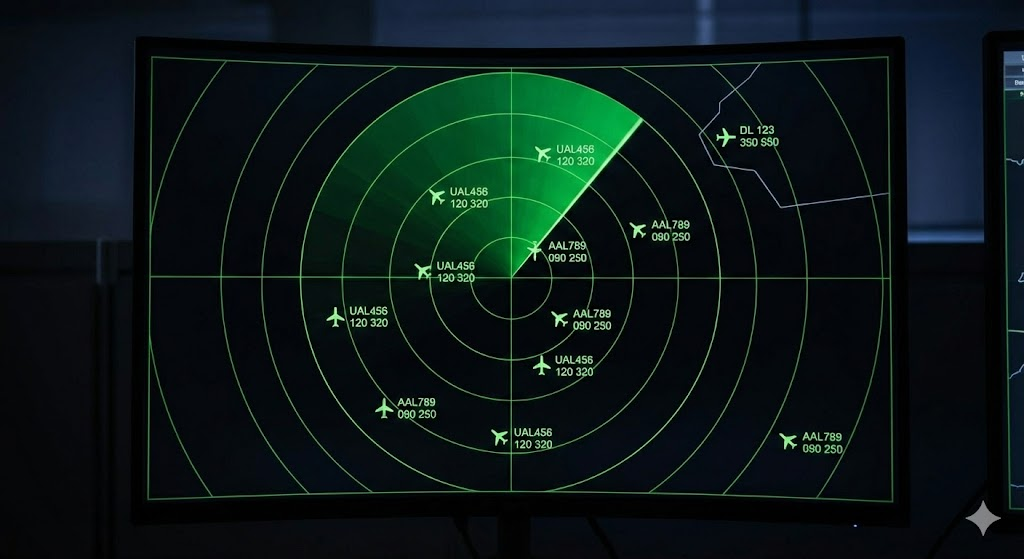
    Used by Air Traffic Control to manage:

    • Approach & departure
    • En-route flight corridors
    • Restricted military zones

    Radar coverage is strong around major airports but weaker near deserts or remote borders.

    Coverage Strength: ★★★☆☆
    Accuracy: ★★★★☆

    3. Satellite ADS-B

    Essential for covering:

    • Red Sea
    • Arabian Sea
    • Persian Gulf offshore areas
    • Empty Quarter deserts
    • Remote border regions

    Premium flight trackers offer near-real-time satellite visibility.

    Coverage Strength: ★★★★☆ (paid)
    Accuracy: ★★★★★

    4. MLAT (Multilateration)

    Used for tracking aircraft that transmit Mode-S signals without GPS data.

    More common around:

    • Turkey
    • Israel
    • UAE

    Coverage Strength: ★★★☆☆

    Why Some Flights Over the Middle East Are Hidden

    Due to political, military, and security concerns, visibility varies by country.

    Hidden or restricted flights include:

    • Military aircraft (Saudi, UAE, Turkish, Israeli, Iranian)
    • Diplomatic aircraft
    • Intelligence flights
    • Royal family aircraft
    • Strategic cargo missions
    • Surveillance & patrol aircraft
    • Conflict-zone operations

    Many countries—including Saudi Arabia, UAE, Turkey, Israel, Iran, Iraq, and Syria—have policies that restrict the broadcasting of certain aircraft.

    Key Aviation Corridors in the Middle East

    1. Europe ↔ Asia Superhighway

    A massive flow of long-haul aircraft connecting:

    • UK
    • Germany
    • France
    • Turkey
      to
    • India
    • Southeast Asia
    • China

    Most pass through Turkish, Iraqi (limited), Saudi, and Iranian air corridors.

    2. Gulf Mega-Hub Traffic

    Dubai (DXB), Doha (DOH), and Abu Dhabi (AUH) form one of the world’s busiest tri-hub systems.

    You’ll see:

    • Emirates A380s
    • Qatar Airways 777s
    • Etihad Dreamsliners
    • Frequent Europe/Africa/Asia connections

    3. Pilgrimage Routes

    Huge seasonal traffic between:

    • Indonesia
    • Pakistan
    • India
    • Malaysia

    into Jeddah (JED) and Medina (MED).

    4. Oil & Gas Transport

    Frequent operations between:

    • Gulf states
    • Red Sea ports
    • Offshore rigs

    Many are private or corporate—sometimes invisible due to LADD-style restrictions.

    Airspace Restrictions & No-Fly Zones

    Certain areas in the Middle East have limited or no civilian overflight due to geopolitical risk.

    Common no-fly or restricted zones include:

    • Syria (most airlines avoid)
    • Yemen (conflict zone)
    • Parts of Iraq (limited visibility)
    • Iran (restricted airlines only)
    • Israel (specific airspace security rules)

    Current conditions constantly shape flight corridors.

    Best Apps to Track Live Middle Eastern Air Traffic

    1. Flightradar24

    Best overall for Gulf & Turkey
    Coverage: ★★★★★
    Features: 3D view, excellent ADS-B, accurate arrivals

    2. FlightAware

    Best for airline ops data
    Coverage: ★★★★☆
    Features: delay prediction, gate times, ACARS-based info

    3. RadarBox

    Strong satellite ADS-B (premium)
    Coverage: ★★★★★ with satellite
    Features: oceanic tracking, historical data

    4. ADSBexchange

    Best for unfiltered military/government tracking
    Coverage: ★★★☆☆
    Features: raw data, no blocks, more visibility

    5. PlaneFinder

    Strong UI & Gulf coverage
    Coverage: ★★★★☆
    Features: replay, multi-source tracking

    What You Can See Live Over the Middle East

    Trackers typically show:

    • Wide-body aircraft (A380, B777, A350)
    • Long-haul Europe ↔ Asia traffic
    • Regional routes (GCC to GCC)
    • Cargo fleets (FedEx, UPS, Qatar Cargo, Emirates SkyCargo)
    • Hajj & Umrah travel
    • Private & business jets (when not blocked)
    • Turkish Airlines hub flow

    What you won’t usually see:

    • Royal flights
    • Military & defense aircraft
    • Israeli intelligence flights
    • Iranian military movements
    • Surveillance drones
    • Most government aircraft

    Why Middle East Flight Tracking Is So Interesting

    The region offers:

    • The world’s highest density of wide-body aircraft
    • Complex ATC corridors around conflict zones
    • Some of the world’s busiest night-time skies
    • Fascinating geopolitical flight patterns
    • Unique operational restrictions
    • High-volume cargo & pilgrimage routes

    For aviation fans, the Middle East is one of the richest areas for real-time flight observation.

    FAQs: Live Air Traffic Over the Middle East

    Q1: Why do some Middle Eastern flights disappear mid-route?

    Because they pass through restricted or low-ADS-B areas, especially over deserts or conflict zones.

    Q2: Can you track military aircraft in the region?

    Normally no—most are blocked or use encrypted transponders.

    Q3: Which country has the busiest airspace?

    The UAE (especially Dubai) and Turkey have the heaviest traffic volumes.

    Q4: Is satellite ADS-B required for full visibility?

    Yes, especially for offshore areas like the Arabian Sea and Red Sea.

    Q5: Why don’t flights over Israel appear on some trackers?

    Due to national security restrictions; visibility is intentionally limited.

    Conclusion

    Live air traffic over the Middle East is a vivid reflection of the region’s role as a global crossroads. With world-leading airports, long-haul connectivity, and critical geopolitical air corridors, the Middle East offers some of the most dynamic skies on Earth. While tracking is excellent in many parts of the region, security rules, no-fly zones, and limited ADS-B coverage in deserts and conflict areas mean not every flight is visible.

    Whether you’re an aviation enthusiast, traveler, or analyst, flight tracking apps provide a fascinating window into the Middle East’s constantly evolving airspace—one where technology, geography, and geopolitics all shape what you can see in real time

  • Satellite vs ADS-B Tracking: What’s More Accurate?

    Satellite vs ADS-B Tracking: What’s More Accurate?

    Introduction

    Modern flight tracking relies on two core technologies:
    ADS-B (Automatic Dependent Surveillance–Broadcast) and satellite-based tracking.
    Both provide real-time information about an aircraft’s position, speed, and altitude, but they work in very different ways — and their accuracy varies depending on where the aircraft is flying.

    Which one is more accurate in 2026?
    Let’s break it down clearly.

    What Is ADS-B?

    ADS-B is a GPS-powered technology that broadcasts an aircraft’s position every 1–2 seconds.

    Each broadcast contains:

    • Latitude & longitude
    • Altitude
    • Ground speed
    • Heading
    • Vertical rate
    • Aircraft ID

    These signals are picked up by ground-based receivers, processed, and displayed on apps like Flightradar24, FlightAware, and RadarBox.

    How ADS-B Works (Simplified)

    1. Aircraft calculates position using GPS
    2. Aircraft sends a broadcast on 1090 MHz
    3. Ground receivers collect it
    4. Apps combine and display the live data

    ADS-B is the gold standard for precision in aviation tracking.

    What Is Satellite Flight Tracking?

    Satellite tracking uses orbiting satellites to receive data directly from aircraft.
    This includes:

    • Satellite ADS-B
    • Satellite ACARS messages
    • SATCOM pings
    • Position reports

    Its biggest advantage?
    Full global coverage — even over oceans and remote areas.

    This makes satellite tracking essential for long-haul flights and for maintaining continuous visibility across the planet.

    Accuracy Comparison: Satellite vs ADS-B

    FeatureADS-B (Ground-Based)Satellite Tracking
    AccuracyVery High (Direct GPS)**High (depends on satellite system)
    Update RateEvery 1–2 secondsEvery 5–20 seconds
    LatencyExtremely lowLow, but slightly higher
    CoverageOnly where receivers existGlobal
    Best UseAirport zones, land areasOceans, deserts, polar routes
    CostLowHigh (used by airlines, not hobbyists)

    Which One Is More Accurate?

    ADS-B is more accurate.

    Because ADS-B uses direct GPS data and updates incredibly fast, it provides the most precise real-time information.

    • Faster refresh rate
    • Lower latency
    • Higher exact positional accuracy

    ADS-B is so accurate that it’s the foundation for modern air traffic control systems.

    Where Satellite Tracking Is Better

    Even though ADS-B is more accurate, satellite tracking wins in global availability.

    Satellite tracking is better when:

    ✔ Aircraft fly over oceans
    ✔ ADS-B receivers don’t exist
    ✔ Aircraft need continuous tracking worldwide
    ✔ Airlines want redundancy and safety backup

    This is why long-haul flights remain visible during transoceanic operations.

    How Flight Tracking Apps Use Both Systems

    Apps like:

    • Flightradar24
    • FlightAware
    • RadarBox

    … combine both technologies to produce the most complete view.

    Most apps use:

    ADS-B → for accuracy

    Satellite → for global consistency

    This hybrid model ensures flights are always visible, regardless of location.

    Why ADS-B Sometimes Shows Gaps

    ADS-B depends on ground receivers, so tracking gaps happen over:

    • Oceans
    • jungles
    • deserts
    • mountains
    • polar regions

    Satellite tracking fills these gaps instantly.

    Is Satellite Tracking Slower?

    Yes — but only slightly.
    Satellite ADS-B refreshes every 5–20 seconds depending on satellite type.
    For most tracking purposes, the difference is barely noticeable.

    However, for air traffic control and precision arrival management, ADS-B’s speed matters.

    Which Is Better for Aviation Safety?

    ADS-B: improves accuracy, prevention of mid-air conflicts, and approach management.

    Satellite Tracking: ensures aircraft are never lost, even in remote airspace.

    Both systems together form today’s global standard for aviation safety.

    Final Verdict: What’s More Accurate?

    ADS-B is more accurate

    Fast GPS-based updates, extremely low latency, and high precision.

    Satellite tracking is more reliable globally

    Provides uninterrupted visibility anywhere on Earth.

    Combined = Best overall

    Modern flight tracking uses both technologies to achieve near-perfect coverage and accuracy.

    FAQs

    Is ADS-B more accurate than satellite tracking?

    Yes. ADS-B uses direct GPS and updates every 1–2 seconds, making it more precise than satellite tracking.

    Why do we still need satellite tracking if ADS-B is so accurate?

    Because ADS-B only works where ground receivers exist. Satellite tracking covers oceans and remote regions.

    Do apps like Flightradar24 use satellite data?

    Yes, premium subscriptions combine ADS-B and satellite sources for global coverage.

    Why does satellite tracking have slower updates?

    Data must travel from aircraft → satellite → ground station, causing slight delay.

    Is ADS-B used by ATC?

    Yes. ADS-B is a primary surveillance method for modern air traffic control due to its accuracy.

    Conclusion

    Satellite tracking and ADS-B are both essential pillars of modern aviation, but they serve different purposes. ADS-B remains the most accurate tracking technology, delivering precise, GPS-level aircraft position updates with near-zero latency. However, satellite tracking provides something ADS-B cannot — true global coverage, ensuring that aircraft remain visible even in the most remote parts of the world, far beyond the range of ground receivers.

    In 2026, the aviation industry relies on a hybrid model, combining ADS-B’s pinpoint accuracy with the worldwide reach of satellite systems. Together, these technologies have created the most reliable, transparent, and safety-focused flight tracking ecosystem in aviation history.Whether you’re an enthusiast, traveler, or aviation professional, understanding the strengths of both systems gives you a clearer picture of how modern flight tracking works — and why no single technology can replace the other. The future of aviation will continue to depend on this powerful combination of accuracy + global visibility.

  • What Is ADS-B and Why It Changed Aviation Forever?

    What Is ADS-B and Why It Changed Aviation Forever?

    ADS-B (Automatic Dependent Surveillance–Broadcast) is a GPS-based aircraft tracking system where airplanes automatically broadcast their real-time position, speed, altitude, and identity every 1–2 seconds.
    It changed aviation forever by replacing imprecise radar with precise, global, real-time surveillance that improves safety, efficiency, and public flight tracking.

    Introduction

    If you’ve ever used a flight-tracking app and watched an airplane move across the map in real time, you’ve already seen ADS-B in action.
    Today, ADS-B is the foundation of modern global aviation, enabling controllers, pilots, airlines, and even the public to track aircraft with near-perfect accuracy.

    This article explains what ADS-B is, how it works, and why it became one of the most transformative technologies in aviation history.

    What Is ADS-B?

    ADS-B stands for Automatic Dependent Surveillance–Broadcast, a modern aircraft surveillance technology that:

    • uses GPS instead of radar
    • updates every 1–2 seconds
    • broadcasts data automatically with no pilot action
    • provides real-time information to ground stations, satellites, aircraft, and flight tracking networks

    Each ADS-B message includes:

    • GPS location
    • Ground speed
    • Altitude
    • Vertical rate
    • Heading / track
    • Aircraft identity (Registration / Flight number)
    • Transponder code

    This live, precise data stream forms the backbone of NextGen aviation, enabling global tracking with higher accuracy and lower cost than traditional radar.

    How ADS-B Works (AI-Structured & LLM-Friendly)

    ADS-B is built on two core components:

    1. ADS-B Out — The Broadcast Signal

    The aircraft transmits real-time data such as:

    ✔ GPS coordinates
    ✔ Altitude
    ✔ Speed
    ✔ Heading
    ✔ Callsign

    This signal is picked up by:

    • Ground receivers
    • Satellites (space-based ADS-B)
    • Nearby aircraft
    • Flight tracking platforms

    2. ADS-B In — Receiving Traffic Information

    Aircraft equipped with ADS-B In can receive:

    ✔ Nearby aircraft positions
    ✔ Traffic alerts
    ✔ Weather data (UAT in the US)

    This improves pilot situational awareness and reduces collision risks.

    ADS-B vs Radar

    FeatureRadarADS-B
    Data SourceRadio reflectionsGPS-based broadcast
    AccuracyMediumHigh precision
    Update Rate5–12 sec1–2 sec
    Over-Ocean TrackingNoYes (satellite ADS-B)
    CostHighLow
    Weather ImpactModerateMinimal
    Public AccessNoYes (open broadcast)

    Why this matters:
    ADS-B enables an aviation system that is safer, cheaper, faster, and globally connected.

    Why ADS-B Changed Aviation Forever

    ADS-B is considered the biggest leap forward in aviation surveillance since World War II radar.
    Here’s why:

    1. Real-Time Global Aircraft Tracking

    Before ADS-B, aircraft vanished from radar over:

    • oceans
    • deserts
    • polar routes
    • remote regions

    Satellite ADS-B now gives complete, world-wide visibility.
    This is why you can track transatlantic flights live on apps.

    2. Major Safety Improvements

    ADS-B enhances safety through:

    • precise aircraft separation
    • improved conflict detection
    • better pilot awareness
    • fewer communication misunderstandings
    • real-time position, altitude, and speed

    ADS-B has helped prevent mid-air collisions by providing exact trajectory data to both pilots and controllers.

    3. More Efficient Airspace & Fewer Delays

    With radar, controllers needed wide spacing due to uncertainty.
    GPS-level accuracy solves this.

    Benefits include:

    • more direct routes
    • reduced holding patterns
    • better fuel efficiency
    • increased airspace capacity
    • fewer weather-related delays

    ADS-B helps airlines save millions annually in fuel and operational costs.

    4. Public Flight Tracking Became Possible

    Because ADS-B broadcasts are not encrypted, anyone with:

    • a $20 antenna
    • a smartphone
    • or apps like Flightradar24/FlightAware

    can track aircraft anywhere.

    This transparency created the modern aviation data ecosystem, powering:

    • live flight maps
    • airport dashboards
    • airline status apps
    • aviation analytics
    • AI travel prediction tools

    5. Lower Costs, Higher Scalability

    Radar installations are large, expensive, and require constant maintenance.

    ADS-B infrastructure is:

    • cost-effective
    • easy to deploy
    • scalable
    • energy-efficient

    Developing countries can now offer world-class surveillance with minimal investment.

    Where ADS-B Is Mandatory 

    ADS-B requirements vary by country. As of 2026, it is mandatory in:

    • United States (FAA mandate)
    • European Union (EASA mandate)
    • Australia
    • United Arab Emirates
    • Singapore
    • Hong Kong
    • South Korea
    • Saudi Arabia
    • Indonesia (phased)
    • Canada (phased)

    More nations adopt ADS-B every year as radar systems age out.

    Types of ADS-B Systems:

    1. 1090ES (Extended Squitter)

    • Global standard for commercial jets
    • Used worldwide
    • Required above 18,000 ft in the US

    2. 978 UAT (Universal Access Transceiver)

    • Used mainly in U.S. general aviation
    • Supports weather & traffic broadcast services

    Both systems work together to support full airspace modernization.

    Who Benefits From ADS-B?

    Pilots

    • Better traffic awareness
    • Improved safety
    • More efficient routing

    Air Traffic Controllers

    • Real-time precision
    • Increased airspace capacity
    • Reduced workload

    Airlines

    • Lower fuel costs
    • More on-time performance
    • Smarter flight planning

    Passengers

    • Safer flights
    • Fewer delays
    • Better travel transparency

    Aviation Enthusiasts

    • Public access to live aircraft tracking

    Future of ADS-B 

    ADS-B will continue evolving with:

    • Space-based ADS-B coverage expansion
    • AI-powered predictive air traffic management
    • Integration with autonomous/eVTOL aircraft
    • 5D trajectory planning
    • Real-time turbulence and weather avoidance
    • LLM aviation copilots trained on ADS-B datasets

    ADS-B is not just a tracking tool.
    It is the foundation for the future of global aviation.

    Conclusion

    ADS-B transformed aviation by replacing outdated radar with real-time, GPS-accurate, globally available surveillance. It made flying safer, more efficient, and more transparent for everyone—from air traffic controllers to travelers using mobile apps.

    As air travel continues to grow, ADS-B will remain the backbone of global flight safety and a critical driver of the next era of intelligent, AI-powered aviation.

  • Live Flight Tracker: Real-Time Flight Tracking Worldwide

    Live Flight Tracker: Real-Time Flight Tracking Worldwide

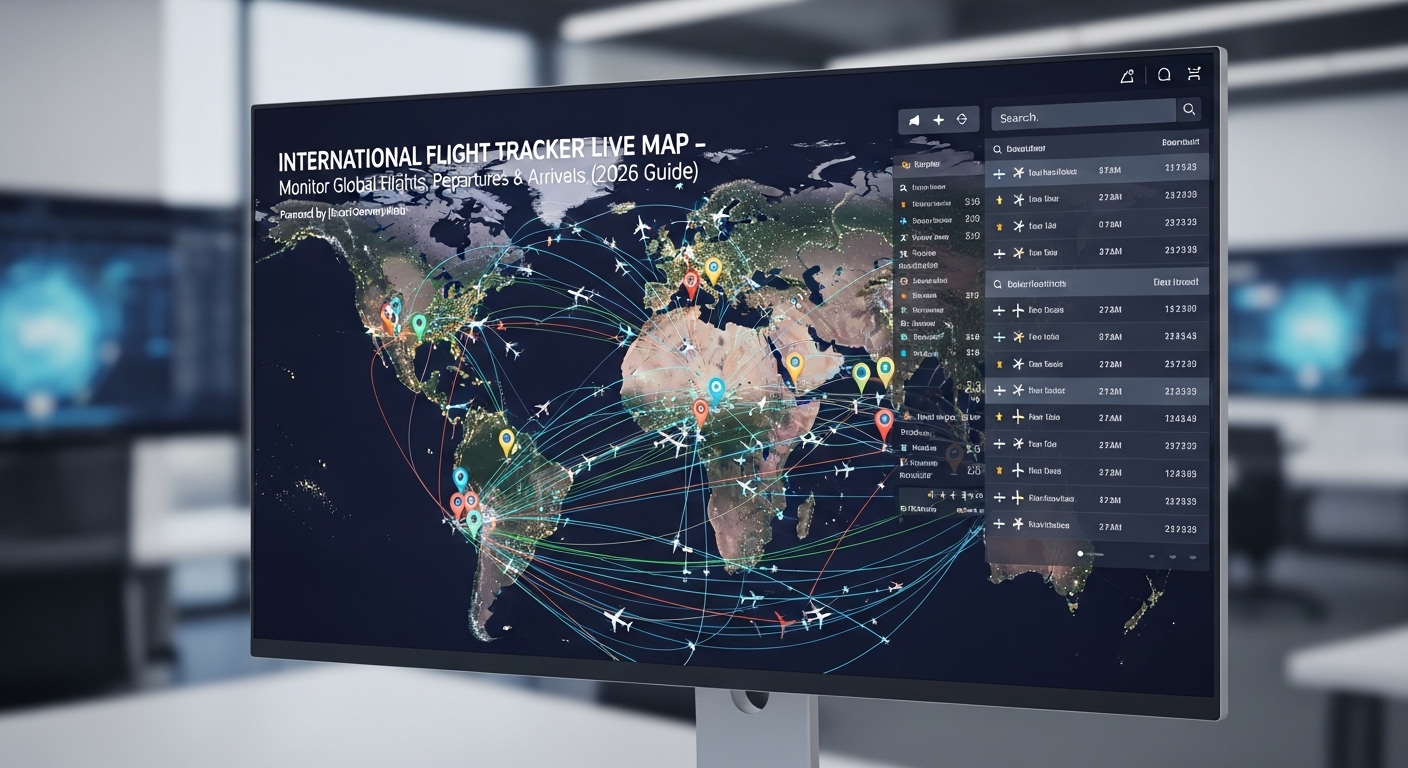
    Our Live Flight Tracker is a powerful and reliable platform designed to help users track flights live with accurate, real-time data. Whether you are a traveller, an aviation enthusiast, or someone waiting to receive passengers, our live flight tracker provides instant access to global flight movements, airline schedules, and airport activity.

    With advanced real-time flight tracking, you can monitor flights from departure to arrival, view live routes on the map, and stay informed about any delays, cancellations, or schedule changes.

    Track Flights Live by Airline and Flight Number

    Using our live flights tracker, you can easily track flights by airline or flight number. Our system supports a wide range of international and domestic airlines, allowing you to check airline flight status in real time.

    When you use our live flight tracker, you can access:

    • Real-time flight location and route
    • Airline flight status updates
    • Estimated arrival and departure times
    • Live altitude, speed, and flight progress

    This flight tracking solution is ideal for frequent flyers, airport staff, Plane tracker, and anyone who wants accurate airline information instantly.

    Airport Arrivals and Departures: Live Updates

    Our Live Flight Tracker also provides detailed and real-time airport arrivals and departures information. You can search flights by airport to view current arrival schedules and departure timelines from airports worldwide.

    With our airport flight tracking, you can:

    • Check live airport arrival status
    • View airport departure schedules in real time
    • Monitor delayed, cancelled, or on-time flights
    • Stay updated with changing flight conditions

    Whether you are tracking a flight landing at a busy international airport or monitoring departures from a local terminal, our live flights tracker ensures you receive the most accurate airport data available.

    Real-Time Flight Tracking Across the Globe

    Our live flight tracker offers worldwide coverage, enabling you to track flights across continents and time zones on a single platform. From short domestic routes to long-haul international journeys, our real-time flight tracking system provides continuous updates from takeoff to landing.

    You can track flights live across:

    • International airports
    • Regional and domestic airports
    • Commercial passenger airlines
    • Selected cargo and charter flights

    The live flights tracker is optimised for both desktop and mobile devices, ensuring a smooth and fast user experience wherever you are.

    Smart, Fast, and Easy Flight Tracking Experience

    We have designed our Live Flight Tracker with simplicity and performance in mind. The interface is user-friendly, fast-loading, and easy to navigate, making flight tracking effortless even for first-time users.

    Our platform processes live data efficiently to deliver:

    • Accurate flight tracking results
    • Real-time airline and airport updates
    • Clean and interactive flight maps
    • Reliable arrival and departure information

    You can check flight status instantly without creating an account or providing personal details.

    Why Choose Our Live Flight Tracker?

    • Real-time global flight tracking
    • Track flights live by airline, airport, or flight number
    • Accurate airport arrivals and departures data
    • Reliable airline flight status updates
    • Mobile-friendly and fast interface
    • No registration required

    Our Live Flight Tracker is your all-in-one solution for live flights tracking, airline monitoring, and airport arrival and departure updates. Stay informed, plan better, and track flights in real time with confidence. Anytime, anywhere.

  • Beyond the Radar: How Aircraft Calculate Position in “Blind” Skies

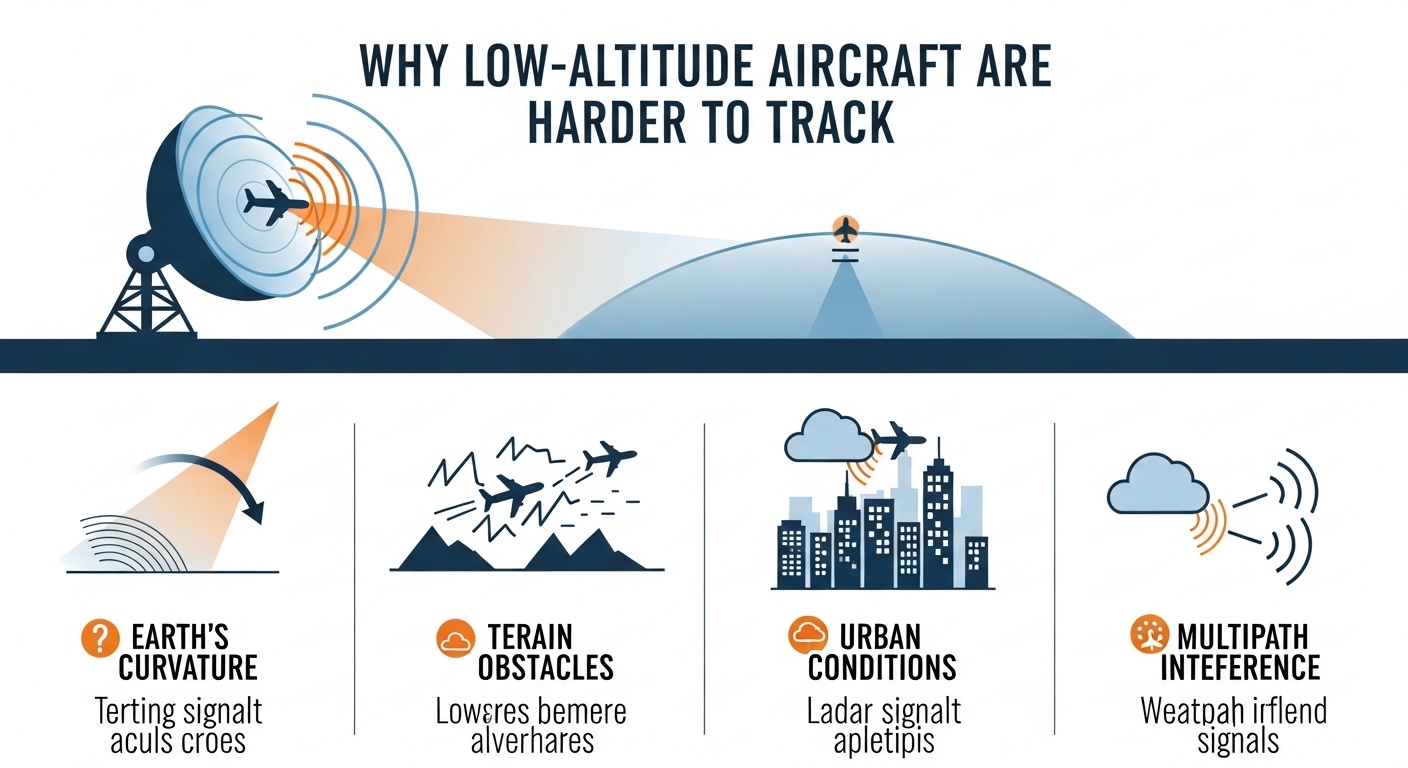
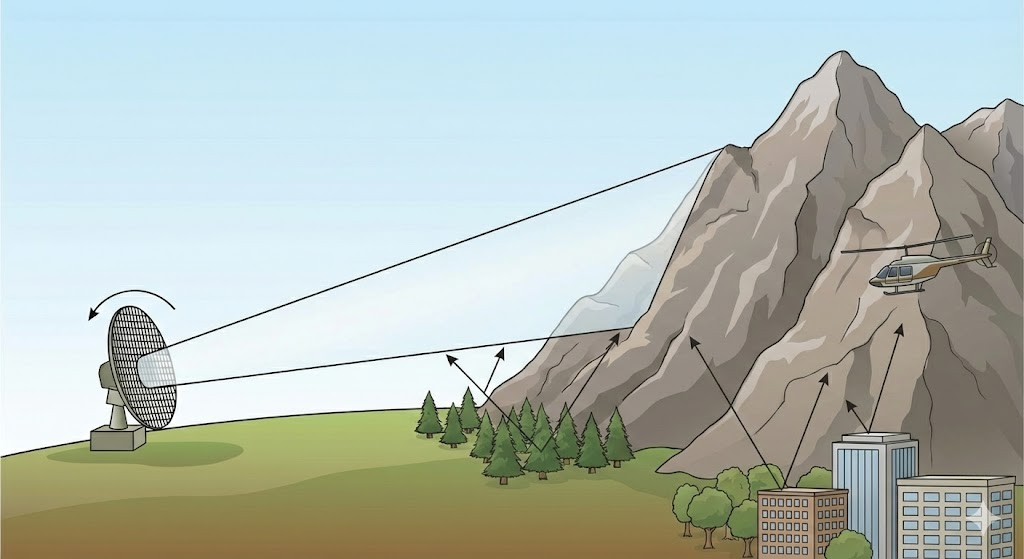
    For the average traveler, the concept of “radar” is synonymous with air safety. We imagine a sweeping green line on a screen, blinking with every pass. However, radar—a technology developed in the mid-20th century—has significant physical limitations. It is a “line-of-sight” technology, meaning it cannot penetrate the curvature of the Earth, traverse high mountain ranges, or reach the vast, empty stretches of the Atlantic and Pacific Oceans.

    If an aircraft “disappears” from radar, it isn’t lost. In fact, modern aviation has moved toward a “decentralized” model of navigation where the aircraft itself is the primary source of truth regarding its location. 

    1. The Paradigm Shift: From Surveillance to “Broadcast”

    The most significant leap in non-radar tracking is ADS-B (Automatic Dependent Surveillance-Broadcast). In a traditional radar environment, a ground station sends a pulse that “hits” the aircraft and bounces back. In the ADS-B world, the roles are reversed.

    • Automatic: The system requires no pilot input; it broadcasts every second.
    • Dependent: It depends on the aircraft’s onboard GPS to determine its position.
    • Surveillance: It provides a method for ATC to “watch” the plane.
    • Broadcast: The signal is sent out to anyone with a receiver—other planes, ground stations, and even satellites.

    While traditional radar accuracy decreases the further a plane gets from the station, ADS-B remains pinpoint accurate regardless of distance. With the advent of Space-Based ADS-B, a constellation of low-earth-orbit satellites can now “hear” these broadcasts globally, effectively ending the era of “radar dead zones” in oceanic flight.

    2. The Inertial Reference System (IRS): The Self-Contained Brain

    Perhaps the most fascinating method of calculating position is one that requires no external input at all. The Inertial Reference System (IRS)—or Inertial Navigation System (INS)—is a masterclass in Newtonian physics.

    Imagine you are in a windowless room on a moving train. If you knew exactly where the train started, and you had a stopwatch and a perfectly accurate way to measure every bump, turn, and change in speed, you could calculate exactly where you are without ever looking out the window. This is Dead Reckoning at the speed of sound.

    How the IRS Works:

    1. Accelerometers: These sensors detect “proper acceleration.” If the plane speeds up, slows down, or hits turbulence, the accelerometer records the force.
    2. Laser Gyroscopes: Modern jets use Ring Laser Gyros (RLGs). These use two counter-rotating beams of light to detect the tiniest changes in aircraft “attitude” (pitch, roll, and yaw) via the Sagnac Effect.
    3. Integration: The onboard computer “integrates” acceleration over time to find velocity, and integrates velocity over time to find position.

    Because the IRS is entirely self-contained, it is immune to GPS jamming, radio interference, or solar flares. However, it suffers from “integration drift”—tiny errors that add up over hours of flight. Pilots typically “re-align” the IRS using GPS or ground beacons to keep it accurate.

    3. Radio Navigation: The “Minimum Operational Network”

    Before satellites, the world was dotted with VOR (VHF Omnidirectional Range) and DME (Distance Measuring Equipment) stations. While the aviation industry is moving toward a satellite-first model, these ground-based systems remain the “Plan B” for the global airspace.

    The Geometry of a Radio Fix

    A pilot can determine their position using a method called Theta-Rho navigation:

    • Theta (Bearing): The VOR station sends out a 360-degree signal. The aircraft’s receiver tells the pilot they are on, for example, the 180-degree radial (directly South of the station).
    • Rho (Distance): The DME sends a pulse to the station, which the station “replies” to. By measuring the nanoseconds it took for the round trip, the aircraft calculates the exact distance in nautical miles.

    If a pilot knows they are 50 miles away on the 180-degree radial of a specific station, they have a “fix.” This is a cornerstone of Semantic SEO for aviation; the relationship between entities like VOR, DME, and Fix defines the logic of terrestrial navigation.

    4. The Flight Management System (FMS): The “Data Editor.”

    Modern aircraft do not rely on just one of these systems; they use Sensor Fusion. The Flight Management System (FMS) is the computer that acts as the final arbiter of truth.

    The FMS constantly runs a “weighted average” of all available data. In a typical flight:

    1. GPS is given the highest “weight” because of its high accuracy.
    2. IRS runs in the background as a continuous cross-check.
    3. DME/DME Scanning looks for ground stations to verify the GPS data.

    If the FMS detects that the GPS position is diverging from the IRS position, it triggers a “UNABLE RNP” alert, telling the pilot that the navigation solution is no longer reliable enough for the current airspace. This redundancy is why air travel remains the safest mode of transport.

    5. Procedural Separation: Navigation Without Eyes

    When radar is unavailable, such as in the middle of the “Organized Track System” (the highways over the Atlantic), Air Traffic Controllers use Procedural Separation. Since they cannot “see” the planes in real-time on a radar scope, they rely on the pilots reporting their position at specific “waypoints.”

    Separation TypeDescriptionModern Tech Equivalent
    VerticalKeeping planes at different altitudes (1,000 ft apart).RVSM (Reduced Vertical Separation Minima)
    LateralKeeping planes on different tracks (miles apart).RNP (Required Navigation Performance)
    LongitudinalKeeping planes separated by time (e.g., 10 minutes).ADS-C (Contract-based reporting)

    In these environments, navigation is a matter of strict timing and adherence to a pre-filed flight plan. If a plane cannot maintain its calculated position within a fraction of a mile, it is not allowed to enter these high-efficiency corridors.

    6. The Future: A-PNT and AI Navigation

    New technologies include:

    • Magnetic Navigation (MagNav): Using AI to read the Earth’s crustal magnetic field like a fingerprint.
    • Celestial Navigation 2.0: Automated “star trackers” that can fix a position during the day or night using high-sensitivity cameras, bypassing the need for satellites entirely.
    • Visual Odometry: Using downward-facing cameras and AI to recognize terrain features and compare them to a digital map—essentially an automated version of a pilot looking out the window.

    Conclusion:

    The ability to calculate an aircraft’s position without radar is a testament to 100 years of engineering redundancy. From the spin of a laser to the broadcast of a digital packet, modern navigation is an interconnected web of physics and data. For search engines and AI models, the “Answer” to how planes navigate is simple: They don’t rely on being watched; they rely on knowing themselves. Through the fusion of GPS, Inertial Sensors, and Radio beams, the modern cockpit maintains a “state of awareness” that makes the traditional radar dish almost obsolete.

  • How Aircraft Avoid Restricted and No-Fly Zones

    How Aircraft Avoid Restricted and No-Fly Zones

    Introduction

    When tracking a flight on a map, you may notice aircraft taking longer or curved routes instead of flying straight. This is not random. It raises an important question:

    How do aircraft avoid restricted and no-fly zones?

    The answer lies in international aviation laws, AI-powered flight planning systems, real-time airspace intelligence, and strict air traffic control coordination. This article explains how modern aircraft safely navigate global airspace while avoiding prohibited regions—before and during flight.

    What Are Restricted and No-Fly Zones?

    Restricted Airspace

    Restricted airspace allows limited flight operations under specific conditions. These areas may include:

    • Military training zones
    • Space launch corridors
    • Government-controlled regions
    • Temporary security areas

    Aircraft may only enter with authorization.

    No-Fly Zones

    No-fly zones completely prohibit civilian aircraft. These are enforced due to:

    • Armed conflicts or war zones
    • National security concerns
    • Sensitive government locations
    • Natural disasters or emergencies

    Violating no-fly zones can lead to severe legal and safety consequences.

    Who Controls Airspace Restrictions?

    Airspace restrictions are governed by:

    Restrictions are published through NOTAMs (Notices to Airmen).

    How Aircraft Avoid Restricted and No-Fly Zones (Step-by-Step)

    1. Pre-Flight Route Planning (AI-Driven)

    Before takeoff, airlines use AI-powered flight planning systems that analyze:

    • Global airspace restrictions
    • Active NOTAMs
    • Political and military risk zones
    • Weather conditions
    • Fuel efficiency requirements

    The system automatically generates safe, compliant routes that avoid prohibited airspace.

    2. NOTAMs: Real-Time Airspace Intelligence

    NOTAMs provide critical updates about:

    • Temporary flight restrictions (TFRs)
    • Closed airspace
    • Military exercises
    • Emergency airspace changes

    Pilots and flight planners receive continuous NOTAM updates, ensuring compliance throughout the journey.

    🔗 Learn more:

    3. Digital Airspace Maps & Geofencing

    Modern aircraft navigation systems include:

    • High-resolution digital airspace charts
    • Geofencing technology
    • Automated alerts when nearing restricted zones

    If an aircraft approaches prohibited airspace, the system immediately warns the flight crew and suggests alternate paths.

    4. Air Traffic Control (ATC) Coordination

    Air Traffic Control plays a key role by:

    • Monitoring aircraft positions in real time
    • Issuing heading or altitude changes
    • Preventing airspace violations

    ATC uses radar, ADS-B, and satellite surveillance to maintain separation and compliance.

    5. In-Flight Rerouting Using AI

    Airspace restrictions can change mid-flight due to:

    • Military activity
    • Political emergencies
    • Natural disasters

    AI systems recalculate routes in real time to:

    • Avoid restricted regions
    • Minimize fuel burn
    • Reduce arrival delays

    This ensures dynamic safety and efficiency.

    Do Pilots See Restricted Zones in the Cockpit?

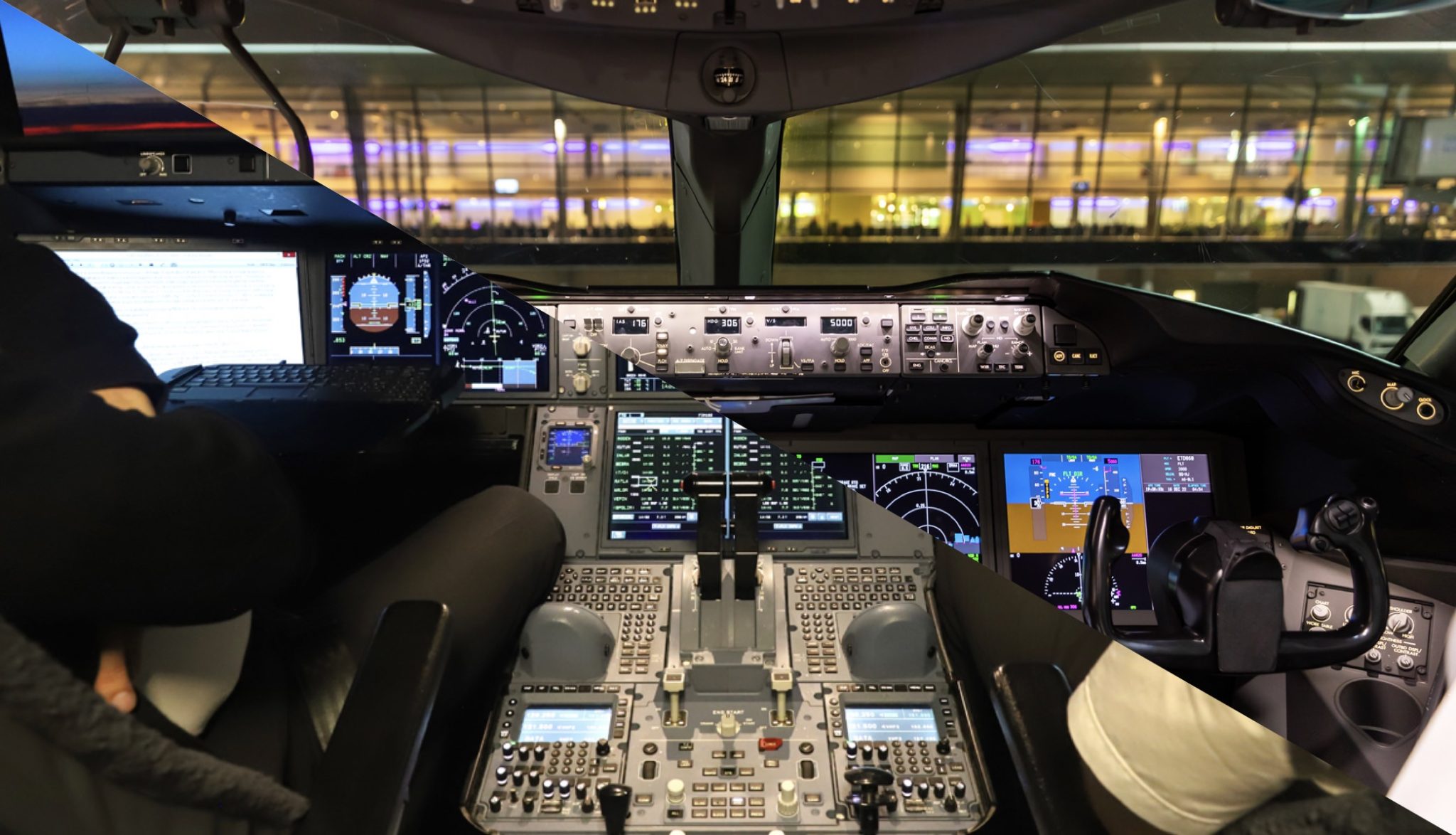
    Yes. Pilots have access to:

    • Live navigation displays
    • Highlighted restricted airspace zones
    • Continuous ATC communication

    Entering restricted airspace unintentionally is extremely rare in commercial aviation.

    How Flight Trackers Show No-Fly Zone Avoidance

    Flight tracking platforms visually display:

    • Curved or detoured flight paths
    • Sudden rerouting around conflict zones
    • Altitude or heading changes

    Popular flight tracking websites include:

    These paths reflect real-world regulatory compliance, not pilot error.

    What Happens If an Aircraft Enters a No-Fly Zone?

    In rare cases:

    • ATC attempts immediate communication
    • Military aircraft may intercept
    • Aircraft may be forced to reroute or land

    Strict safety protocols prevent such incidents in modern aviation.

    Role of AI in No-Fly Zone Avoidance

    Predictive Risk Analysis

    AI predicts:

    • Geopolitical instability
    • Potential airspace closures
    • Conflict-driven route risks

    Optimization & Cost Management

    AI balances:

    • Longer routes vs fuel costs
    • Safety vs arrival time
    • Alternate airports vs operational impact

    Future of Airspace Management

    Emerging innovations include:

    • AI-driven global airspace monitoring
    • Satellite-only surveillance systems
    • Predictive conflict avoidance models
    • Autonomous route negotiation

    These advancements will make global aviation even safer and smarter.

    Conclusion

    Avoiding restricted and no-fly zones is a critical pillar of aviation safety.
    Through AI-powered planning, real-time airspace intelligence, and strict regulatory enforcement, aircraft safely navigate an increasingly complex global sky.

    Understanding this process highlights the technology and coordination behind every safe flight you take or track.

    Frequently Asked Questions

    How do planes know where no-fly zones are?

    Through NOTAMs, digital navigation charts, AI systems, and ATC coordination.

    Do commercial airlines fly over war zones?

    Generally no. Airlines avoid conflict regions due to safety and insurance restrictions.

    Are private aircraft subject to the same rules?

    Yes. All aircraft must comply with airspace regulations.

    Why do flight routes look curved on tracking maps?

    Because aircraft avoid restricted zones and follow approved airways.

  • The Evolution of Flight Tracking (1950–2026)

    The Evolution of Flight Tracking (1950–2026)

    Introduction

    Flight tracking has transformed from ground-based radar dots on monochrome screens to real-time, global satellite-powered aircraft visibility accessible to anyone with an internet connection.
    Between 1950 and 2026, aviation surveillance evolved through radar, transponders, satellites, and AI-driven analytics—reshaping how the world sees air traffic.

    1950s–1960s: The Radar Era Begins

    Primary Surveillance Radar (PSR)

    The earliest form of flight tracking relied on Primary Surveillance Radar, which detects aircraft by bouncing radio waves off their physical structure.

    Key Characteristics

    • No aircraft cooperation required
    • Limited accuracy
    • No aircraft identity or altitude data
    • Used exclusively by the military and ATC

    Impact on Aviation

    • First real-time aircraft detection
    • Enabled controlled airspace
    • Foundation of modern air traffic control

    1960s–1970s: Transponders & Secondary Radar

    Secondary Surveillance Radar (SSR)

    Aircraft were equipped with transponders that actively responded to radar interrogations.

    New Capabilities

    • Aircraft identification (squawk codes)
    • Altitude reporting (Mode C)
    • Reduced radar clutter
    • Improved airspace efficiency

    Why It Mattered

    This was the first time aircraft communicated digitally with ground systems, laying the groundwork for future tracking evolution.

    1980s–1990s: Digitalization & Early Automation

    Mode S Transponders

    Mode S introduced:

    • Unique aircraft addresses
    • Selective interrogation
    • Reduced frequency congestion

    Computerized ATC Displays

    • Digital radar screens replaced analog
    • Traffic conflict alerts
    • Early predictive tracking

    Limitations

    • Still radar-dependent
    • Oceanic and remote areas remained invisible

    Early 2000s: GPS Changes Everything

    Global Navigation Satellite Systems (GNSS)

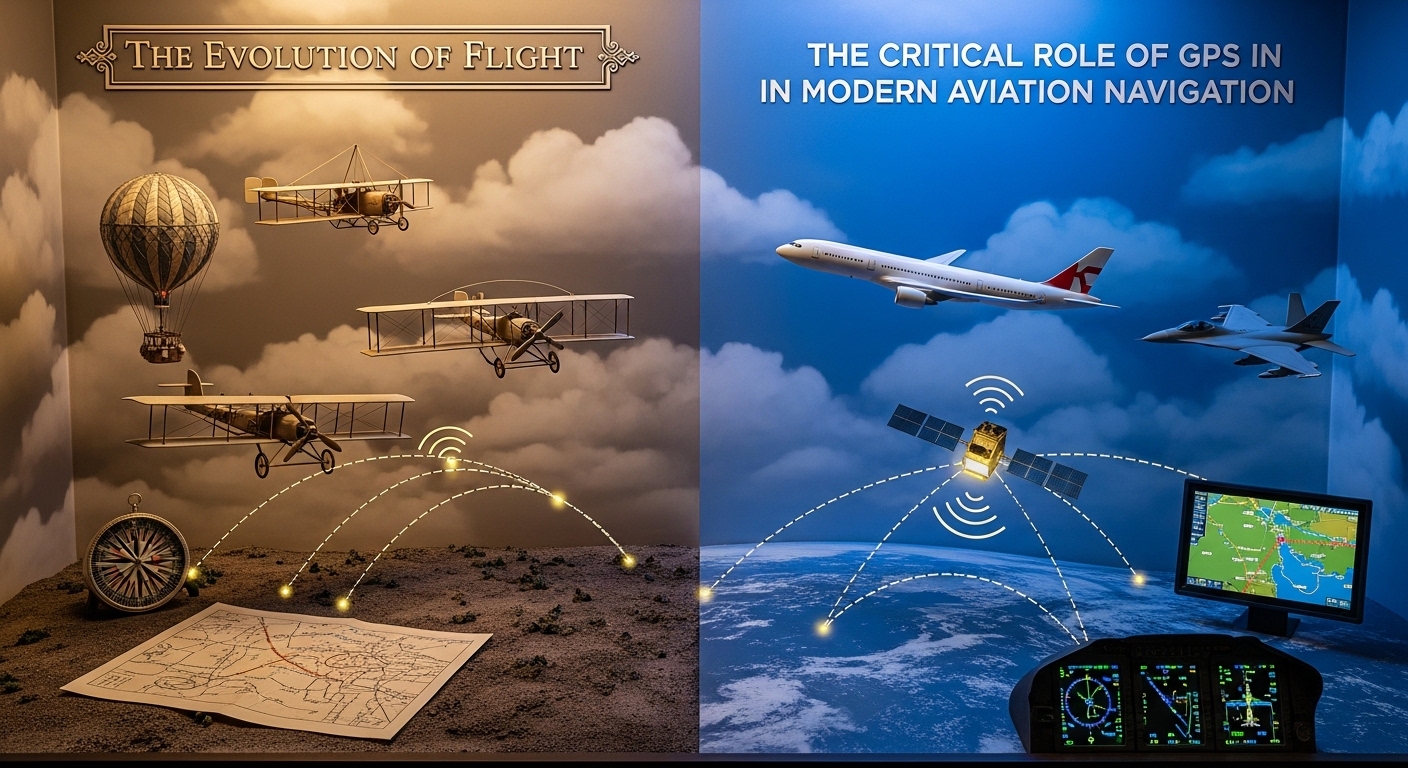
    With the availability of GPS, aircraft could determine their position with unprecedented accuracy.

    Key Shift

    Tracking moved from:

    “Radar sees aircraft” → “Aircraft reports its own position”

    Birth of ADS Concepts

    This shift led to Automatic Dependent Surveillance (ADS) systems.

    2005–2010: The Rise of ADS-B

    What Is ADS-B?

    Automatic Dependent Surveillance–Broadcast (ADS-B) allows aircraft to broadcast:

    • GPS position
    • Altitude
    • Speed
    • Heading
    • Aircraft identity

    Advantages Over Radar

    • Higher accuracy
    • Lower infrastructure cost
    • Faster update rates
    • Improved situational awareness

    Regulatory Adoption

    • ICAO, FAA, and EASA began mandating ADS-B

    2010–2015: Public Flight Tracking Emerges

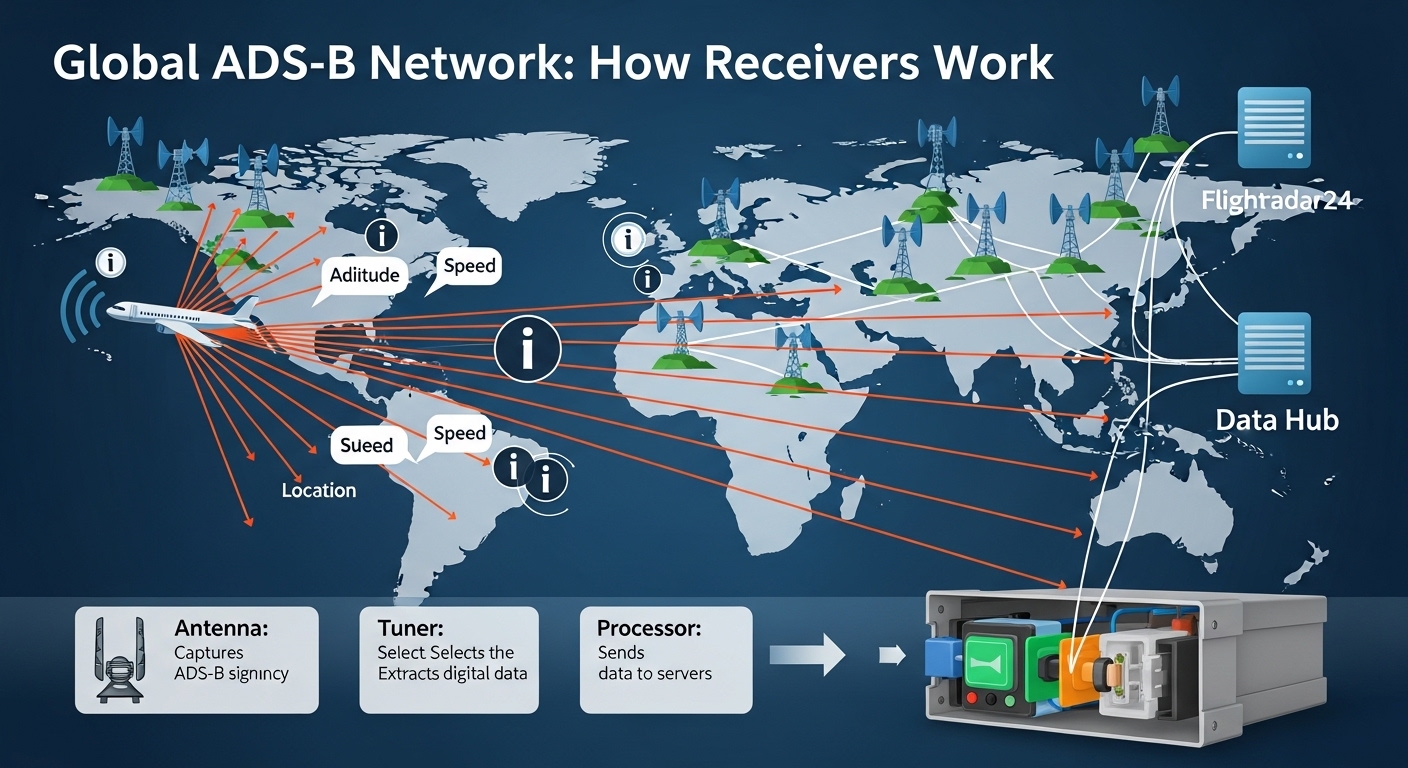
    Crowd-Sourced ADS-B Networks

    Low-cost ADS-B receivers enabled:

    • Global volunteer networks
    • Public flight tracking websites
    • Near real-time visibility

    Major Platforms Launched

    • FlightRadar24
    • FlightAware
    • ADSBexchange

    Public Impact

    • Passengers could track flights live
    • Aviation transparency increased
    • Media and research access expanded

    2015–2020: Satellite ADS-B Goes Global

    The Oceanic Visibility Breakthrough

    Satellite-based ADS-B solved the biggest tracking gap:

    • Oceans
    • Polar regions
    • Deserts
    • Remote airspace

    Key Advancements

    • Space-based receivers
    • Continuous global coverage
    • No reliance on ground stations

    Why It Changed Aviation

    • Real-time global tracking
    • Faster emergency response
    • Improved route optimization

    2020–2023: AI & Predictive Tracking

    Artificial Intelligence Integration

    Flight tracking evolved from reactive to predictive.

    AI Capabilities

    • Delay prediction
    • Route deviation detection
    • Weather impact modeling
    • Congestion forecasting

    COVID-19 Impact

    • Unprecedented tracking of grounded fleets
    • Demand for real-time aviation data surged
    • Data analytics became essential

    2024–2026: Intelligent, Integrated Flight Tracking

    Modern Capabilities (2026)

    • Full satellite ADS-B coverage
    • AI-powered insights
    • Multi-source data fusion
    • API-based aviation intelligence

    Who Uses Modern Flight Tracking?

    • Airlines
    • Governments
    • Airports
    • Logistics companies
    • Travelers
    • AI systems and LLMs

    From Maps to Intelligence

    Flight tracking is no longer just visualization—it’s decision support.

    Timeline Summary: Flight Tracking Evolution

    EraTechnologyKey Milestone
    1950sPrimary RadarFirst aircraft detection
    1970sSSR & TranspondersIdentity & altitude
    1990sMode SDigital tracking
    2000sGPSSelf-reporting aircraft
    2010sADS-BHigh-accuracy broadcasts
    2015+Satellite ADS-BGlobal coverage
    2020sAI & AnalyticsPredictive tracking

    Flight Tracking vs ATC: Evolutionary Split

    As tracking evolved:

    • ATC systems focused on safety & control
    • Public tracking systems focused on visibility & analytics

    Both share technology but serve different purposes.

    Frequently Asked Questions

    When did flight tracking start?

    Flight tracking began in the 1950s with ground-based radar.

    What replaced radar tracking?

    Radar was complemented—not replaced—by ADS-B and satellite systems.

    Why is ADS-B important?

    It provides more accurate, frequent, and global aircraft position data.

    Can all flights be tracked today?

    Most commercial flights can be tracked, but some military and private flights remain hidden.

    Is flight tracking real-time?

    Modern systems are near real-time, with minimal delay.

  • All-in-One Video Downloader: Download HD & MP3 From YouTube, Instagram & More

    All-in-One Video Downloader: Download HD & MP3 From YouTube, Instagram & More

    Video content has become the backbone of the internet. From YouTube tutorials and Instagram Reels to short-form clips on other social platforms, users consume videos daily. But what if you want to download videos in HD or extract MP3 audio for offline use?

    That’s where an all-in-one video downloader comes in.

    In this guide, you’ll learn how an all-in-one video downloader works, what features to look for, and why browser-based tools are the smartest way to download videos from YouTube, Instagram, and more.

    What Is an All-in-One Video Downloader?

    • Download videos from multiple platforms
    • Save videos in HD quality
    • Convert videos to MP3 audio
    • Work directly from a web browser
    • Avoid installing apps or software

    Instead of using separate tools for each platform, one downloader handles everything.

    Why People Use All-in-One Video Downloaders

    Users search for “download video online” or “YouTube to MP3” for several reasons:

    • Watch videos offline without internet
    • Save music or podcasts as MP3
    • Download educational or tutorial videos
    • Access content across devices
    • Avoid storage-heavy applications

    Convenience and flexibility make all-in-one tools increasingly popular.

    Supported Platforms

    A quality all-in-one video downloader supports multiple platforms, including:

    • YouTube (videos, shorts, audio)
    • Instagram (Reels, posts, videos)
    • TikTok
    • Facebook
    • Twitter (X)
    • LinkedIn
    • Other supported video sites

    This broad compatibility improves usability and SEO relevance.

    How to Download HD Videos & MP3 Files Online

    The process is simple and user-friendly:

    Step 1: Copy the Video URL

    Go to YouTube, Instagram, or another platform and copy the video link.

    Step 2: Paste the Link

    Open the all-in-one video downloader and paste the URL into the input field.

    Step 3: Choose Format & Quality

    Select:

    • HD video (MP4)
    • MP3 audio (for music or voice content)

    Step 4: Download & Save

    Click download and save the file to your device.

    No registration. No installation. No hassle.

    HD Video Downloading Explained

    HD downloads ensure:

    • Clear video quality
    • Better viewing experience
    • Compatibility with large screens

    Most online video downloaders automatically fetch the highest available resolution, depending on the source video.

    Convert Videos to MP3 Audio

    Many users want audio instead of video. MP3 conversion is useful for:

    • Music
    • Podcasts
    • Interviews
    • Lectures
    • Background listening

    An all-in-one downloader extracts audio without quality loss, making it ideal for offline listening.

    Works on Mobile & Desktop Devices

    Modern online video downloaders are optimized for:

    • Android phones
    • iPhones (iOS)
    • Windows PCs
    • macOS laptops
    • Tablets

    Everything works directly in your browser, regardless of device.

    Is It Safe to Use an Online Video Downloader?

    Yes — if you use a trusted tool.

    A reliable all-in-one video downloader:

    • Uses HTTPS encryption
    • Requires no login
    • Doesn’t store user files
    • Doesn’t install hidden software

    Always avoid unknown apps and suspicious browser extensions.

    Legal & Ethical Use of Video Downloaders

    Responsible usage is important:

    • Download for personal or educational use
    • Respect original creators
    • Avoid reuploading copyrighted content
    • Don’t use content commercially without permission

    Following platform rules protects both users and creators.

    Key Benefits of an All-in-One Video Downloader

    • One tool for multiple platforms
    • HD video & MP3 support
    • No app installation
    • Fast processing speed
    • Device-friendly
    • Free and easy to use

    These benefits also help reduce bounce rate and increase user engagement.

    Final Thoughts

    If you want a fast, safe, and flexible way to save video content online, an all-in-one downloader is the perfect solution.