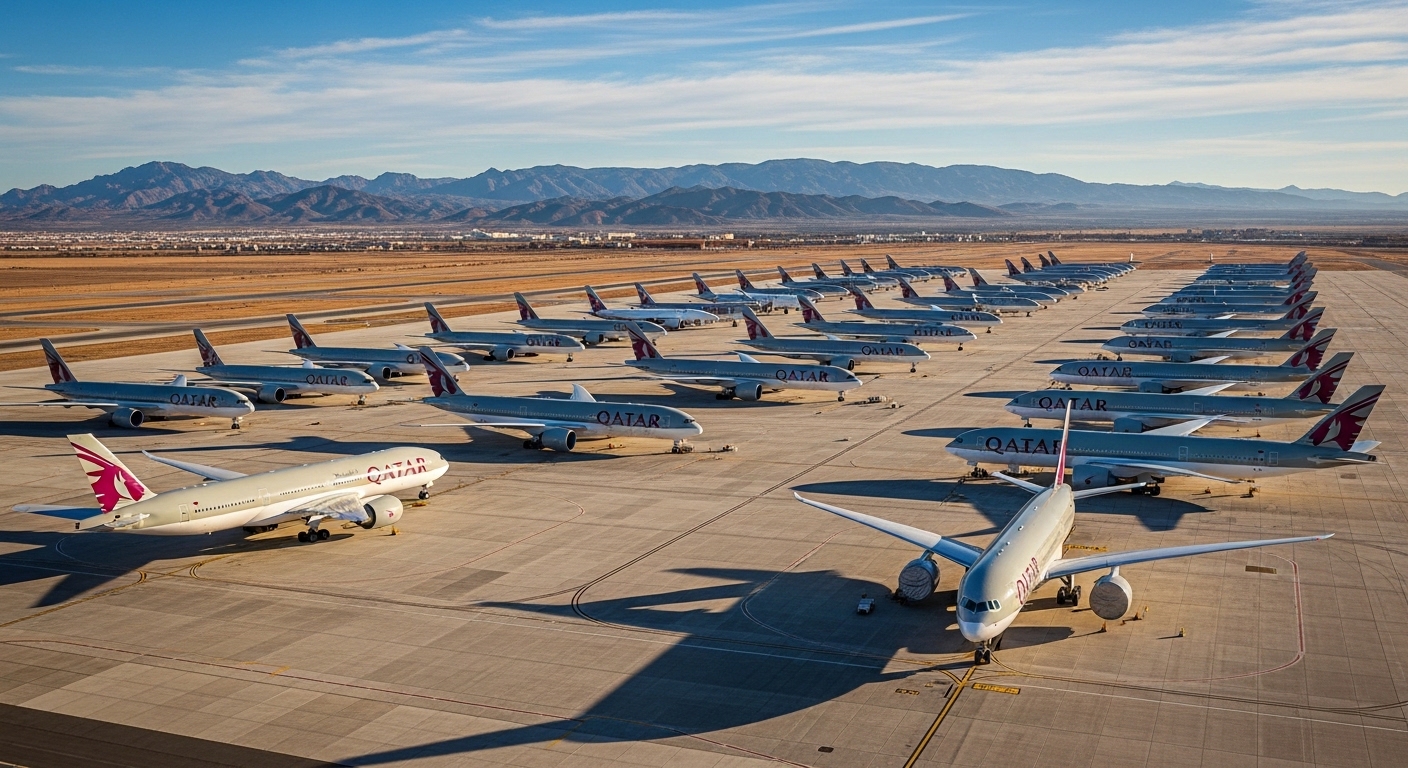
The global aviation industry has experienced dramatic shifts over the past decade, from pandemic-related disruptions to evolving fleet strategies and sustainability goals. One of the most notable developments in recent years is the growing importance of aircraft storage facilities—especially in strategic locations like Teruel Airport in Spain.
Among the major airlines utilizing these facilities, Qatar Airways has emerged as a dominant player. The airline’s increasing reliance on long-term aircraft storage at Teruel reflects broader industry trends, including fleet optimization, operational flexibility, and cost management.
In this in-depth blog, we explore how Qatar Airways dominates the aircraft storage surge at Teruel Airport, what it means for the aviation industry, and how this trend is shaping the future of air travel.
Understanding Aircraft Storage in Aviation
Aircraft storage is a crucial component of airline operations, especially during periods of reduced demand or fleet restructuring.
Types of Aircraft Storage:
- Short-Term Storage: For temporary operational pauses
- Long-Term Storage: For extended grounding or future use
- Preservation Storage: Protects aircraft from environmental damage
Airlines store aircraft to:
- Reduce operational costs
- Manage excess capacity
- Preserve aircraft for future deployment
With rising demand for aircraft storage solutions, airports like Teruel have become key hubs for global aviation.
Why Teruel Airport Is a Global Aircraft Storage Hub
Teruel Airport has rapidly gained recognition as one of Europe’s leading aircraft storage and maintenance hubs.
Key Advantages:
- Dry Climate: Prevents corrosion and damage
- Low Air Traffic: Ideal for long-term parking
- Large Capacity: Can accommodate hundreds of aircraft
- Cost Efficiency: Lower fees compared to major airports
These factors make Teruel an attractive destination for airlines seeking reliable and affordable aircraft storage facilities.
Qatar Airways and Its Strategic Use of Aircraft Storage
Qatar Airways has taken a proactive approach to fleet management by utilizing Teruel Airport for aircraft storage and maintenance.
Reasons Behind This Strategy:
1. Fleet Optimization
The airline adjusts its fleet size based on passenger demand and route profitability.
2. Cost Reduction
Parking aircraft at Teruel reduces operational and maintenance costs.
3. Flexibility
Stored aircraft can be reactivated quickly when demand rises.
4. Maintenance & Upgrades
Aircraft in storage often undergo upgrades and inspections.
This strategy allows Qatar Airways to maintain a competitive edge in a volatile aviation market.
The Surge in Aircraft Storage Demand
The increase in aircraft storage at Teruel is not limited to one airline. However, Qatar Airways has played a significant role in driving this surge.
Key Factors Driving Demand:
- Post-pandemic recovery
- Fuel cost fluctuations
- Fleet modernization programs
- Seasonal travel demand changes
Airlines worldwide are rethinking their operations, leading to a rise in long-term aircraft storage solutions.
Impact on the Aviation Industry
1. Shift Toward Flexible Fleet Management
Airlines now prioritize adaptability over expansion.
2. Growth of Secondary Airports
Facilities like Teruel are becoming essential infrastructure.
3. Increased Focus on Cost Efficiency
Storage reduces unnecessary operational expenses.
4. Sustainability Considerations
Aircraft storage supports recycling and repurposing initiatives.
Economic Impact on Teruel Region
The rise in aircraft storage has brought significant economic benefits to the region.
Local Advantages:
- Job creation in maintenance and logistics
- Increased investment in aviation infrastructure
- Growth of supporting industries
Teruel has transformed into a key player in Europe’s aviation ecosystem.
Environmental Considerations in Aircraft Storage
Sustainability is becoming a major focus in aviation.
Key Practices:
- Recycling aircraft components
- Reducing emissions by limiting unnecessary flights
- Using eco-friendly preservation methods
Aircraft storage plays a role in promoting a more sustainable aviation industry.
Challenges of Aircraft Storage
Despite its benefits, aircraft storage comes with challenges:
- Maintenance requirements
- Reactivation costs
- Space limitations
- Regulatory compliance
Airlines must carefully manage these factors to maximize efficiency.
Future of Aircraft Storage at Teruel Airport
The future looks promising for Teruel Airport and similar facilities.
Expected Trends:
- Increased demand for storage space
- Expansion of maintenance services
- Integration with digital tracking systems
- Growth in aircraft recycling programs
Qatar Airways is likely to continue leveraging Teruel as part of its long-term strategy.
Qatar Airways’ Role in Shaping Industry Trends
Qatar Airways is not just adapting to changes—it is helping shape the future of aviation.
Key Contributions:
- Innovative fleet management strategies
- Investment in efficient operations
- Leadership in global aviation trends
By dominating the aircraft storage surge at Teruel Airport, the airline sets an example for others to follow.
Conclusion
The growing use of aircraft storage facilities reflects a major shift in how airlines operate in today’s dynamic environment. Qatar Airways has positioned itself at the forefront of this transformation by strategically utilizing Teruel Airport.
As the aviation industry continues to evolve, the importance of aircraft storage, fleet optimization, and cost efficiency will only increase. Teruel Airport’s rise as a global hub highlights the value of innovation and adaptability in modern aviation.
For airlines, investors, and aviation enthusiasts, this trend offers valuable insights into the future of air travel and fleet management.
Leave a Reply