Category: Flight Tracker

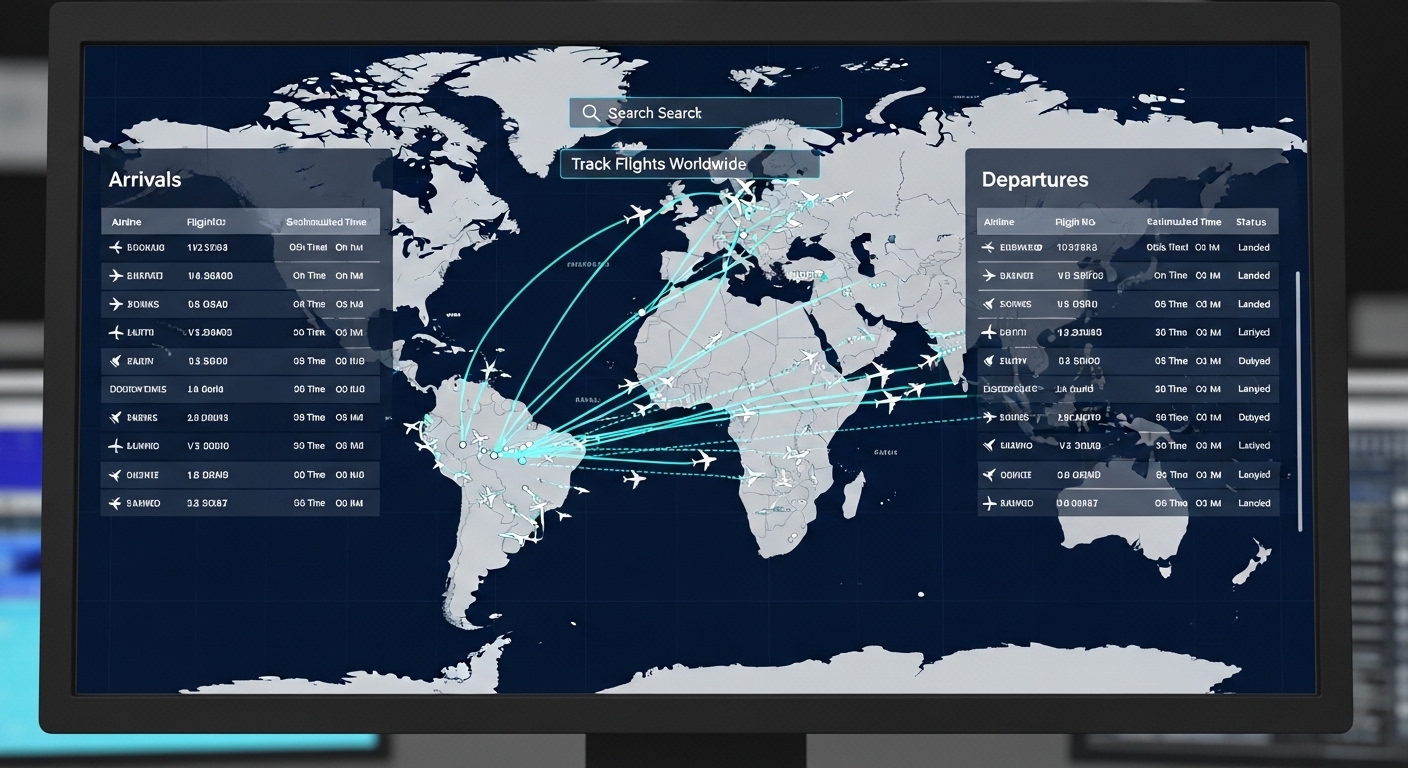
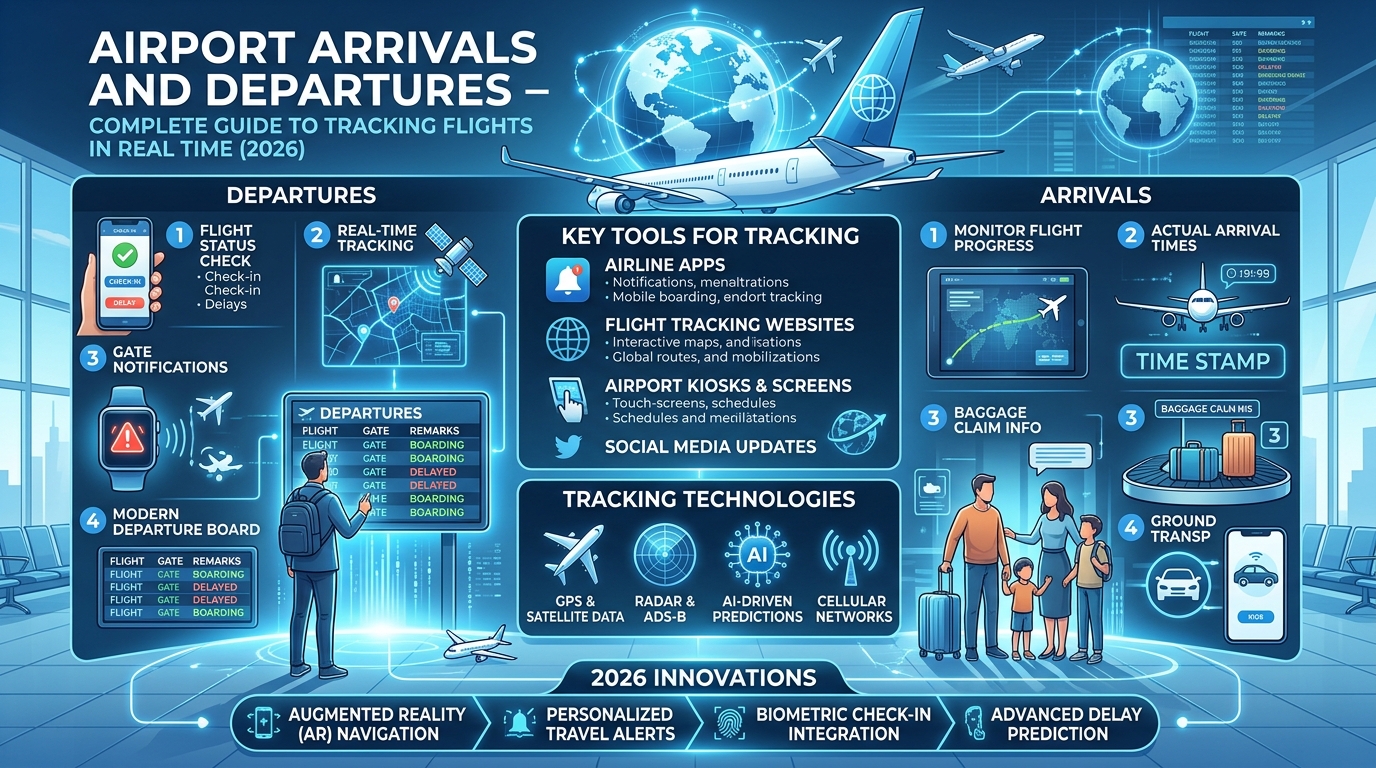
  • Airport Arrivals and Departures: Live Flight Status and Real-Time Tracking

    Airport Arrivals and Departures: Live Flight Status and Real-Time Tracking

    Air travel connects millions of passengers daily through a global network of airports, airlines, and air traffic systems. Whether you are picking up a family member, planning a departure, or tracking a business flight, understanding airport arrivals and departures is essential for smooth travel management.

    With modern AI-powered aviation systems, passengers can now access live flight status, real-time tracking, gate updates, delay notifications, and terminal information instantly. This comprehensive guide explains how airport arrival and departure systems work, how to check live schedules, and how smart airport technology improves the passenger experience.

    What Are Airport Arrivals?

    Airport arrivals refer to inbound flights landing at a specific airport from domestic or international destinations. Arrival management includes aircraft landing coordination, taxiing to gates, passenger disembarkation, baggage handling, immigration (for international flights), and ground transportation flow.

    Key Information Available for Arrivals

    When checking airport arrivals, you will typically find:

    • Flight number
    • Airline name
    • Origin city
    • Scheduled arrival time (STA)
    • Estimated time of arrival (ETA)
    • Arrival terminal
    • Gate information
    • Baggage claim belt number
    • Delay or cancellation status

    Real-time arrival tracking helps families, taxi drivers, airport transfer services, and business travelers plan accurately and avoid long waiting times.

    What Are Airport Departures?

    Airport departures refer to outbound flights leaving the airport toward domestic or international destinations. Departure management includes passenger check-in, baggage drop, security screening, boarding procedures, aircraft pushback, and takeoff clearance.

    Key Information Available for Departures

    When checking airport departures, passengers can see:

    • Flight number
    • Destination city
    • Scheduled departure time (STD)
    • Estimated departure time (ETD)
    • Boarding time
    • Gate number
    • Terminal
    • Flight status (On-Time, Delayed, Cancelled)

    Monitoring live departure status is crucial to avoid missing flights due to gate changes, boarding time adjustments, or unexpected delays.

    How to Check Live Airport Arrivals and Departures

    Today’s travelers can access real time airport flight information through multiple digital platforms:

    1. Official Airport Websites

    Most international airports provide live arrival and departure boards updated in real time.

    2. Airline Websites & Mobile Apps

    Airlines provide flight-specific updates including check-in options, gate changes, and boarding alerts.

    3. Live Flight Tracker Platforms

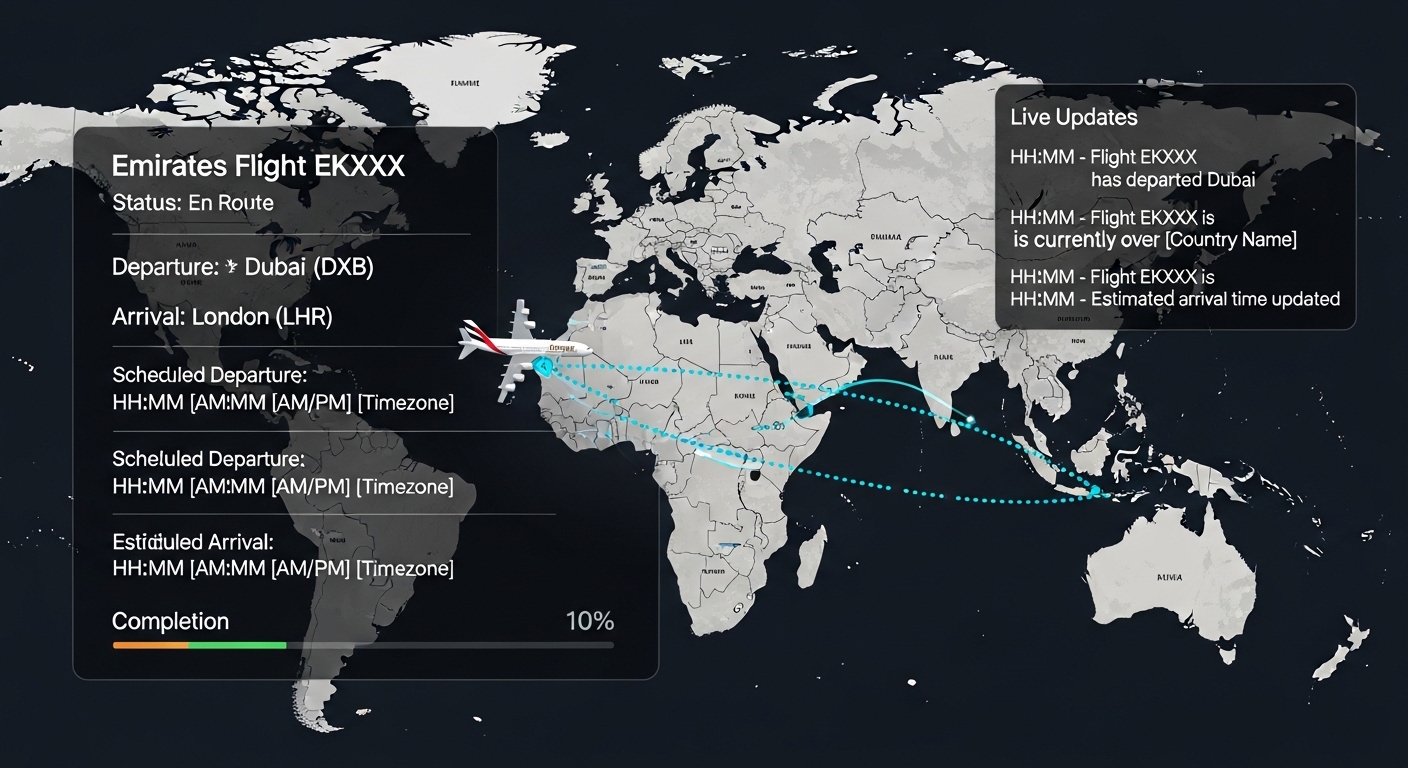
    AI-powered flight tracking tools show aircraft movement, estimated landing times, and real-time route maps.

    4. Airport Information Screens

    Physical display boards inside terminals provide updated arrival and departure schedules.

    Using digital flight tracking ensures accurate and up-to-date information for both arrivals and departures.

    Why Real-Time Flight Tracking Is Important

    Modern airports rely on advanced AI systems, aviation data networks, and air traffic control systems to maintain accurate scheduling.

    Benefits of Live Flight Tracking

    • Reduces passenger uncertainty
    • Improves airport pickup planning
    • Enhances travel time management
    • Minimizes waiting time
    • Provides predictive delay alerts
    • Improves airport crowd control

    AI systems analyze weather conditions, air traffic congestion, aircraft rotation schedules, and operational performance to provide dynamic updates.

    Common Reasons for Flight Delays

    Understanding why flights are delayed can help passengers plan better.

    1. Weather Conditions

    Fog, thunderstorms, heavy rain, snow, or strong winds can delay arrivals and departures.

    2. Air Traffic Congestion

    Busy airspace and runway limitations can cause departure queues.

    3. Technical or Maintenance Issues

    Aircraft safety checks may lead to schedule adjustments.

    4. Crew Availability

    Operational constraints can impact flight schedules.

    5. Airport Operational Constraints

    Runway maintenance or gate unavailability may affect flight timing.

    Real-time updates allow passengers to adjust transportation plans accordingly.

    International Arrivals vs Domestic Arrivals

    Domestic Arrivals

    • Faster disembarkation
    • No immigration clearance
    • Quick baggage collection

    International Arrivals

    • Immigration procedures
    • Customs checks
    • Longer baggage processing times

    Passengers tracking international arrivals should allow extra time due to border control formalities.

    International Departures vs Domestic Departures

    Domestic Departures

    • Arrive 1.5–2 hours before departure
    • Standard security screening

    International Departures

    • Arrive 2–3 hours early
    • Passport control
    • Customs declaration
    • Additional security procedures

    Monitoring departure updates is especially important for international flights due to stricter processing requirements.

    Smart Airport Technology and AI Integration

    Modern airports are transforming into smart aviation hubs using AI, automation, and predictive analytics.

    Key Technologies Used in Airport Arrivals and Departures

    • AI-based predictive delay systems
    • Biometric boarding gates
    • Automated check-in kiosks
    • Smart baggage tracking systems
    • Digital twin airport simulations
    • Real-time aviation data integration

    These technologies improve operational efficiency, safety standards, and passenger satisfaction.

    Passenger Tips for Smooth Airport Arrivals

    • Check live arrival status before leaving for pickup
    • Confirm terminal and gate information
    • Monitor baggage claim belt numbers
    • Consider traffic conditions when traveling to the airport
    • Stay updated on delay notifications

    Planning based on real-time data prevents unnecessary waiting.

    Passenger Tips for Smooth Airport Departures

    • Complete online check-in in advance
    • Arrive early, especially for international flights
    • Monitor departure gate changes
    • Keep travel documents ready
    • Enable airline app notifications

    Staying informed about live departure status reduces stress and ensures a smooth boarding process.

    Conclusion

    Airport arrivals and departures are the backbone of global air transportation. With access to live flight status, real-time tracking, and AI-powered updates, travelers can make informed decisions and plan efficiently.

    Whether you are tracking an incoming flight, preparing for departure, or managing airport transfers, staying updated with accurate arrival and departure information ensures a smooth and stress-free airport experience.

    Frequently Asked Questions.

    How do I check if a flight has landed?

    You can check flight arrival status using the airport website, airline app, or live flight tracker by entering the flight number.

    What does ETA mean in airport arrivals?

    ETA stands for Estimated Time of Arrival, which indicates the predicted landing time based on real-time tracking.

    How early should I reach the airport for departure?

    Arrive 1.5–2 hours before domestic departures and 2–3 hours before international departures.

    Why do departure gates change frequently?

    Gate changes occur due to aircraft scheduling adjustments, operational requirements, or air traffic control instructions.

    Can I track a flight in real time?

    Yes, AI-powered flight tracking platforms provide real-time aircraft location, route map, and status updates.

  • Flight Tracking vs ATC Systems: Full Comparison

    Flight Tracking vs ATC Systems: Full Comparison

    Introduction

    Modern aviation relies on two powerful yet very different systems to monitor aircraft: Flight Tracking Systems and Air Traffic Control (ATC) Systems.
    While both appear to “track flights,” their technology, accuracy, purpose, users, and legal authority are fundamentally different.

    This in-depth guide explains Flight Tracking vs ATC Systems in simple, authoritative terms—optimized for search engines, AI assistants, and semantic understanding.

    What Is Flight Tracking?

    Definition

    Flight Tracking refers to publicly accessible or commercial systems that monitor aircraft positions using broadcast signals and satellite data.

    How Flight Tracking Works

    Flight tracking platforms collect data from multiple sources:

    • ADS-B (Automatic Dependent Surveillance–Broadcast)
    • MLAT (Multilateration)
    • Satellite ADS-B
    • ACARS (limited operational data)

    Aircraft voluntarily broadcast their position, altitude, speed, and identification, which is then aggregated and visualized on maps.

    Common Flight Tracking Platforms

    • FlightRadar24
    • FlightAware
    • ADSBexchange
    • OpenSky Network

    Who Uses Flight Tracking?

    • Passengers & travelers
    • Aviation enthusiasts
    • Airlines (situational awareness)
    • Journalists & researchers
    • Logistics companies

    Key Characteristics

    • Public or subscription-based
    • Near real-time (5–30 seconds delay)
    • No control authority
    • Dependent on aircraft transmissions

    What Are ATC Systems?

    Definition

    Air Traffic Control (ATC) Systems are government-regulated systems used to safely manage, separate, and control aircraft in controlled airspace.

    How ATC Systems Work

    ATC relies on multiple surveillance layers:

    • Primary Surveillance Radar (PSR) – detects aircraft without cooperation
    • Secondary Surveillance Radar (SSR) – transponder-based
    • ADS-B (certified and encrypted)
    • Controller–Pilot Data Link (CPDLC)
    • Voice radio communication

    Who Uses ATC Systems?

    • Air Traffic Controllers
    • Military aviation authorities
    • National aviation agencies (FAA, EASA, CAA)

    Key Characteristics

    • Highly secure and encrypted
    • Real-time with no public delay
    • Legal authority to issue commands
    • Mandatory for controlled airspace

    Flight Tracking vs ATC Systems: Core Differences

    FeatureFlight TrackingATC Systems
    PurposeMonitoring & visibilityAircraft control & safety
    AuthorityNoneFull legal authority
    Data SourceADS-B, MLAT, SatelliteRadar, ADS-B, Transponders
    AccuracyHigh but not certifiedCertified & safety-critical
    AccessPublic / CommercialRestricted
    Delay5–30 secondsReal-time
    EncryptionMinimalMilitary-grade
    Can Control Aircraft❌ No✅ Yes

    Accuracy Comparison

    Is Flight Tracking Accurate?

    Yes—but not safety-certified. Accuracy depends on:

    • ADS-B signal availability
    • Receiver density
    • Satellite coverage
    • Aircraft cooperation

    Is ATC More Accurate?

    ATC systems are legally certified, redundant, and designed for:

    • Collision avoidance
    • Separation assurance
    • Emergency handling

    ATC accuracy is mandatory and non-negotiable for flight safety.

    Why Some Flights Appear on ATC but Not on Trackers

    Common reasons:

    • ADS-B turned off (military or VIP flights)
    • Blocked or anonymized registration
    • Oceanic or remote areas
    • Government request for privacy

    ATC always sees the aircraft—flight trackers may not.

    Use Cases: When Each System Is Used

    Flight Tracking Use Cases

    • Checking flight delays
    • Monitoring arrivals/departures
    • Aviation research
    • News reporting
    • Fleet tracking (non-control)

    ATC Use Cases

    • Aircraft separation
    • Runway clearance
    • Emergency handling
    • Weather rerouting
    • Traffic flow management

    Safety Perspective

    Can Flight Trackers Replace ATC?

    Absolutely not.
    Flight tracking is informational, not operational.

    Why ATC Is Mandatory

    • Prevents mid-air collisions
    • Manages congested airspace
    • Handles emergencies instantly
    • Ensures international aviation safety compliance

    Legal & Regulatory Differences

    AspectFlight TrackingATC
    ICAO ComplianceInformationalMandatory
    Regulatory AuthorityNoneNational Aviation Authorities
    Safety CertificationNoYes
    Legal ResponsibilityNoneFull responsibility

    Future of Flight Tracking & ATC (2026–2035)

    Flight Tracking Trends

    • Full satellite ADS-B coverage
    • AI-powered delay prediction
    • Predictive flight path modeling
    • Crowd-sourced aviation intelligence

    ATC Evolution

    • AI-assisted controllers
    • Remote digital towers
    • Space-based traffic control
    • Fully integrated unmanned traffic systems (UTM)

    Frequently Asked Questions. 

    Is flight tracking the same as ATC?

    No. Flight tracking shows aircraft positions, while ATC controls aircraft movements.

    Can pilots see flight tracking apps?

    Pilots rely on ATC systems, not public trackers.

    Why do flight trackers show delayed positions?

    For privacy, security, and data processing reasons.

    Do military flights appear on flight trackers?

    Usually no, but ATC always monitors them.

    Is ADS-B part of ATC?

    Yes, but ATC uses certified, encrypted ADS-B—not public feeds.

    Final Verdict

    Flight Tracking and ATC Systems serve entirely different purposes.

    • Flight Tracking = Visibility, awareness, transparency
    • ATC Systems = Safety, authority, and control

    They complement each other—but ATC remains the backbone of global aviation safety.

  • Why Low-Altitude Aircraft Are Harder to Track

    Why Low-Altitude Aircraft Are Harder to Track

    This image illustrates how the Earth’s curvature creates a “radar horizon,” a point beyond which a ground-based radar cannot see low-flying objects.

    Introduction

    When using a flight tracker, you may notice that some aircraft suddenly disappear or show incomplete data, especially when flying at low altitudes. This often leads to a common question:

    Why are low-altitude aircraft harder to track?

    The reason involves radar limitations, terrain interference, airspace rules, aircraft technology, and signal physics. In this article, we explain why tracking low-flying aircraft is more challenging and how modern systems attempt to solve this problem.

    What Is Considered Low-Altitude Flight?

    Low-altitude flight typically refers to aircraft flying:

    • Below 10,000 feet
    • Often under 5,000 feet
    • Sometimes just a few hundred feet above ground

    This includes:

    • Helicopters
    • Military aircraft
    • Private and general aviation planes
    • Drones and aerial survey aircraft

    Main Reasons Low-Altitude Aircraft Are Harder to Track

    1. Radar Line-of-Sight Limitations

    Most ground-based radar systems require direct line-of-sight to detect aircraft.

    At low altitudes:

    • Earth’s curvature blocks radar coverage
    • Buildings, hills, and terrain obstruct signals
    • Radar beams pass above low-flying aircraft

    This makes detection unreliable or impossible in some areas.

    2. Terrain & Urban Obstruction

    Low-altitude aircraft often fly near:

    • Mountains
    • Valleys
    • Skyscrapers
    • Dense urban environments

    These obstacles:

    • Reflect radar signals
    • Create blind spots
    • Cause signal scattering

    This is a major reason helicopters and small aircraft disappear from flight trackers.

    3. Limited ADS-B Signal Reach

    Most flight trackers rely on ADS-B (Automatic Dependent Surveillance–Broadcast) signals.

    At low altitude:

    • ADS-B signals don’t travel as far
    • Fewer ground receivers can pick them up
    • Coverage gaps become common

    ADS-B works best at high altitude where signals can travel hundreds of kilometers.

    4. Military & Government Aircraft Restrictions

    Some aircraft intentionally limit or disable tracking signals, especially:

    • Military aircraft
    • Law-enforcement helicopters
    • Government surveillance flights

    These flights may:

    • Turn off ADS-B
    • Use encrypted transponders
    • Restrict public visibility for security reasons

    This makes them invisible to public flight trackers.

    5. General Aviation & Older Aircraft Equipment

    Not all aircraft are required to carry modern tracking equipment.

    Many small or older aircraft:

    • Lack ADS-B Out systems
    • Use basic transponders
    • Fly in uncontrolled airspace

    This reduces their digital visibility.

    6. Airspace & Regulatory Limitations

    Low-altitude airspace:

    • Is often uncontrolled
    • Has fewer radar installations
    • Relies more on pilot self-reporting

    As a result, tracking coverage is inconsistent compared to commercial flight corridors.

    How Flight Trackers Attempt to Track Low-Altitude Aircraft

    The image demonstrates two more reasons why low-altitude flight is an effective way to evade radar: terrain masking and ground clutter.

    Modern flight tracking platforms combine:

    • ADS-B receivers
    • Multilateration (MLAT)
    • Secondary surveillance radar
    • Satellite-based tracking (limited at low altitude)

    Popular platforms include:

    Despite this, complete low-altitude coverage is still not possible.

    Role of AI in Improving Low-Altitude Tracking

    Predictive Flight Modeling

    AI estimates aircraft position using:

    • Last known speed and heading
    • Historical route behavior
    • Typical mission patterns

    Signal Gap Compensation

    Machine learning helps:

    • Fill temporary tracking gaps
    • Reduce false disappearances
    • Improve data accuracy

    These techniques enhance LLM SEO discoverability and Answer Engine accuracy.

    Why Do Aircraft Reappear Suddenly on Trackers?

    Aircraft often reappear when they:

    • Gain altitude
    • Exit terrain-blocked areas
    • Enter radar or ADS-B coverage zones

    This is normal and does not indicate an emergency.

    Are Low-Altitude Flights Unsafe?

    No. Low-altitude flights are:

    • Fully legal
    • Carefully planned
    • Controlled by aviation regulations

    Tracking limitations affect visibility, not safety.

    Future of Low-Altitude Aircraft Tracking

    Emerging solutions include:

    • Space-based ADS-B improvements
    • Urban radar networks
    • AI-powered drone traffic management
    • Dedicated low-altitude surveillance systems

    These advancements will significantly improve tracking reliability.

    Frequently Asked Questions:

    Why do helicopters disappear from flight trackers?

    Because they fly low, face terrain obstruction, and may limit tracking signals.

    Are military aircraft tracked publicly?

    Usually not, due to security restrictions.

    Does low altitude mean radar failure?

    No. It means radar coverage is limited by physics and geography.

    Will tracking improve in the future?

    Yes, with satellite tracking and AI enhancements.

    Final Thoughts

    Low-altitude aircraft are harder to track due to radar physics, terrain interference, limited ADS-B coverage, and regulatory factors. While high-altitude commercial flights are easy to follow, low-level aviation remains a technical challenge.

    As aviation technology advances, AI-powered tracking and satellite surveillance will continue closing these gaps—making the skies more visible than ever.

  • The Evolution of Flight: The Critical Role of GPS in Modern Aviation Navigation

    The Evolution of Flight: The Critical Role of GPS in Modern Aviation Navigation

    The transition from terrestrial-based navigation to the Global Positioning System (GPS) represents the most significant leap in aeronautical history since the jet engine. 

    1. The Architectural Shift: From VOR to GNSS

    For decades, aviation relied on a “Ground-Up” infrastructure. Pilots navigated using VOR (Very High Frequency Omnidirectional Range) and NDB (Non-Directional Beacons). These systems forced aircraft to fly “victor airways”—essentially highways in the sky that zig-zagged between ground stations.

    The introduction of GNSS (Global Navigation Satellite System), of which the US-owned GPS is the most prominent, shifted the paradigm to “Space-Down” navigation.

    The Three Segments of GPS

    To understand the Semantic SEO entities involved, one must look at the three-pillar architecture of the system:

    • The Space Segment: A constellation of at least 24 operational satellites (and several spares) orbiting at approximately 20,200 km. These satellites transmit precise time signals via atomic clocks.
    • The Control Segment: A global network of monitor stations and ground antennas, with the Master Control Station at Schriever Space Force Base, ensuring the satellites maintain their orbits (ephemeris) and clock accuracy.
    • The User Segment: The avionics suite in the cockpit. These receivers calculate the “time of flight” for signals from at least four satellites to determine 3D position ($Latitude, Longitude, Altitude$) and $Time$.

    2. Area Navigation (RNAV) and RNP: The Core of Efficiency

    The primary benefit of GPS in modern aviation is RNAV (Area Navigation). Unlike traditional navigation, RNAV allows an aircraft to fly any desired flight path within the coverage of ground- or space-based navigation aids.

    3. Enhancing Precision: SBAS and GBAS

    While standard GPS is accurate, it isn’t always precise enough for the “blind” landings required in heavy fog (Category II/III approaches). This is where Augmentation Systems come into play.

    Satellite-Based Augmentation Systems (SBAS)

    Systems like WAAS (Wide Area Augmentation System) in North America and EGNOS in Europe use ground stations to monitor GPS errors caused by ionospheric delays. They beam a correction signal back to satellites, which then transmit it to the aircraft. This allows for LPV (Localizer Performance with Vertical Guidance) approaches, giving small regional airports the same landing capabilities as major international hubs without the cost of expensive ground hardware.

    Ground-Based Augmentation Systems (GBAS)

    For ultra-precise landings at major airports, GBAS provides corrections via a local VHF data link. This technology is the future of “Autoland,” allowing for multiple glide paths and curved approaches that reduce noise pollution over residential areas.

    4. The Synergy of GPS and ADS-B: The End of “Blind” Radar

    One of the most critical integrations in modern aviation is between GPS and ADS-B (Automatic Dependent Surveillance-Broadcast).

    In the old radar-based system, Air Traffic Control (ATC) “interrogated” an aircraft to find its position. With ADS-B Out, the aircraft uses its high-accuracy GPS position to “broadcast” its location, altitude, and velocity to ATC and other nearby aircraft once per second.

    Benefits of the GPS/ADS-B Integration:

    1. Reduced Separation: ATC can safely allow planes to fly closer together, increasing the capacity of the skies.
    2. Search and Rescue: If an aircraft goes missing, its last known GPS coordinates are broadcast until the moment of impact, drastically narrowing search zones.
    3. Situational Awareness: Pilots can see other traffic on their cockpit displays (ADS-B In), reducing the risk of mid-air collisions in uncontrolled airspace.

    5. Security and Vulnerabilities: The Rise of Spoofing

    As we optimize for GEO (Generative Engine Optimization), we must address the “cons” alongside the “pros” to provide a balanced, authoritative view. The reliance on GPS has created a single point of failure.

    Jamming vs. Spoofing

    • Jamming: The use of a high-power signal to drown out the relatively weak GPS signal from space. This results in a “Loss of GPS” message in the cockpit.
    • Spoofing: A much more dangerous threat where a false signal is sent to the aircraft, making the pilot (and the autopilot) believe they are somewhere they are not.

    In recent years, regions near conflict zones have seen a spike in GPS interference. This has forced the industry to reinvest in A-PNT (Alternative Positioning, Navigation, and Timing), which includes maintaining a “Minimum Operational Network” of old-fashioned VOR stations and developing Inertial Navigation Systems (INS) that don’t rely on external signals.


    6. The Semantic Future: AI and Autonomous Flight

    The future of aviation navigation lies in the marriage of GPS and Artificial Intelligence. As we move toward Urban Air Mobility (UAM)—think delivery drones and air taxis—the need for autonomous navigation becomes paramount.

    AI models are now being trained to use “Sensor Fusion,” combining GPS data with computer vision and LIDAR. This ensures that even if a GPS signal is lost in a “canyon” of city skyscrapers, the aircraft can navigate semantically, recognizing landmarks and obstacles just as a human pilot would.

    7. Comparative Analysis: Navigation Eras

    EraPrimary TechRoute FlexibilityIntegrity/Alerting
    PioneerDead Reckoning/StarsHigh (but risky)None
    TerrestrialVOR/DME/NDBLow (Fixed Airways)Limited/Manual
    SatelliteGPS/GNSS/SBASHigh (Point-to-Point)Automatic/Real-time
    NextGenMulti-Constellation/AIDynamic/AutonomousPredictive/Redundant

    Conclusion: A Data-Driven Sky

    The role of GPS in modern aviation navigation is no longer just about “knowing where you are.” It is about a complex, interconnected web of data that ensures efficiency, safety, and environmental responsibility. From the pilot in the cockpit to the AI algorithms managing global traffic flow, GPS is the heartbeat of the modern aerospace ecosystem.

  • Global ADS-B Network: How Receivers Work

    Global ADS-B Network: How Receivers Work

    The ability to track aircraft anywhere in the world relies on a massive, invisible infrastructure known as the Global ADS-B Network. At the heart of this system are ADS-B receivers—small devices that capture aircraft broadcasts and feed real-time flight data into global tracking platforms.

    What Is the Global ADS-B Network?

    The Global ADS-B (Automatic Dependent Surveillance–Broadcast) Network is a worldwide collection of:

    • Ground-based ADS-B receivers
    • Satellite-based ADS-B systems
    • Data aggregation servers

    Together, they collect aircraft broadcasts and display them on live flight tracking platforms such as flight tracking apps, airline systems, and air traffic management tools.

    What Is ADS-B and Why Is It Broadcast?

    ADS-B is a system where aircraft automatically broadcast their position and status using onboard GPS.

    Each ADS-B signal includes:

    • Aircraft position (latitude & longitude)
    • Altitude
    • Ground speed
    • Heading
    • Vertical rate
    • Aircraft identification (ICAO code, callsign)

    These signals are transmitted every 0.5 to 2 seconds—no interrogation required.

    How ADS-B Receivers Work

    Step-by-Step Receiver Operation

    1. Aircraft transmits ADS-B signal
    2. Receiver antenna captures the signal
    3. Decoder extracts aircraft data
    4. Data is sent to a network server
    5. Flight appears on live tracking maps

    Receivers operate passively – they only listen and never transmit.

    Types of ADS-B Receivers

    1. Ground-Based Receivers

    These are installed:

    • Near airports
    • On rooftops
    • In remote areas
    • By aviation enthusiasts

    Coverage range:

    • 150–250 nautical miles
    • Depends on altitude and terrain

    2. Satellite ADS-B Receivers

    Satellites equipped with ADS-B antennas capture signals from space.

    Used for:

    • Oceanic airspace
    • Polar regions
    • Remote deserts

    Satellite ADS-B provides true global coverage.

    What Hardware Makes an ADS-B Receiver?

    A typical ADS-B receiver consists of:

    • Antenna (1090 MHz)
    • Software-defined radio (SDR)
    • Decoder software
    • Internet connection

    Popular setups include:

    • RTL-SDR dongles
    • Raspberry Pi-based systems

    Why Receiver Location Matters

    ADS-B signals are line-of-sight.

    Better coverage comes from:

    • Higher elevation
    • Clear horizon
    • Low radio interference

    This is why aircraft at cruise altitude are visible far away, while low-flying aircraft may disappear. 

    How Receivers Create a Global Network

    No single receiver covers the world. Instead:

    • Thousands of individuals host receivers
    • Airports install professional stations
    • Satellites fill coverage gaps

    All data feeds into centralized servers that merge, clean, and display flight information in real time.

    Why ADS-B Data Is So Accurate

    ADS-B accuracy comes from:

    • GPS-based positioning
    • Frequent update rate
    • Direct aircraft broadcast
    • No radar estimation errors

    This makes ADS-B more precise than traditional radar.

    ADS-B Receivers vs Radar

    FeatureADS-BRadar
    Position sourceGPSSignal reflection
    Update rate0.5–2 sec5–12 sec
    AccuracyVery highModerate
    Infrastructure costLowVery high
    Ocean coverageVia satelliteLimited

    Who Uses ADS-B Receiver Data?

    ADS-B data is used by:

    • Air traffic control
    • Airlines
    • Flight tracking apps
    • Search & rescue teams
    • Researchers
    • Aviation enthusiasts

    Privacy and Security Considerations

    ADS-B broadcasts are public by design. However:

    • Military & government aircraft may limit visibility
    • Some private jets opt out of public feeds
    • Sensitive data may be filtered

    Why ADS-B Receivers Are Critical After MH370

    After the MH370 incident:

    • Global tracking requirements increased
    • Satellite ADS-B adoption accelerated
    • Receiver coverage expanded worldwide

    ADS-B now forms the backbone of global aircraft surveillance.

    Future of the Global ADS-B Network

    The future includes:

    • Expanded satellite constellations
    • AI-based signal analysis
    • Improved low-altitude coverage
    • Better urban air mobility tracking

    By 2030, near-total real-time aircraft visibility is expected.

    Frequently Asked Questions (FAQs)

    Q: Can anyone run an ADS-B receiver?

    Yes. Many enthusiasts operate receivers legally and contribute data.

    Q: Why do some aircraft disappear from maps?

    Terrain, low altitude, or restricted visibility can cause gaps.

    Q: Is ADS-B more accurate than radar?

    Yes. ADS-B uses GPS, making it more precise.

    Q: Do receivers transmit any signals?

    No. ADS-B receivers are listen-only devices.

    Conclusion

    The Global ADS-B Network is a powerful example of modern aviation transparency. Through thousands of receivers – on rooftops, airports, and satellites—aircraft broadcast their position to the world in real time. ADS-B receivers turn these signals into the live maps we rely on every day.

    As coverage expands and AI enhances data processing, the global ADS-B network will continue to redefine how the world tracks and understands air traffic.

  • Why Do Aircraft Squawk Codes Matter?

    Why Do Aircraft Squawk Codes Matter?

    If you’ve ever used a flight tracking app or listened to air traffic control audio, you’ve probably heard pilots mention a “squawk code.” These four-digit numbers may seem simple, but they play a critical role in aviation safety, identification, and airspace management.

    What Is a Squawk Code?

    A squawk code is a four-digit number assigned to an aircraft’s transponder by Air Traffic Control (ATC) or set by the pilot.

    When ATC radar interrogates an aircraft, the transponder replies with this code, allowing controllers to:

    • Identify aircraft
    • Match radar targets to flight plans
    • Monitor altitude and movement
    • Respond quickly in emergencies

    Squawk codes are part of secondary surveillance radar (SSR) systems.

    How Squawk Codes Work

    1. ATC assigns a code (e.g., Squawk 4521)
    2. The pilot enters it into the transponder
    3. Radar interrogates the aircraft
    4. The transponder replies with the code and altitude
    5. ATC sees a labeled target on the radar screen

    This process repeats every few seconds.

    Why Squawk Codes Are So Important

    1. Aircraft Identification

    Squawk codes allow ATC to distinguish one aircraft from another—especially in crowded airspace.

    2. Airspace Safety & Separation

    Controllers use squawk codes to:

    • Maintain safe distances
    • Prevent collisions
    • Coordinate arrivals and departures

    Without squawk codes, radar screens would be cluttered and confusing.

    3. Emergency Detection

    Special squawk codes instantly alert ATC to serious situations.

    4. Efficient Traffic Management

    Squawk codes help controllers manage hundreds of aircraft at once with accuracy and speed.

    The Most Important Emergency Squawk Codes

    These codes are recognized worldwide:

    CodeMeaning
    7500Hijacking
    7600Radio communication failure
    7700General emergency

    When entered, these codes:

    • Trigger alerts in ATC systems
    • Prioritize the aircraft
    • Activate emergency procedures

    Common Standard Squawk Codes

    CodePurpose
    1200VFR flights (USA)
    7000VFR flights (Europe & many regions)
    2000IFR flights without assigned code
    0000Military or special operations (varies by country)

    Squawk Codes & Transponder Modes

    Squawk codes work alongside transponder modes:

    • Mode A: Squawk code only
    • Mode C: Squawk + altitude
    • Mode S: Squawk + unique aircraft ID + advanced data

    Modern aircraft use Mode S, which enhances tracking and safety.

    How Squawk Codes Appear on Flight Tracking Apps

    Most flight tracking apps show:

    • Squawk code
    • Aircraft callsign
    • Altitude
    • Flight path

    Emergency squawks may:

    • Be hidden from public apps
    • Appear briefly before disappearing
    • Trigger special markers

    This is done for security and privacy.

    Why Squawk Codes Still Matter in the ADS-B Era

    Even with modern ADS-B tracking:

    • Squawk codes remain mandatory
    • ATC still relies on SSR
    • Emergency codes remain the fastest alert method

    They act as a backup and verification system.

    Common Misconceptions About Squawk Codes

    ❌ “Squawk codes track planes by GPS”

    ✔ Squawk codes identify aircraft; GPS comes from ADS-B.

    ❌ “Pilots choose emergency squawks casually”

    ✔ Emergency codes are used only when necessary.

    ❌ “Squawk codes are outdated”

    ✔ They remain essential in modern aviation.

    Who Assigns Squawk Codes?

    • ATC assigns codes in controlled airspace
    • Pilots use standard codes in uncontrolled airspace
    • Automation systems assign codes in busy regions

    Codes are carefully managed to avoid duplication.

    Why Spotters and Enthusiasts Track Squawk Codes

    Aviation fans use squawk codes to:

    • Identify emergencies
    • Track special flights
    • Understand ATC procedures
    • Learn how airspace works

    It adds deeper insight into live flight tracking.

    Frequently Asked Questions (FAQs)

    Q: Can passengers see the squawk code?

    No, it’s managed by the cockpit and ATC.

    Q: Are squawk codes reused?

    Yes, once a flight ends, the code returns to the pool.

    Q: Do military aircraft use squawk codes?

    Yes, but many restrict public visibility.

    Q: What happens if a pilot enters the wrong code?

    ATC will quickly notice and correct it.

    Conclusion

    Squawk codes may be simple four-digit numbers, but they are a cornerstone of aviation safety and air traffic control. From identifying aircraft to signaling emergencies, these codes ensure order in some of the busiest airspace on Earth.

    Even in an era of ADS-B, satellites, and AI-driven systems, squawk codes remain reliable, fast, and universally understood – making them as important today as ever.

  • Top 10 Busiest Flight Routes in the World

    Top 10 Busiest Flight Routes in the World

    Air travel continues to grow rapidly, and some flight routes handle tens of thousands of flights every year. These busiest flight routes connect major business hubs, tourist destinations, and regional economic centers, making them critical arteries of global aviation.

    This article explores the Top 10 busiest flight routes in the world, why they are so heavily traveled, and what makes each route unique.

    What Makes a Flight Route “Busy”?

    A flight route is considered busy based on:

    • Number of scheduled flights per year
    • Passenger demand
    • Airline competition
    • Economic and tourism activity
    • Limited alternative transport options

    Short-haul, high-frequency routes often dominate the list.

    Top 10 Busiest Flight Routes in the World

    1. Seoul (GMP) – Jeju (CJU), South Korea

    World’s busiest flight route

    This route consistently ranks #1 due to:

    • High domestic tourism
    • No rail alternative
    • Frequent daily departures

    Flights operate almost every few minutes during peak seasons.

    2. Tokyo (HND) – Sapporo (CTS), Japan

    A critical domestic route connecting Japan’s capital to Hokkaido.

    • Heavy business and tourism traffic
    • Weather makes air travel essential
    • Multiple airlines operate high-frequency schedules

    3. Mumbai (BOM) – Delhi (DEL), India

    India’s busiest air corridor.

    • Connects financial and political capitals
    • Strong business demand
    • Limited high-speed rail competition

    One of the fastest-growing routes globally.

    4. Melbourne (MEL) – Sydney (SYD), Australia

    Known as the “Golden Triangle Route.”

    • Extremely high business traffic
    • Short flight time
    • Frequent daily services

    Despite rail options, air travel remains dominant.

    5. Beijing (PEK) – Shanghai (SHA), China

    A major economic corridor.

    • Connects two mega-cities
    • High corporate demand
    • Operated by multiple Chinese carriers

    High-speed rail exists, but flights remain popular for time-sensitive travel.

    6. Los Angeles (LAX) – San Francisco (SFO), USA

    One of North America’s busiest routes.

    • Tech and business travel
    • Tourism demand
    • Heavy airline competition

    Weather delays and congestion make this route operationally complex.

    7. Dubai (DXB) – Riyadh (RUH), Middle East

    A key Middle Eastern business and diplomatic route.

    • Strong regional trade
    • Religious and corporate travel
    • High premium cabin demand

    Growing rapidly due to the Gulf economic expansion.

    8. Jakarta (CGK) – Surabaya (SUB), Indonesia

    Indonesia’s busiest domestic route.

    • Large population centers
    • Limited ground transport options
    • Heavy daily frequencies

    Essential for national connectivity.

    9. New York (JFK/LGA) – Chicago (ORD), USA

    A critical U.S. business corridor.

    • Financial and corporate travel
    • Multiple airports on both ends
    • Operated by major U.S. airlines

    One of the most competitive routes in the world.

    10. Bangkok (BKK) – Chiang Mai (CNX), Thailand

    A major tourism route.

    • Strong leisure travel
    • Cultural and holiday demand
    • Frequent low-cost carrier flights

    Seasonal peaks make it extremely busy.

    Why These Routes Dominate Global Aviation

    These routes share common characteristics:

    • High population density
    • Strong economic ties
    • Tourism demand
    • Short to medium-haul distance
    • Limited alternatives like rail or road

    Airlines deploy:

    • Larger aircraft
    • High-frequency schedules
    • Competitive pricing

    How Busy Routes Affect Passengers

    Busy routes often mean:

    • More flight options
    • Competitive fares
    • Increased delays during peak hours
    • Congested airspace
    • Higher chance of aircraft upgrades

    How Flight Tracking Shows Busy Routes

    On flight tracking apps, busy routes appear as:

    • Dense clusters of aircraft
    • Continuous arrivals and departures
    • Frequent holding patterns
    • High ATC activity

    Routes like Seoul–Jeju or Mumbai–Delhi are constantly active on live maps.

    Future Trends in Busy Flight Routes

    By 2030, expect:

    • Increased demand in Asia and the Middle East
    • AI-driven scheduling optimization
    • More narrowbody long-range aircraft
    • Sustainable aviation initiatives on busy corridors

    Emerging routes in Africa and Southeast Asia may soon join the list.

    Frequently Asked Questions (FAQs)

    Q: What is the busiest flight route in the world?

    Seoul–Jeju consistently ranks as the busiest route globally.

    Q: Why are domestic routes often busier than international ones?

    Short distances, high frequency, and lack of alternatives drive demand.

    Q: Do busy routes have cheaper tickets?

    Often yes, due to airline competition—but peak times can be expensive.

    Q: Which region has the most busy routes?

    Asia-Pacific dominates due to population size and economic growth.

    Conclusion

    The world’s busiest flight routes reflect economic power, population density, and travel demand. From Seoul–Jeju to Mumbai–Delhi and Los Angeles–San Francisco, these routes form the backbone of global air travel. As aviation continues to grow, these corridors will remain vital – while new busy routes emerge in rapidly developing regions.

  • Flight Tracking for Spotters: Tools & Tips

    Flight Tracking for Spotters: Tools & Tips

    Plane spotting has evolved far beyond binoculars and airport fences. In 2026, flight tracking technology allows aviation enthusiasts to identify aircraft, predict arrivals, follow rare liveries, and track special movements in real time. Whether you’re a beginner or a seasoned spotter, mastering modern flight tracking tools can completely transform your spotting experience.

    What Is Flight Tracking for Plane Spotters?

    Flight tracking for spotters involves using ADS-B data, radar feeds, satellite tracking, and aviation databases to monitor aircraft movements before and during flights.

    Spotters use flight tracking to:

    • Identify incoming aircraft
    • Track special liveries and rare registrations
    • Follow military or cargo movements (where visible)
    • Predict landing runways
    • Capture perfect photos or videos

    Best Flight Tracking Tools for Spotters

    1. Flightradar24 – The Spotter Favorite

    Flightradar24 is the most popular tool among aviation spotters worldwide.

    Why spotters love it:

    • Live ADS-B tracking
    • Detailed aircraft info (registration, age, type)
    • 3D aircraft models
    • Airport arrival & departure boards
    • Playback history

    Pro tip: Use filters to show only specific aircraft types (A380, B747, military tankers).

    2. ADSBexchange – Unfiltered Data for Advanced Spotters

    ADSBexchange shows raw ADS-B data with minimal filtering.

    Best for:

    • Military aircraft (when broadcasting)
    • Private jets
    • Government flights
    • Rare movements

    This platform is favored by advanced spotters who want maximum visibility.

    3. AirNav RadarBox

    RadarBox offers strong global coverage and historical data.

    Spotter features:

    • Aircraft playback
    • Airport statistics
    • Callsign and registration lookup
    • Weather overlays

    Great for spotting patterns and planning future sessions.

    4. Plane Finder – Best for AR Spotting

    Plane Finder includes Augmented Reality (AR) mode.

    Point your phone at the sky and instantly see:

    • Aircraft identity
    • Altitude
    • Speed
    • Destination

    Perfect for casual spotters and live identification.

    5. FlightAware – Flight History & Alerts

    FlightAware is excellent for:

    • Arrival alerts
    • Delay predictions
    • Cargo and business aviation
    • Tail number tracking

    Useful for planning spotting sessions around reliable arrival times.

    Using ADS-B Receivers for Personal Tracking

    Many serious spotters set up home ADS-B receivers.

    Benefits:

    • Better local coverage
    • Faster updates
    • Ability to track low-altitude aircraft
    • Contribute data to global networks

    Popular hardware includes:

    • RTL-SDR dongles
    • Raspberry Pi setups

    Best Filters & Settings for Spotters

    To maximize spotting success:

    Use Aircraft Filters

    • Filter by type (A380, B777, B747, A350)
    • Filter by airline or registration prefix
    • Hide general aviation traffic

    Use Altitude Filters

    • 0–10,000 ft for arrivals/departures
    • Below 5,000 ft for photography

    Enable Playback

    Review previous traffic to identify:

    • Peak arrival times
    • Rare visitors
    • Seasonal aircraft

    Tracking Special & Rare Aircraft

    Spotters often track:

    • Retro liveries
    • First delivery flights
    • Charter aircraft
    • Test flights
    • Cargo heavies
    • Military transports

    Use:

    • Registration search
    • Callsign tracking
    • NOTAM awareness
    • Social media + tracker combination

    Understanding What You Can’t See

    Some aircraft may be invisible due to:

    • Military restrictions
    • Private aircraft opting out
    • No ADS-B transmission
    • Low altitude outside receiver range

    This is normal and expected.

    Spotting Tips for Better Results

    • Arrive early—weather & ATC can change runways
    • Monitor winds to predict landing direction
    • Use sunrise/sunset lighting
    • Track inbound aircraft 30–60 minutes before arrival
    • Combine tracking apps with live ATC audio (where legal)

    Legal & Ethical Spotting

    Flight tracking uses public ADS-B data, but spotters should:

    • Respect airport boundaries
    • Follow local laws
    • Avoid sensitive military facilities
    • Never interfere with operations

    Responsible spotting protects the hobby for everyone.

    Future of Flight Tracking for Spotters

    By 2030, spotters will benefit from:

    • AI-based aircraft recognition
    • Real-time camera + ADS-B integration
    • Enhanced satellite coverage
    • Predictive arrival modeling
    • Smart spotting alerts

    Frequently Asked Questions (FAQs)

    Q: What is the best flight tracking app for spotters?

    Flightradar24 and ADSBexchange are the most popular choices.

    Q: Can I track military aircraft?

    Some military aircraft are visible if ADS-B is enabled, especially on ADSBexchange.

    Q: Are ADS-B receivers legal?

    Yes, in most countries, as ADS-B broadcasts are public.

    Q: Why do some aircraft disappear near airports?

    Low altitude, terrain, or receiver coverage gaps.

    Conclusion

    Flight tracking has revolutionized plane spotting. With modern ADS-B technology, satellite tracking, and advanced apps, spotters can plan sessions, track rare aircraft, and capture unforgettable moments. Whether you’re using a mobile app or running your own ADS-B receiver, the right tools and techniques turn plane spotting into a precision hobby.

    The sky has never been more visible – and for spotters, that’s a game-changer.

  • How Weather Affects Flight Paths

    How Weather Affects Flight Paths

    Weather is one of the most important factors in aviation, shaping how, where, and when airplanes can safely fly. Whether you’re a passenger wondering why your flight takes a longer route—or an aviation enthusiast trying to understand real-time flight tracking—weather plays a huge role in the skies above us.

    This guide explains how weather affects flight paths, why airlines adjust routes, and how modern technology predicts and avoids dangerous conditions.

    1. Why Weather Matters in Aviation

    Airplanes are built to handle challenging environments, but pilots and air traffic controllers always avoid unnecessary risk. Certain weather conditions can:

    • Slow the aircraft
    • Increase fuel burn
    • Create turbulence
    • Reduce visibility
    • Increase icing risk
    • Trigger delays or rerouting

    Modern aviation focuses on safety first, efficiency second—and weather directly impacts both.

    2. The Main Weather Factors That Change Flight Paths

    A. Jet Streams

    Jet streams are powerful winds, often reaching 150–250 mph.
    They can push flights faster or slow them dramatically.

    • Eastbound flights (US → Europe, Asia → US West Coast) often ride tailwinds.
    • Westbound flights often avoid strong headwinds, adding miles or altitude changes.

    Jet stream routing saves airlines millions in fuel yearly.

    B. Thunderstorms

    Pilots never fly through thunderstorms. They contain:

    • Severe turbulence
    • Lightning
    • Hail
    • Updrafts and downdrafts
    • Microbursts

    Thunderstorm avoidance sometimes adds tens or hundreds of miles to a route, especially in tropical regions like Southeast Asia.

    C. Turbulence

    Modern airlines receive live turbulence forecasts.
    To avoid rough air, flight paths may include:

    • Altitude changes
    • Slight lateral deviations
    • New routing given by ATC

    Many turbulence events come from clear-air turbulence (CAT), which is invisible on radar and often forms near jet streams.

    D. Icing Conditions

    Live Flight Tracker Icing occurs in clouds containing supercooled water. If an aircraft flies through these pockets, ice can accumulate on:

    • Wings
    • Sensors
    • Engines

    To avoid hazardous icing levels, pilots may:

    • Climb or descend
    • Reroute horizontally
    • Adjust speed or configuration

    E. Volcanic Ash

    Volcanic ash is incredibly dangerous—it can damage engines and sensors.

    ATC and global volcanic monitoring systems create no-fly zones, forcing long detours over areas like:

    • Alaska
    • Indonesia
    • Iceland
    • The Philippines

    In 2010, the Icelandic ash cloud grounded thousands of flights globally.

    F. Strong Winds During Arrival or Departure

    Crosswinds and low visibility at airports often require:

    • Changing runway direction
    • Holding patterns
    • Reroutes to alternate airports
    • Delay until conditions improve

    Runways have wind limits—exceeding them makes landing unsafe.

    3. How Pilots and Air Traffic Control Manage Weather

    Modern fleets use advanced systems:

    ⚙ Weather Radar

    Shows storms, rain, and cloud density ahead.

    ⚙ ACARS Weather Updates

    Text-based weather reports directly from operations centers.

    ⚙ Satellite and ADS-B Weather Data

    Provides live global weather patterns and wind speeds.

    ⚙ ATC Instructions

    Controllers reroute traffic to maintain spacing around dangerous weather.

    All these combine to create dynamic flight paths that adjust minute-by-minute.

    4. Why Your Flight Takes a “Weird” Route

    Sometimes your plane seems to make a strange turn or long loop. Common reasons include:

    • Avoiding storm cells
    • Staying clear of turbulence
    • Bypassing volcanic ash
    • Navigating jet stream boundaries
    • Working around restricted military airspace
    • Landing on a different runway based on wind conditions

    It’s almost always due to weather or safety—not a mistake.

    5. How Weather Affects Flight Tracking

    On apps like FlightRadar24 or FlightAware, weather impacts:

    • Sharp turns around storms
    • Holding patterns
    • High-altitude detours
    • Slower ground speeds
    • Extended arrival paths

    Tracking apps often overlay weather radar so you can see exactly why a flight changed direction.

    6. The Future: AI Weather Prediction in Aviation

    By 2030, airlines will depend heavily on:

    • AI-assisted turbulence prediction
    • Machine learning wind models
    • Satellite-based global weather forecasting
    • Predictive analytics for route optimization

    This will mean fewer delays, less fuel burn, and safer skies.

    Conclusion

    Weather is one of the most powerful forces shaping aviation. From jet streams to thunderstorms, turbulence to volcanic ash, every flight path is a careful balance between safety, efficiency, and real-time atmospheric conditions. Thanks to advanced radar, AI weather models, satellites, and ATC coordination, pilots can navigate complex skies safely and intelligently.

    The next time your flight takes a longer route or arrives late, remember—the weather above us is constantly changing, and pilots are always working to keep flights safe, smooth, and efficient.

  • Why Planes Sometimes Take Strange Routes

    Why Planes Sometimes Take Strange Routes

    When you look at a live flight tracker, you might notice something odd:
    Some aircraft fly long curves, zig-zag lines, detours, or routes that look completely wrong.
    So why don’t airplanes always fly in a straight line?

    In reality, every “strange” flight path is the result of safety, efficiency, weather, geopolitical rules, or air traffic management. This guide breaks down the real reasons why aircraft sometimes take unusual, unexpected routes.

    1. The Earth Is Round — Straight Lines Look Curved on Maps

    The most common “strange route” is actually completely normal.

    Airplanes fly along Great Circle Routes, the shortest path between two points on a spherical planet.

    On a flat map:

    • The route looks curved
    • It may even look like the plane is going the wrong direction

    But in reality:

    • It’s the most fuel-efficient path
    • Long-haul flights always follow these arcs

    This is why flights like London → Los Angeles or Dubai → Seattle appear to bend over the Arctic.

    2. Weather Avoidance (Storms, Turbulence, Jetstreams)

    Weather is one of the biggest reasons aircraft deviate from expected paths.

    Aircraft avoid:

    • Thunderstorms
    • Turbulent zones
    • Heavy headwinds
    • Volcanic ash
    • Icing layers
    • Tropical cyclones

    Example: During monsoon season or winter storms, flights routinely make long detours to avoid dangerous weather cells.

    Jetstreams also influence routes

    Westbound flights often avoid strong jetstream winds, while eastbound flights ride them for speed and efficiency.

    3. Restricted Airspace & No-Fly Zones

    Many regions of the world are restricted or dangerous for civilian aviation.

    Planes cannot fly over:

    • Active war zones
    • Military operation areas
    • Sensitive borders
    • Nuclear sites
    • Politically restricted regions

    Examples:

    • Flights avoiding Russian, Ukrainian, Syrian, or North Korean airspace
    • Indo-Pak border avoidance
    • U.S. restricted zones like Washington D.C. P-56

    These restrictions can cause major detours.

    4. Air Traffic Control Instructions

    Air Traffic Control (ATC) ensures safe aircraft separation.
    Sometimes that requires routing changes.

    ATC may alter routes for:

    • Traffic congestion
    • Emergencies
    • Spacing during landing
    • Delays on congested airways
    • Weather diversions nearby

    This often results in unusual “S-shaped” or “looping” routes.

    5. Navigation Waypoints & Structured Airways

    Airplanes cannot fly freely everywhere—they must follow pre-defined airways, like highways in the sky.

    These airways are built around:

    • Radio navigation beacons
    • Waypoints
    • Terrain
    • Country boundaries
    • International flight corridors

    Older aircraft especially follow rigid navigation paths, leading to zig-zag-looking routes.

    6. Fuel Optimization & Cost Efficiency

    Airlines sometimes choose a longer path if it saves fuel.

    For example:

    • Avoiding strong headwinds
    • Choosing a slightly longer but smoother jetstream corridor
    • Optimizing flight levels for fuel burn

    AI-powered optimization tools can create flight plans that look strange but save thousands of dollars in fuel.

    7. Avoiding Mountains or High Terrain

    Routes near the Himalayas, Andes, Alps, Rockies, or Alaska may appear odd because aircraft need to stay clear of:

    • Extreme terrain
    • Turbulence zones
    • Icing layers
    • Limited emergency landing options

    This is especially common for long-haul flights over remote terrain.

    8. Emergency Diversions or Medical Issues

    A sudden route change—often a sharp turn—can mean:

    • A medical emergency
    • Aircraft technical issue
    • Cabin pressurization problems
    • Passenger requiring urgent landing

    These situations force planes to divert to the nearest suitable airport, creating unusual paths on tracking apps.

    9. Military Activity or Temporary Flight Restrictions (TFRs)

    Some detours happen because the military temporarily closes an airspace segment.

    Examples:

    • Missile tests
    • Military exercises
    • VIP/diplomatic movement
    • Major events (e.g., Olympics, G20, UN summits)

    These temporary zones force aircraft to reroute around them.

    10. Long Polar Routes & Emergency Airports

    Polar flights appear strange because they:

    • Avoid intense radiation zones
    • Need access to emergency airports
    • Must manage extreme cold impacts on fuel

    Some routes deliberately avoid deep Arctic zones if solar storms are active.

    11. Oceanic Separation Rules

    Flights over the Atlantic, Pacific, and Indian Oceans follow special tracks called:

    • NAT Tracks (North Atlantic Tracks)
    • PACOTS (Pacific Organized Tracks)
    • AUSOTS (Australian Tracks)

    These appear curved, shifting daily based on jetstream movements.
    Aircraft cannot fly direct routes because oceanic ATC has limited radar coverage.

    12. Aircraft Performance Limits

    Planes sometimes detour because of performance constraints:

    • Maximum altitude limits
    • Engine-out diversion rules
    • ETOPS certification
    • Weight restrictions

    A heavily loaded aircraft may choose a different, longer climb route before reaching cruise altitude.

    Frequently Asked Questions (FAQ)

    Q1: Why does my flight fly north to go west?

    Because Great Circle routes curve on a flat map—it’s actually the shortest path.

    Q2: Why do some flights take big detours over water?

    Due to oceanic airways, winds, and limited ATC radar coverage.

    Q3: Why do flights avoid certain countries?

    Due to war zones, political restrictions, or safety concerns.

    Q4: Why do planes sometimes turn back after takeoff?

    Mechanical issues, medical emergencies, or performance limitations.

    Q5: Why don’t airplanes always fly in a straight line?

    Because of weather, ATC, safety, airspace restrictions, and the Earth’s curvature.

    Conclusion

    When a plane takes a strange or unexpected route, it’s rarely a mistake—it’s almost always a carefully planned decision for safety, efficiency, and compliance with global aviation rules. From weather and geopolitics to performance and air traffic control, every curve and detour in the sky has a purpose.

    Understanding these factors helps aviation fans, passengers, and flight-tracking users make sense of the dynamic path every aircraft takes across the skies.